


 TrumpRx Website Launches to Offer Discounted Prescription Drugs for Cash-Paying Americans
  Trump Lifts 25% Tariff on Indian Goods in Strategic U.S.–India Trade and Energy Deal
  Missouri Judge Dismisses Lawsuit Challenging Starbucks’ Diversity and Inclusion Policies
  South Korea Assures U.S. on Trade Deal Commitments Amid Tariff Concerns
  Jack Lang Resigns as Head of Arab World Institute Amid Epstein Controversy
  U.S. Announces Additional $6 Million in Humanitarian Aid to Cuba Amid Oil Sanctions and Fuel Shortages
  Pentagon Ends Military Education Programs With Harvard University
  Trump Backs Nexstar–Tegna Merger Amid Shifting U.S. Media Landscape
  Trump Signs Executive Order Threatening 25% Tariffs on Countries Trading With Iran
  Nighttime Shelling Causes Serious Damage in Russia’s Belgorod Region Near Ukraine Border
  India–U.S. Interim Trade Pact Cuts Auto Tariffs but Leaves Tesla Out
  U.S.-India Trade Framework Signals Major Shift in Tariffs, Energy, and Supply Chains
  Japan Election 2026: Sanae Takaichi Poised for Landslide Win Despite Record Snowfall
  Federal Judge Restores Funding for Gateway Rail Tunnel Project
  Trump Signs “America First Arms Transfer Strategy” to Prioritize U.S. Weapons Sales
  Trump Endorses Japan’s Sanae Takaichi Ahead of Crucial Election Amid Market and China Tensions
  Netanyahu to Meet Trump in Washington as Iran Nuclear Talks Intensify


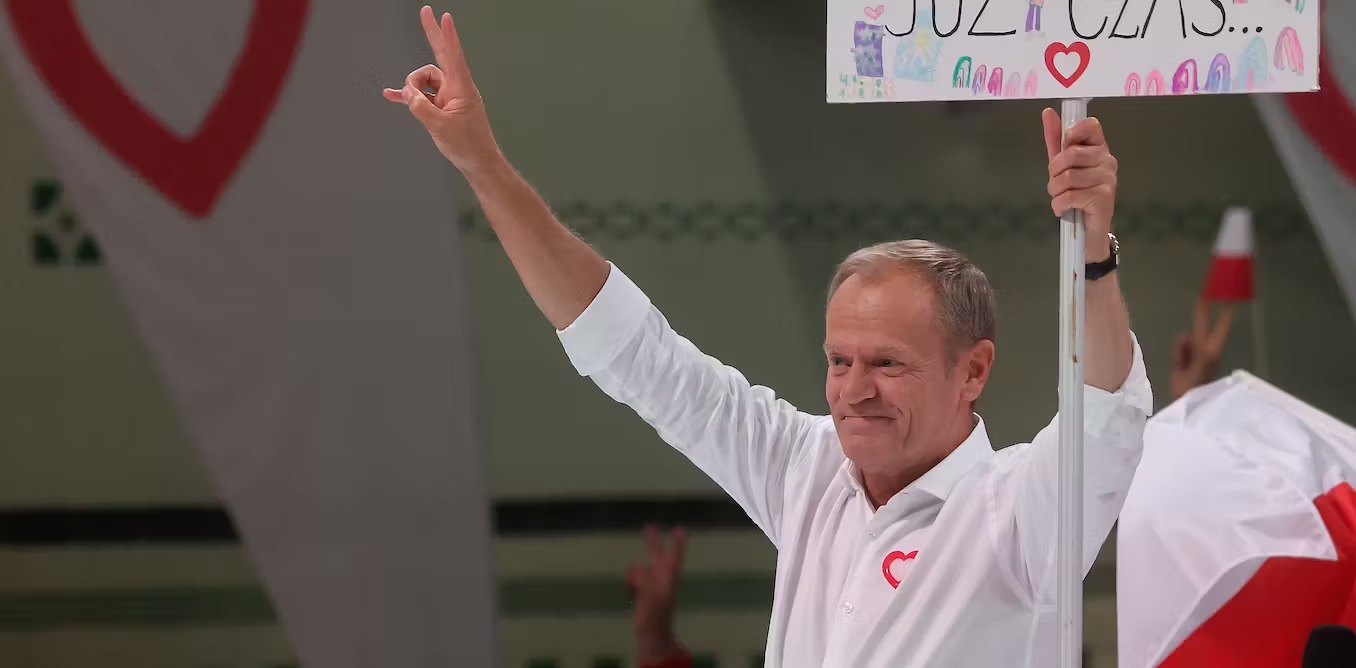
Poles headed to the polls Sunday in a pivotal presidential election that could reshape the country’s stance on the European Union and liberal values. The vote is seen as a referendum on whether Poland continues the pro-European path set by Prime Minister Donald Tusk or leans back toward the nationalist right inspired by former U.S. President Donald Trump.
The main contenders are Warsaw Mayor Rafal Trzaskowski from Tusk’s Civic Coalition and conservative historian Karol Nawrocki, backed by the nationalist Law and Justice (PiS) party. Trzaskowski, the pro-EU frontrunner, is expected to face Nawrocki in a likely run-off on June 1 unless one secures over 50% in the first round.
Trzaskowski promises to strengthen Poland’s EU and NATO ties, reverse controversial PiS judicial reforms, and restore democratic standards. Meanwhile, Nawrocki frames the election as a battle against unchecked liberal power and defends traditional values, criticizing Trzaskowski’s support for LGBT rights and secular policies. Despite denying fraud allegations over a real estate dispute, Nawrocki received a political boost from a meeting with Trump at the White House.
Other candidates include far-right Slawomir Mentzen, centrist Szymon Holownia, and leftist Magdalena Biejat.
The Polish presidency holds limited powers but can veto legislation, a role outgoing President Andrzej Duda has used to block reforms. A Trzaskowski win could facilitate Tusk’s agenda, while a Nawrocki presidency could preserve PiS influence.
The vote coincides with Romania’s presidential run-off between centrist Nicusor Dan and nationalist George Simion, highlighting rising euroscepticism as the EU faces growing geopolitical pressure from Russia and renewed U.S. trade tensions under Trump.
Polls in Poland close at 9 p.m. local time, with over 29 million citizens eligible to vote.













