


 NASA Artemis II: First Crewed Moon Mission Since Apollo Takes Four Astronauts on 10-Day Lunar Journey
  How America courted increasingly destructive wildfires − and what that means for protecting homes today
  SpaceX Delays Starship V3 Launch Ahead of Potential Record IPO
  US Strikes Iran IRGC Targets as Conflict Escalates
  Dollar Hits Two-Week High as Iran Conflict Lifts Oil and Bond Yields
  Qantas Near-Miss Raises Sydney Air Traffic Controller Fatigue Concerns
  Lake beds are rich environmental records — studying them reveals much about a place’s history
  Blue Origin’s New Glenn Achieves Breakthrough Success With First NASA Mission
  Gold Prices Hold Near $4,500 as Fed Rate Hike Bets Ease
  Lenovo Shares Fall After Dropbox Security Breach Exposes ID Vulnerability
  Tesla Cybercab Rides Launch in Austin as NHTSA Reviews Rollout
  Treasury Yields Set to Stay High as Debt Supply Pressures Bond Market
  GesiaPlatform Launches Carbon-Neutral Lifestyle App ‘Net Zero Heroes’
  OpenAI Nears Astra AI Model Launch With Safety Focus
  Is space worth the cost? Accounting experts say its value can’t be found in spreadsheets
  Asian Stocks Rise as Bond Yields Ease, Oil Prices Stabilize


 Add as a preferred source on Google
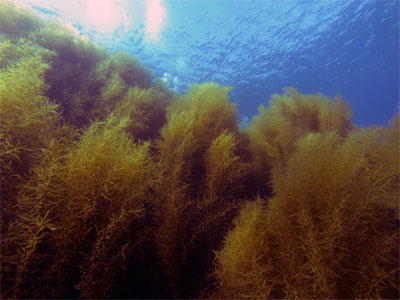
South Korea’s Ministry of Oceans and Fisheries and a research team at Pohang University of Science and Technology will begin developing technology that uses marine plants to produce biodegradable plastic material.
Among the marine plants is an invasive algae called Sargassum horneri.
Each year, 24 tons of Sargassum horneri grow in South Korea to pose a problem. Using the algae will help the environment, government officials pointed out.
The team will use a strain that doesn’t require preliminary processing to produce biodegradable plastic material such as itaconic acid, 3-HP and lactic acid by 2026.
It also intends to develop a separate technology for combining monomers to obtain plastic properties, which will compensate for the shortcomings of environmentally friendly plastic, which has weaker plastic properties than petroleum-based plastic.







