


 Trump Allows Commercial Fishing in Protected New England Waters
  U.S. to Begin Paying UN Dues as Financial Crisis Spurs Push for Reforms
  TrumpRx Website Launches to Offer Discounted Prescription Drugs for Cash-Paying Americans
  Nighttime Shelling Causes Serious Damage in Russia’s Belgorod Region Near Ukraine Border
  Federal Judge Restores Funding for Gateway Rail Tunnel Project
  Iran–U.S. Nuclear Talks in Oman Face Major Hurdles Amid Rising Regional Tensions
  U.S.-India Trade Framework Signals Major Shift in Tariffs, Energy, and Supply Chains
  New York Legalizes Medical Aid in Dying for Terminally Ill Patients
  Japan Election 2026: Sanae Takaichi Poised for Landslide Win Despite Record Snowfall
  TrumpRx.gov Highlights GLP-1 Drug Discounts but Offers Limited Savings for Most Americans
  Netanyahu to Meet Trump in Washington as Iran Nuclear Talks Intensify
  Trump Backs Nexstar–Tegna Merger Amid Shifting U.S. Media Landscape
  Trump Signs “America First Arms Transfer Strategy” to Prioritize U.S. Weapons Sales
  India–U.S. Interim Trade Pact Cuts Auto Tariffs but Leaves Tesla Out
  Trump Signs Executive Order Threatening 25% Tariffs on Countries Trading With Iran
  Trump Says “Very Good Talks” Underway on Russia-Ukraine War as Peace Efforts Continue
  U.S. Announces Additional $6 Million in Humanitarian Aid to Cuba Amid Oil Sanctions and Fuel Shortages


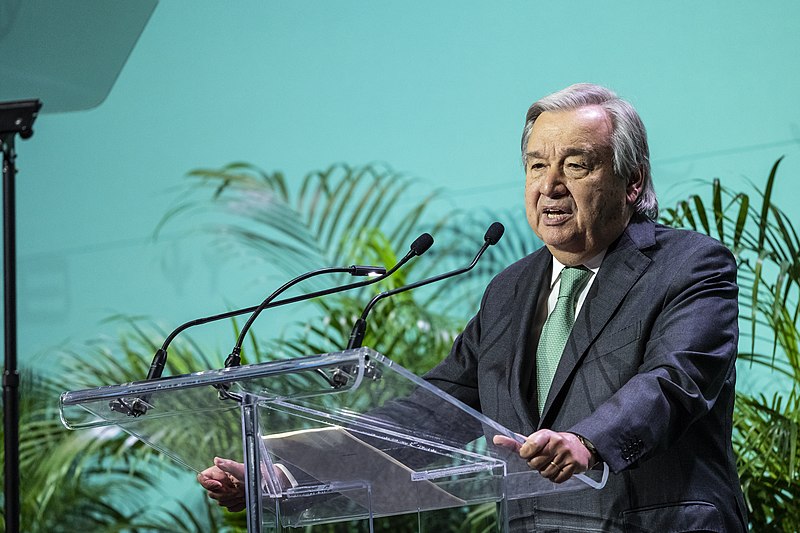
The United Nations Secretary-General said it was up to North Korea to return to denuclearization talks amidst its ongoing developments in its nuclear arsenal. The UN chief’s comments contrasted with China’s criticism of the United States for showing more flexibility.
Speaking at the UN Security Council meeting chaired by Japanese foreign minister Yoshimasa Hayashi, Secretary-General Antonio Guterres said it was up to Pyongyang to return to denuclearization talks. Guterres’ comments contrasted with that of China’s last year, which demanded that Washington show more flexibility in order for talks to resume.
“The unlawful nuclear weapons program being pursued by the Democratic People’s Republic of Korea is a clear and present danger, driving risks and geopolitical tensions to new heights,” said Guterres, referring to North Korea by its formal name. “The onus is on the DPRK to comply with its international obligations and return to the negotiating table.”
North Korea has been under sanctions by the UN since 2006 for its nuclear and ballistic missile programs. The so-called denuclearization talks between North Korea and five other countries fell through in 2009. The 2018 and 2019 summits between Pyongyang and Washington also fell through, and Russia and China have called for sanctions to be eased in order to entice North Korea to return to denuclearization talks.
“We have to work together. We have to really ask our American colleagues to move forward with more concrete steps,” Chinese ambassador to the UN Zhang Jun told Reuters when pressed on how North Korea could be convinced to return to negotiations.
Last year, China said that the way to solve North Korea’s ballistic missile and nuclear programs issue lies with the United States, saying that Washington must show “sincerity and flexibility” if it wants to progress. North Korea wants sanctions from the UN, and the US lifted.
Last week, North Korean leader Kim Jong-un’s presentation of his daughter Kim Ju-ae at public events may be an effort to show the public that he plans to extend his family’s rule over the isolated nation with one of his children inherited the leadership, South Korea’s intelligence agency told lawmakers.
During a closed-door parliamentary meeting with the South Korean National Intelligence Service and lawmakers, the agency said it believes that with Kim taking his daughter to public events, the North Korean leader wants to show the people that he intends to hold another hereditary transfer of power within the family.
However, the agency said that it may not necessarily mean that Kim Ju-ae may be the one that takes over for her father, lawmaker Yoo Sang-bum, who was present at the briefing told reporters.













