


 Coca-Cola Raises Diet Coke Prices in India as Iran Conflict Disrupts Can Supply
  Zhongji Innolight Raises $6.8 Billion in Hong Kong IPO as AI Demand Fuels Growth
  Intel, AMD Seek Long-Term China Server CPU Deals as AI Demand Drives Supply Crunch
  SAP Beats Q2 Revenue Estimates as Cloud Backlog and Business AI Demand Drive Growth.
  AstraZeneca Q2 Earnings Beat Forecasts as Oncology Growth Supports 2026 Outlook
  Paramount-Warner Bros. Merger Delayed Until 2027 Amid Antitrust Lawsuit
  Johnson & Johnson Proposes $5.5 Billion Talc Settlement to Resolve U.S. Ovarian Cancer Lawsuits
  CATL Shares Jump as $5.6 Billion Buyback Signals Confidence in Long-Term Growth
  Scandinavian Tobacco Group Sells BREAK and Moro Brands to Japan Tobacco for €176 Million
  AMD Unveils Helios AI Servers to Challenge Nvidia as OpenAI Adopts New Platform
  Nvidia Eyes $250B Guarantee for OpenAI’s Massive Ohio AI Data Center Project
  Nvidia Invests $1 Billion in Naver as South Korea AI Data Center Expansion Gains Momentum
  SpaceX Stock Slump Wipes Out Nearly $700 Billion From Elon Musk’s Paper Wealth
  CXMT IPO Debut in Shanghai Puts $85.5 Billion Chipmaker in Spotlight
  Amkor Stock Surges 17% After $1.5 Billion Nvidia AI Packaging Partnership
  Volkswagen Cuts 2026 Revenue Outlook as China Weakness, Trade Risks Weigh
  OpenAI AI Agent Reportedly Breached Hugging Face, Raising AI Safety Concerns


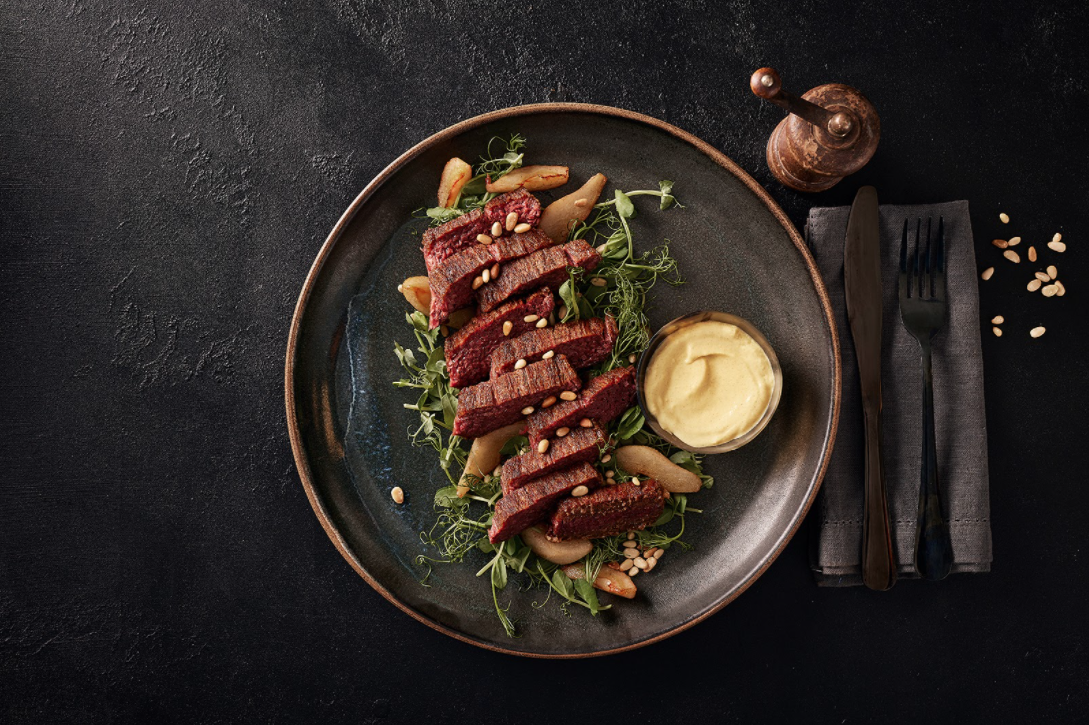
Designed for carnivores, 3D-printed “alt-steak” is a potential economic powerhouse
Meat. You can barbecue it, boil it, broil it, bake it, sauté it, pan-fry it, deep-fry it, stir-fry it, put it a soup, a salad, in a burger, in a sandwich, in a stew, eat with rice or potatoes… and that’s not just about it. There are almost as many types of meat as there are animals on the planet. Pork might take the crown as “most widely eaten” meat – accounting for over 36 percent of world’s total meat intake (obviously excluding many Muslim nations and Israel). Beef might only grab 22-24 percent of the total pie, but the meat of a cow has an almost revered place in so many cultures and is considered by many – especially in North America – to be the tastiest, “richest” and most satisfying meat available. Aside from some of the Hindu faith who abstain due to religious reasons, as well as a shrinking minority in east Asia who consider cows and oxen farm helpers – and thus deserving of a retirement – beef is king. We can’t cite statistics, but we’ll wager a guess as to why: beef is delicious. Sure, chicken is good, and sheep, goat, deer, and fish all have their place; but beef is special. –And hugely valuable for economies from New Zealand to France.
On the far upper end, you have Japanese Wagyu beef, which can cost roughly US$200 per pound. The world’s most expensive steak is a type of “aged beef.” The 2000 vintage côte de boeuf (rib steak) costs US$3,200, according to a 2015 report by Forbes. Try finding a “vintage” pork chop or “Wagyu '' chicken leg. But, as the saying goes, all good things come to an end. Beef consumption is declining in the west – and has been since the 1970s. Even pork consumption is thinning out around the world; chicken is taking the crown, and it’s not only because it’s cheap. Many consumers have gotten the message about the health effects of red meat and the damage raising large animals for food does to the environment. But there is hope on the horizon. Behold the birth of New Meat.

No, it’s not kangaroo – as much as Australia wishes that would catch on – nor is it a newly-discovered species. It’s still beef, only this time created by a 3D printer. And, oh… made entirely of plant-based materials. We can hear the scoffing. “Veggie burgers? Are you serious? That’s not beef.” No, it isn’t. But 3D-printed meat has little in common with even the most “real” meat substitute on the market. A company out of Israel is – after quite a few years of serious R&D – now ready to unleash its mix of tech and taste. Each layer of this “alt-meat” is printed with varying ingredients. Have you seen how thin a 3D printed layer is? The slow layering allows for “alt-fat,” “alt-muscle” and real texture. The company didn’t even offer samples until they’d gotten the nod from chefs, butchers, and food critics. And, of course, they did “blind tests,” after which people who thought they were eating real meat scored the “alt-meat” as 90 percent “authentic” for having that meaty feel, smell, texture and look. –Impressive numbers.
Let’s set aside all the controversies over meat consumption, and meat production and focus on economics for a minute. Consumers in some markets are cutting down on beef, but overall demand is up, fueled by China and other markets where the meat was formerly too expensive for frequent consumption. We, collectively, eat some 50 billion kilos of beef a year and that’s going to rise as huge new markets grow. Unfortunately, the surface land area of the planet is literally shrinking. Cows are big animals. Estimates say one kilogram of beef requires 5,000 to 20,000 liters of water to produce. Water – as droughts all over the world in 2021 demonstrate – is a limited resource and is predicted to be the cause of future wars.
If you’ve got a product that’s as cheap or cheaper than beef, doesn’t require even close to the water requirements to produce, has no health issues as it’s zero-cholesterol, very low-fat, and vegetable-based, and people rate it at 90 percent for “beefiness” – you’ve got a license to print money. Already the projections were for meat substitutes to be a US$140 billion industry within a year or two. Redefine Meat’s list of “new-meat” products now includes ground beef, kebab, burgers, sausages, and more. Think about how many barriers these new meat products cross. It works for the religious (kosher, halal), those with moral reservations (vegans, vegetarians), and the health-conscious (a fast-rising demographic). For business owners, the win here is primarily financial – as 3D-printed “alt-meat” prices are set to become more than competitive. The naysayers point to what’s out there today and note it’s a niche market. And that may be. With the advances in high-tech 3D printing used by new “alt-meat” start-ups, however, critics are about to get knocked off their feet as “fake” beef – and more – charges into the mainstream.
This article does not necessarily reflect the opinions of the editors or the management of EconoTimes







