


 Netanyahu to Meet Trump in Washington as Iran Nuclear Talks Intensify
  Trump’s Inflation Claims Clash With Voters’ Cost-of-Living Reality
  Trump Lifts 25% Tariff on Indian Goods in Strategic U.S.–India Trade and Energy Deal
  Trump Says “Very Good Talks” Underway on Russia-Ukraine War as Peace Efforts Continue
  Trump Administration Appeals Court Order to Release Hudson Tunnel Project Funding
  Federal Judge Restores Funding for Gateway Rail Tunnel Project
  U.S. Lawmakers to Review Unredacted Jeffrey Epstein DOJ Files Starting Monday
  Jack Lang Resigns as Head of Arab World Institute Amid Epstein Controversy
  U.S.-India Trade Framework Signals Major Shift in Tariffs, Energy, and Supply Chains
  Japan’s Prime Minister Sanae Takaichi Secures Historic Election Win, Shaking Markets and Regional Politics
  Pentagon Ends Military Education Programs With Harvard University
  Trump Signs Executive Order Threatening 25% Tariffs on Countries Trading With Iran
  Ohio Man Indicted for Alleged Threat Against Vice President JD Vance, Faces Additional Federal Charges
  US Pushes Ukraine-Russia Peace Talks Before Summer Amid Escalating Attacks
  Sydney Braces for Pro-Palestine Protests During Israeli President Isaac Herzog’s Visit
  China Warns US Arms Sales to Taiwan Could Disrupt Trump’s Planned Visit
  Nicaragua Ends Visa-Free Entry for Cubans, Disrupting Key Migration Route to the U.S.


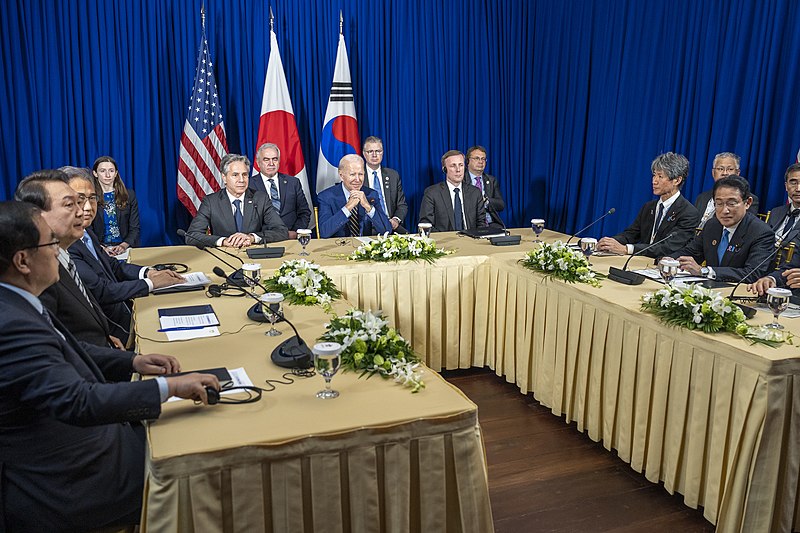
Japanese Prime Minister Fumio Kishida spoke with French President Emmanuel Macron on the sidelines of the G20 Summit in Bali. Kishida told Macron that he hopes Japan and France could strengthen cooperation in the Indo-Pacific region.
The Japanese foreign ministry issued a statement on Kishida’s meeting with Macron Tuesday. Kishida told Macron that he hopes the two countries could strengthen their cooperation in ensuring a free and open Indo-Pacific. Both leaders also discussed the ongoing war in Ukraine, China’s growing influence in the region, climate change, and energy.
This follows Kishida’s remarks during the East Asia Summit over the weekend that China’s activities in the region are increasingly breaching Japan’s sovereignty. Kishida stressed that ensuring peace and stability in the Taiwan Strait was key to security in the region. Kishida also expressed his concern over the alleged treatment of the Uyghur minority in China’s Xinjiang province.
“There has been continued, increasing actions by China in the East China Sea that violates Japan’s sovereignty. China also continues to take actions that heighten regional tension in the South China Sea,” Kishida told his counterparts at the meeting, according to a statement by the ministry.
Kishida echoed the comments by US President Joe Biden, stressing the importance of peace in the Taiwan Strait and ensuring freedom of navigation in the contested South China Sea.
China claims to have sovereignty over the majority of the South China Sea and the Taiwan Strait, angering surrounding nations. China also claims to have sovereignty over a part of the East China Sea.
Kishida also expressed concern over the multiple missile tests conducted by North Korea this year, saying that the tests posed a “clear and serious challenge” against the international community.
Kishida was also in attendance at the ASEAN Summit along with the United States and told reporters Sunday that the two allies agreed on the need to “strengthen the deterrent strength of the US-Japan alliance amid mounting challenges to the security of the region.”
“We reaffirmed that unilateral attempts to change forcefully the status quo is unacceptable, and confirmed that Russia’s threats with nuclear power cannot be tolerated,” said Kishida.
Kishida and Biden also held a trilateral summit with South Korean President Yoon Suk-yeol to discuss the threat posed by North Korea and its missile launches.













