


 Cuba Receives Humanitarian Aid Convoy Amid U.S. Sanctions
  WTO Reform Talks Begin in Cameroon Amid Global Trade Tensions
  Trump Votes by Mail Despite Calling It "Cheating" as Democrat Wins Mar-a-Lago District
  Taiwan Arms Deal on Track Despite U.S.-China Summit Uncertainty
  Pakistan's Diplomatic Rise: Mediating U.S.-Iran Peace Talks
  Kristi Noem Ends Western Hemisphere Tour in Diminished Role After DHS Firing
  ICE Arrest of Guatemalan Woman at San Francisco Airport Sparks Outrage
  Iran-Israel Missile Strikes Continue Amid Mixed Signals on U.S.-Iran Diplomacy
  Denmark Election 2026: Frederiksen Eyes Third Term Amid Trump-Greenland Tensions
  US Accelerates Taiwan Arms Deliveries Amid Rising China Threat
  Denmark Election 2025: Social Democrats Suffer Historic Losses Amid Migration and Cost-of-Living Tensions
  Trump Administration Opens Two New Investigations Into Harvard Over Discrimination and Antisemitism
  Jay Bhattacharya to Continue Leading CDC as White House Searches for Permanent Director
  Trump Backs Down on Iran Strikes After Gulf Allies Sound the Alarm
  Trump Says Iran Offered Major Energy Concession Amid Ongoing Negotiations
  FEMA Reinstates $1 Billion Disaster Prevention Grant Program After Court Order
  U.S.-Iran Peace Talks Gain Momentum Amid Ongoing Conflict


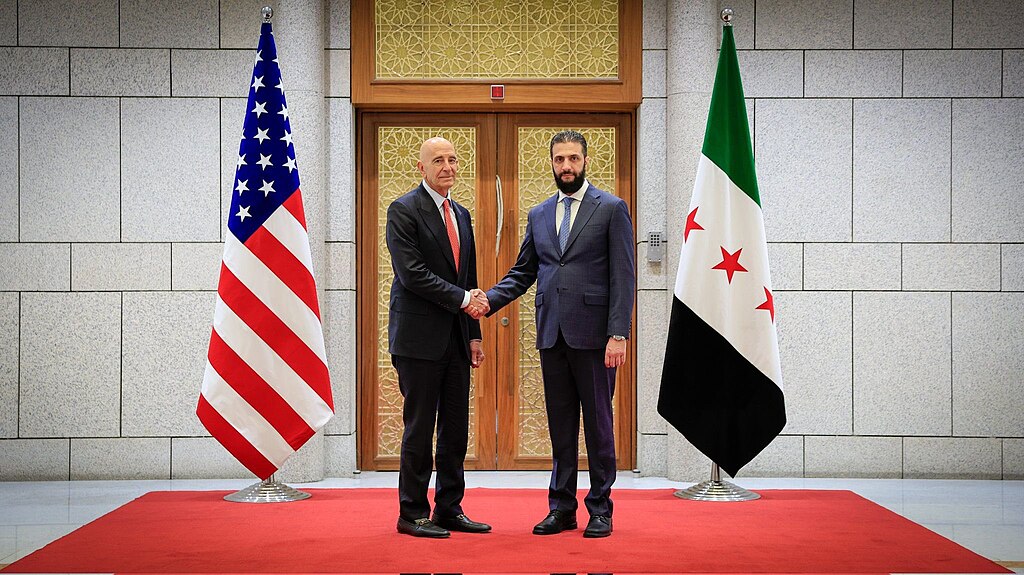
Israel and Syria are moving closer to a potential de-escalation agreement that could ease years of conflict, according to U.S. Special Envoy for Syria Tom Barrack. Speaking during the U.N. General Assembly in New York, Barrack revealed that the proposed deal would halt Israeli attacks in exchange for Syria agreeing not to move heavy machinery or equipment near the Israeli border. This arrangement is seen as the first step toward a broader security deal currently under negotiation.
The talks, encouraged by U.S. President Donald Trump, aim to create a framework for stability in the region. However, Barrack noted that progress has been slower than anticipated due to the Jewish New Year holiday, Rosh Hashanah, and unresolved sticking points between the two sides. “I think everybody is approaching it in good faith,” Barrack said, stressing cautious optimism about the outcome.
Syria, under the leadership of President Ahmed al-Sharaa following the overthrow of Bashar al-Assad last December, has been pressing for an end to Israeli airstrikes and the withdrawal of Israeli troops from southern territories. Israel, however, remains wary of Damascus’ Islamist-led government and its leader’s former jihadist ties. The Israeli government has repeatedly voiced concerns about security risks and has urged Washington to keep Syria decentralized and militarily weakened.
Tensions escalated sharply after Israel abandoned the 1974 truce on December 8, the same day Assad was ousted by rebel forces. Since then, Israel has conducted more than 1,000 airstrikes and over 400 ground incursions into Syrian territory, according to Sharaa. The Syrian leader expressed skepticism during remarks in New York, suggesting that Israel might be deliberately slowing down the negotiation process. “We are scared of Israel. We are worried about Israel. It’s not the other way around,” Sharaa warned.
The possible agreement marks a rare diplomatic opening between two historical adversaries. Yet, deep mistrust, territorial disputes, and competing political agendas mean that even if signed, the road to lasting peace will remain uncertain.













