


 UK Warned Over Growing Reliance on US Cloud Providers
  Israeli Settler Attack in West Bank Kills Palestinian
  Flydubai FZ1073 Co-Pilot Accused of Terror Attack
  Trump Heads to Ohio to Boost Husted in Tight Senate Race
  G20 Divided Over US Push to Curb Industrial Overcapacity
  Tsai Ing-wen to Visit US for Stanford Security Conference
  Japan Protests to US After Marine Arrested in Okinawa Murder Case
  South Korea Warns Ukraine Over North Korean POW Dispute
  TRUMP Memecoin Launches New Dinner Contest
  Xi Rest Breaks Cut Trump Summit Schedule, WSJ Reports
  Trump Taps Dennis Rodman as Kim Jong Un Outreach Continues
  Netanyahu Vows Probe Into Foiled Flydubai Crash Attempt
  Putin Says Western Firms Could Regain Russian Assets
  Ukraine Deploys FP-7 Ballistic Missile in Combat for First Time
  California Leads Lawsuit Over Trump’s $810 Million Funding Cuts


 Add as a preferred source on Google
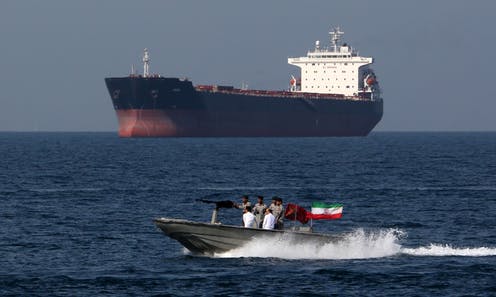
Iran said Sunday that the Strait of Hormuz will remain closed until Washington accepts seven conditions tied to the Islamabad Memorandum, as negotiations to end the seven-month U.S.-Israeli war with Iran remain deadlocked.
Parliament Speaker Mohammad Bagher Ghalibaf said Washington had submitted proposals through an intermediary but insisted Tehran would no longer accept unilateral demands. Iran’s position keeps uncertainty high around the Strait of Hormuz, a critical route for global oil shipments.
Tensions rose further after Britain’s UKMTO maritime monitor said a tanker in the strait was struck in its engine room by an unidentified projectile. The crew was reported safe, with no environmental damage, and no group immediately claimed responsibility.
Meanwhile, OPEC+ has reached an agreement in principle to maintain current oil production targets for November, according to Reuters. Gulf producers have struggled to meet existing quotas because the war has disrupted exports, which have reportedly remained 60% to 80% below normal levels in recent months.
Core OPEC+ members produced about 25 million barrels per day in August, roughly 5 million bpd below prewar output. Brent crude closed at $102.72, up 0.46%, reflecting continued concerns about Middle East energy supplies.
Regional fighting also intensified in Yemen. The Houthis claimed they targeted a major Saudi Aramco facility near Riyadh using ballistic missiles and drones in retaliation for around 60 Saudi airstrikes over 24 hours. The Saudi-led coalition disputed the Houthi account, while Saudi officials and Aramco had not confirmed the cause of a refinery fire reported Saturday.
Clashes also escalated near Taiz, where Houthi forces launched coordinated attacks across a roughly 15-kilometer front.
U.S. Defense Secretary Pete Hegseth said the blockade surrounding Hormuz remained “ironclad.” Meanwhile, Iran’s rial fell to a record low near 2.7 million per U.S. dollar on the free market, prompting the central bank to begin selling up to $2 billion to support the currency.
Russia’s Dmitry Medvedev said Moscow was prepared to help mediate the conflict.







