


 Trump Backs Nexstar–Tegna Merger Amid Shifting U.S. Media Landscape
  Netanyahu to Meet Trump in Washington as Iran Nuclear Talks Intensify
  Jack Lang Resigns as Head of Arab World Institute Amid Epstein Controversy
  Ohio Man Indicted for Alleged Threat Against Vice President JD Vance, Faces Additional Federal Charges
  New York Legalizes Medical Aid in Dying for Terminally Ill Patients
  Japan’s Prime Minister Sanae Takaichi Secures Historic Election Win, Shaking Markets and Regional Politics
  Ghislaine Maxwell to Invoke Fifth Amendment at House Oversight Committee Deposition
  U.S.-India Trade Framework Signals Major Shift in Tariffs, Energy, and Supply Chains
  U.S. Lawmakers to Review Unredacted Jeffrey Epstein DOJ Files Starting Monday
  Anutin’s Bhumjaithai Party Wins Thai Election, Signals Shift Toward Political Stability
  India–U.S. Interim Trade Pact Cuts Auto Tariffs but Leaves Tesla Out
  Nicaragua Ends Visa-Free Entry for Cubans, Disrupting Key Migration Route to the U.S.
  Trump Congratulates Japan’s First Female Prime Minister Sanae Takaichi After Historic Election Victory
  Antonio José Seguro Poised for Landslide Win in Portugal Presidential Runoff
  Bangladesh Election 2026: A Turning Point After Years of Political Suppression
  Trump Signs Executive Order Threatening 25% Tariffs on Countries Trading With Iran
  Federal Judge Restores Funding for Gateway Rail Tunnel Project


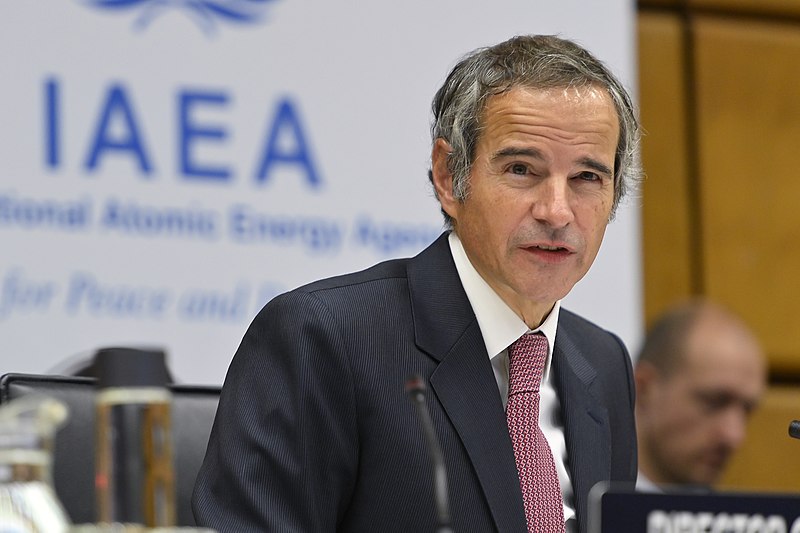
The head of the United Nations International Atomic Energy Agency said that the concessions Iran has pledged would mainly depend on future talks. This follows the joint statement made by Tehran and the IAEA pledging cooperation.
At a news conference on Monday, IAEA head Rafael Grossi said Iran’s concessions to the nuclear watchdog would mainly depend on the outcome of future talks, walking back previous comments that Tehran agreed to reinstall the watchdog’s monitoring equipment at nuclear sites under the 2015 nuclear agreement. The equipment was removed last year as the nuclear deal further unraveled when the United States withdrew in 2018.
Over the weekend, ahead of the meeting of the IAEA’s board of governors, the watchdog and Iran issued a joint statement saying they agreed to make progress on various issues, including a long-stalled IAEA probe into the uranium particles that were found in three undeclared nuclear facilities in Iran.
“We will have to discuss this…this, how we do it,” Grossi told reporters, acknowledging that the issues mentioned would largely depend on the result of the technical talks with Iran.
“We have our ideas and this will be part of the technical discussions that are going to be undertaken as a follow-up to my visit, and to the joint statement. And a technical team will be traveling to Iran very soon to do that,” said Grossi.
The announcement of some progress over the weekend seems to have been enough to prevent a Western-led push to adopt another resolution that demanded Iran cooperate with the investigation into the uranium particles. Iran has long said its nuclear program was for peaceful purposes and has usually dismissed such resolutions and has previously responded by ramping up its nuclear program.
On Tuesday, German foreign minister Annalena Baerbock criticized Iran’s cross-border attacks with Iraq, saying that the attacks only fuel instability and endanger civilians during her visit to Baghdad. This follows last year’s attack when Iran fired missiles at bases of Kurdish groups in northern Iraq. Tehran accuses the groups of getting involved in the anti-government protests that it also blames on its foreign adversaries.













