


 U.S.-India Trade Framework Signals Major Shift in Tariffs, Energy, and Supply Chains
  U.S. to Begin Paying UN Dues as Financial Crisis Spurs Push for Reforms
  China Warns US Arms Sales to Taiwan Could Disrupt Trump’s Planned Visit
  Missouri Judge Dismisses Lawsuit Challenging Starbucks’ Diversity and Inclusion Policies
  U.S. Announces Additional $6 Million in Humanitarian Aid to Cuba Amid Oil Sanctions and Fuel Shortages
  India–U.S. Interim Trade Pact Cuts Auto Tariffs but Leaves Tesla Out
  US Pushes Ukraine-Russia Peace Talks Before Summer Amid Escalating Attacks
  Trump Signs Executive Order Threatening 25% Tariffs on Countries Trading With Iran
  TrumpRx Website Launches to Offer Discounted Prescription Drugs for Cash-Paying Americans
  Iran–U.S. Nuclear Talks in Oman Face Major Hurdles Amid Rising Regional Tensions
  Norway Opens Corruption Probe Into Former PM and Nobel Committee Chair Thorbjoern Jagland Over Epstein Links
  Nighttime Shelling Causes Serious Damage in Russia’s Belgorod Region Near Ukraine Border
  Trump Says “Very Good Talks” Underway on Russia-Ukraine War as Peace Efforts Continue
  Jack Lang Resigns as Head of Arab World Institute Amid Epstein Controversy
  Trump Allegedly Sought Airport, Penn Station Renaming in Exchange for Hudson River Tunnel Funding
  Trump’s Inflation Claims Clash With Voters’ Cost-of-Living Reality
  Trump Signs “America First Arms Transfer Strategy” to Prioritize U.S. Weapons Sales


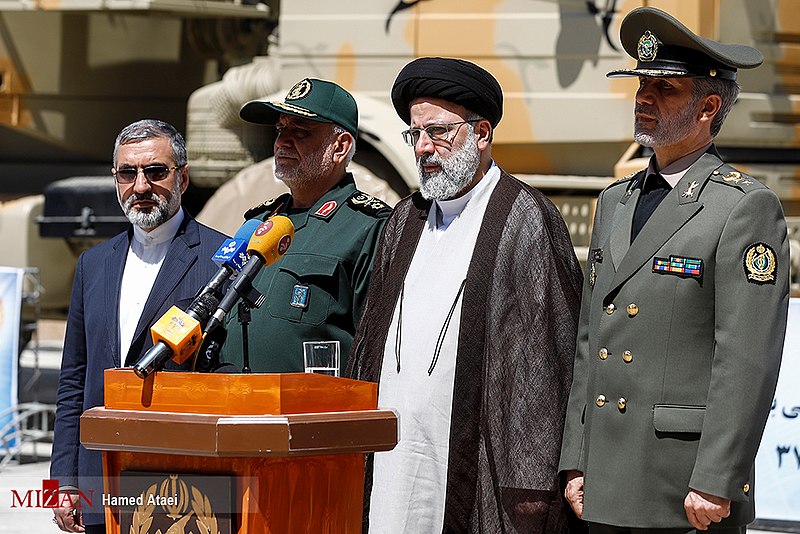
Iranian President Ebrahim Raisi pledged over the weekend to continue pursuing the crackdown on the ongoing protests across the country. Raisi’s pledge comes amidst criticism from a prominent cleric on the recent protest-related execution.
Speaking at a ceremony honoring the country’s security forces that were killed in the demonstrations Friday last week, Raisi said that the crackdown on the protesters would continue to be pursued. Raisi’s pledge came a day after a man named Mohsen Shekari was hanged after getting convicted for injuring a security guard with a knife and blocking a street in central Tehran. The execution of Shekari was the first execution made by the Iranian judiciary related to the widespread protests.
Sunni cleric Molavi Abdolhamid, however, criticized the execution of Shekari in a statement on his website. Abdolhamid also urged the predominantly Shi’ite Islamic Republic to listen to the protesters.
“When someone has not killed but only blocked a road and stabbed and injured a Basij member with a knife, he cannot be put to death under Sharia,” said Abdolhamid, referring to the Tehran-backed militia group that took part in the crackdown on the protests.
“Listen to these protests and negotiate with the people of Iran. Beating, killing, and executing this nation is not right. This protest will not be quelled by killing people,” said the cleric.
Protests have erupted across the country since September following the death of Kurdish-Iranian Mahsa Amini. Amini died in the custody of the morality police days after she was arrested for supposedly flouting the dress code on women imposed by the Islamic Republic. Tehran has sought to blame its enemies, such as the United States, for the unrest, which has led to sanctions and widespread condemnation.
Australian foreign minister Penny Wong announced Saturday that the Australian government would be sanctioning Iran as well as Russia for “egregious” human rights violations. In a statement, Wong said the morality police and the Basij militia, as well as six other Iranians linked to the crackdown, would be targeted with Magnitsky-style sanctions.
In a piece for the Sydney Morning Herald, Wong said the six individuals included are Sadegh Hosseini, who was described as a senior commander of Iran’s Revolutionary Guard Corps. Wong said Hosseini was being targeted by sanctions for his alleged involvement in the “indiscriminate use of violence against protesters.”













