


 Hantavirus Cruise Ship Outbreak Triggers Global Health Alert
  S&P 500, Nasdaq Hit Record Highs as AI Stocks Rally and Strong Jobs Data Boost Confidence
  AI-Driven Inflation Raises U.S. Consumer Prices, Goldman Sachs Says
  BHP Attracts AI-Focused Investors as Copper Demand Surges
  Lula and Trump Talks Signal New Phase in Brazil-US Relations
  Gold Prices Rise as Weaker Dollar and U.S.-Iran Peace Hopes Boost Demand
  Coinbase Q1 2026 Earnings Miss Sends COIN Stock Lower Amid Crypto Market Slump
  Russian LNG Shadow Fleet Expands Amid Arctic LNG 2 Sanctions
  Hua Hong Semiconductor Stock Surges to Multi-Year High Amid AI Boom
  Supermicro Forecasts Strong Q4 Revenue Growth as AI Server Demand Surges
  Intel Emerges as Key Contender in Apple’s Chip Manufacturing Strategy Shift
  Dell Stock Hits Record High After Trump Endorsement, AI Server Demand Fuels Rally
  UOB Q1 Profit Meets Expectations as Loan Growth Offsets Lower Interest Rates
  AWS Data Center Overheating Disrupts Cloud Services in Northern Virginia
  Oil Prices Surge as U.S.-Iran Conflict Threatens Strait of Hormuz Supply Route
  China-Made Fireworks Power U.S. Independence Day Celebrations Amid Trade Truce
  Japan’s Yen Intervention and BOJ Rate Hike Bets Support Currency Recovery


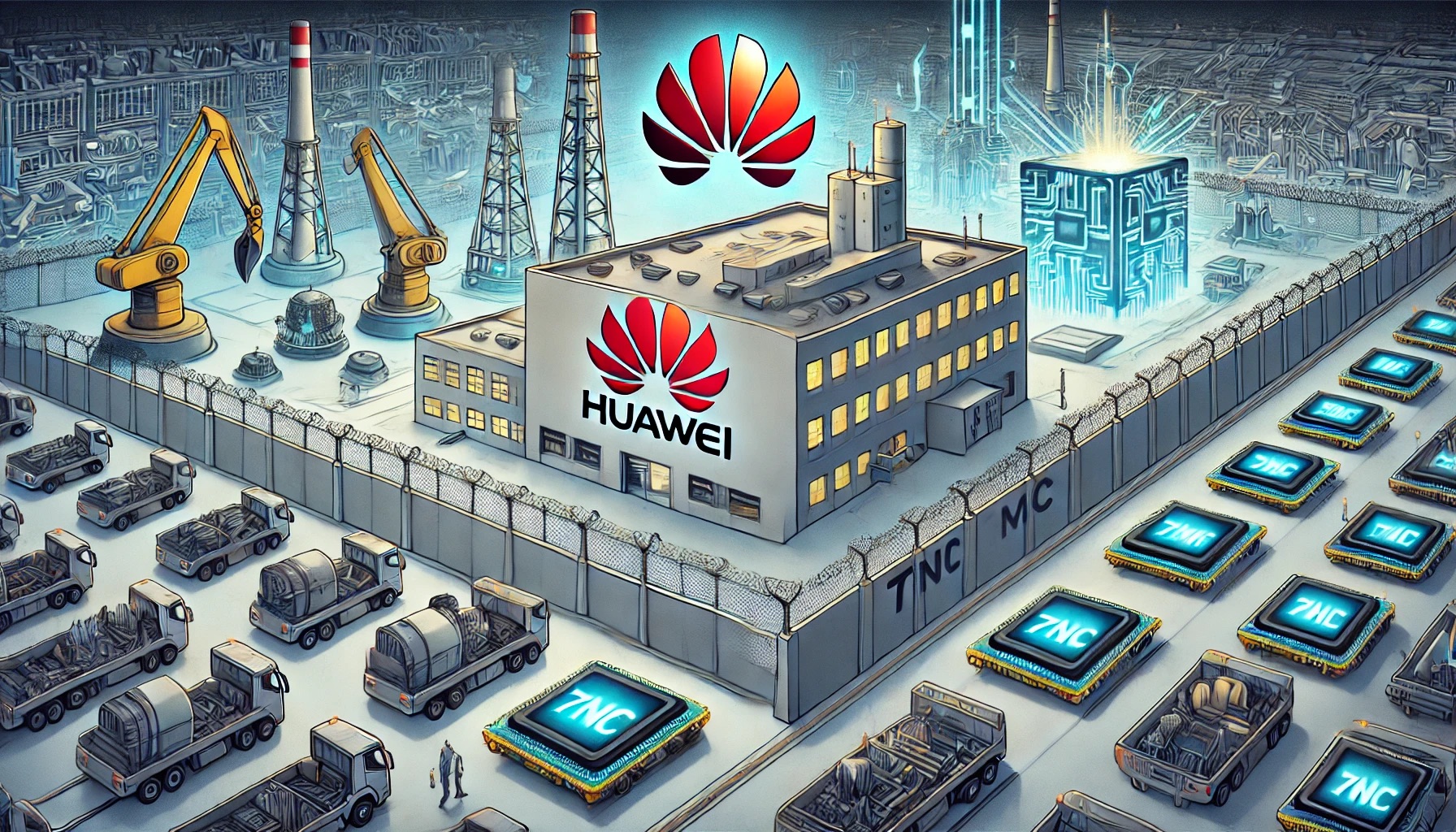
Huawei's AI chip development faces a significant roadblock as US sanctions limit access to TSMC's advanced chip technologies. Struggling to move beyond 7nm tech, Huawei trails NVIDIA, widening the gap in AI hardware innovation.
US Sanctions Disrupt Huawei’s AI Chip Production
Sources told Bloomberg that US restrictions are making it difficult for Huawei, a Chinese tech behemoth, to produce modern chips that can handle AI workloads and match the performance of NVIDIA's older products.
Sanctions imposed by the US government under the Trump and Biden administrations have hindered the capacity of Chinese chip producers to acquire the most recent chip production machinery from the Dutch business ASML and have stopped Taiwan's TSMC from exporting China its most modern chips.
Huawei has limited its efforts to build new chips capable of supporting AI workloads to the 7-nanometer node for the next two years due to the machines' crucial nature in creating newer chips.
Huawei Limits AI Chip Development to 7nm Technology
TSMC's N4 process technology family is used for the fabrication of NVIDIA's newest AI chip series, the H100 lineup. An improved version of TSMC's 5-nanometer, the N4 stands over TSMC's 7-nanometer technology by more than a generation.
According to Bloomberg, SMIC has been unable to develop beyond the 7-nanometer process due to restrictions imposed by the Biden administration. These sanctions prohibit SMIC from purchasing ASML's most recent extreme ultraviolet (EUV) chip fabrication machinery.
SMIC Struggles with Multi-Patterning Techniques
Older scanners that use deep ultraviolet (DUV) lithography are SMIC's only choice because ASML is the only firm in the world that offers these devices. According to the anonymous sources, the Chinese company has resorted to multi-patterning in an effort to produce 7-nanometer circuits.
To obtain the fine resolution required for reduced feature sizes in semiconductor production, multi-patterning divides a mask (equipment with the circuit design) into parts. This allows for the "printing" of one component on silicon at a time. Because of this, the technique makes semiconductor fabrication more complicated, lengthens production time, and introduces quality issues.
Reliance on DUV Machines Adds Pressure to SMIC
The top chipmaker in China, SMIC, is reportedly also dealing with these problems, as shared by WCCFTECH.
The difficulty has developed since the United States is unable to purchase sophisticated ultra-violet (EUV) machines from ASML due to sanctions, and the subsequent transition to deep ultraviolet (DUV) machines has made it difficult to produce the most recent chips. To get over the limitations, SMIC is using multi-patterning. However, it is still lagging behind older Western chip production technology, and the government is pressuring companies to employ local equipment.
Huawei’s Chip Design Faces Increasing Challenges
Consequently, Huawei is dependent on SMIC's products and designs its chips on the older 7-nanometer process as it is not allowed access to TSMC's latest chip process families. Nevertheless, Huawei's intentions to create its own artificial intelligence processors are encountering difficulties because of TSMC's ambitions to manufacture 2-nanometer chips in the coming year and SMIC's struggles with multi-patterning and domestic chip manufacturing equipment.
Impact on Huawei and China’s Semiconductor Goals
These challenges are a setback for Huawei in the consumer electronics industry, where it competes with companies like Apple. They are also a setback for China's efforts to become semiconductor self-sufficient in the age of artificial intelligence and keep up with the US.
Apple's iPhones frequently use TSMC's newest offerings; for example, the 2024 iPhone will employ chips manufactured using TSMC's 3-nanometer process technology family.







