


 Air Liquide Q2 Sales Growth Tops Forecast as Electronics Business Drives Strong Performance
  TeamViewer Shares Fall Despite Profit Growth as ARR and Customer Base Decline
  Barclays Q2 Profit Beats Forecasts as Investment Banking Strength Offsets Higher Costs
  GSK Unveils $2.52 Billion Cost-Cutting Plan to Accelerate Drug Pipeline
  Unilever Raises 2026 Sales Outlook After Strong Q2 Volume Growth
  Galp Shares Fall After Q2 EBITDA Miss Despite Profit Beat and Higher Dividend
  Sika Raises 2026 Sales Outlook After Strong First-Half Results Beat Expectations
  Philips Shares Slide 10% Despite Earnings Beat as Weak Orders Raise Growth Concerns
  Zhongji Innolight Raises $6.8 Billion in Hong Kong IPO as AI Demand Fuels Growth
  Johnson & Johnson Proposes $5.5 Billion Talc Settlement to Resolve U.S. Ovarian Cancer Lawsuits
  CATL Shares Jump as $5.6 Billion Buyback Signals Confidence in Long-Term Growth
  Standard Chartered Beats Profit Forecasts as First-Half Earnings Rise 9%
  Tech Stock Positioning Nears Neutral as Investor Rotation Enters Final Phase, Deutsche Bank Says
  Brown-Forman Rejects Sazerac’s $15 Billion Takeover Bid as Family Backs Independence
  Exosens H1 Profit Beats Forecasts as Defense Demand Drives Growth
  AstraZeneca Q2 Earnings Beat Forecasts as Oncology Growth Supports 2026 Outlook


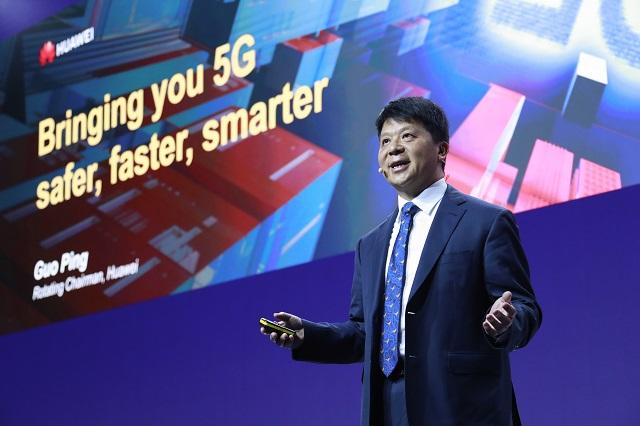
Huawei Technologies called on the US to reconsider its trade restrictions, which were hurting its suppliers globally.
The US has implemented trade curbs designed to choke Huawei’s access to commercially available chips.
The company's chairman, Guo Ping, pointed out that the US has modified its sanctions for the third time, bringing challenges to its production and operations.
Guo added that if the US reconsiders its policy, they are still willing to buy products from US companies.
But the US is not backing down from its fight with Huawei, saying last month that it would expand its “Clean Network” program to prevent various Chinese apps and telecom companies from accessing vital information on American citizens and businesses.
The US believes that Huawei is a vehicle for Chinese state espionage and from Sept. 15 imposed new curbs that bar US companies from supplying or servicing the company.
Huawei has repeatedly denied allegations.
Guo said that Huawei was feeling the pinch of the US restrictions on its smartphone chip stocks, although the company had sufficient chips for its business-to-business operations, including its 5G network enterprise.
Suppliers such as Qualcomm were applying for US licenses that would let them continue servicing Huawei.
Intel already received licenses to supply certain products to Huawei, while China’s Semiconductor Manufacturing International Corp, which uses US-origin machinery to produce chips for Huawei, has applied for a license.
Huawei was willing to use Qualcomm chips in its smartphones should the latter get a license.
Huawei recently announced that it would stop manufacturing its most advanced Kirin chips, which power its high-end phones.
The company's supply of Kirin chips is set to run out next year.
Amid concerns that Huawei's mobile division is about to fold, consumers rushed to buy Huawei phones by as much as $74.







