


 Rubio Rejects AI ‘Kill Switch’ Claims as U.S. Defends American Technology Abroad
  CATL Shares Jump as $5.6 Billion Buyback Signals Confidence in Long-Term Growth
  Paramount-Warner Bros. Merger Delayed Until 2027 Amid Antitrust Lawsuit
  Trump Administration Monitors OpenAI Incident as Lawmakers Push AI Kill Switch Bill
  Coca-Cola Raises Diet Coke Prices in India as Iran Conflict Disrupts Can Supply
  Intel Stock Slips After Earnings Rally Despite Strong AI-Driven Revenue Growth
  Intel, AMD Seek Long-Term China Server CPU Deals as AI Demand Drives Supply Crunch
  Tech Stock Positioning Nears Neutral as Investor Rotation Enters Final Phase, Deutsche Bank Says
  Scandinavian Tobacco Group Sells BREAK and Moro Brands to Japan Tobacco for €176 Million
  Brown-Forman Rejects Sazerac’s $15 Billion Takeover Bid as Family Backs Independence
  Zhongji Innolight Raises $6.8 Billion in Hong Kong IPO as AI Demand Fuels Growth
  AMD Unveils Helios AI Servers to Challenge Nvidia as OpenAI Adopts New Platform
  Serica Energy to Acquire Pharos Energy for £145.7M, Sending PHARP Shares Soaring
  Amkor Stock Surges 17% After $1.5 Billion Nvidia AI Packaging Partnership
  Shein Reports $99 Million Loss Ahead of Hong Kong IPO as U.S. Tariffs Hit Sales
  Nvidia Eyes $250B Guarantee for OpenAI’s Massive Ohio AI Data Center Project
  Volkswagen Cuts 2026 Revenue Outlook as China Weakness, Trade Risks Weigh


The lottery in Illinois has always been popular and well-funded. It has been in existence for almost 50 years and lots of residents have won amazing prices. All through the state, you can easily find tickets for the lottery. High-reward games are just as accessible as low-reward games.
From modest prizes to surprisingly high rewards, the players always have something to look forward to. Scratchers or instant-win games are highly popular as well. The Illinois lottery has something for everyone. Find more detail here.
The COVID Illinois Lottery
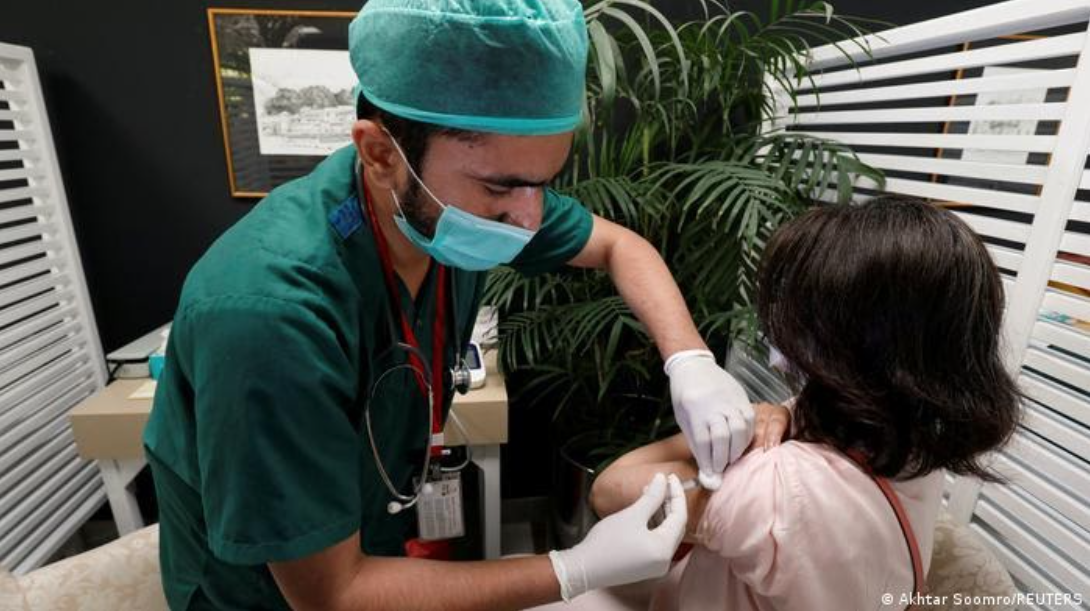
Illinois started a new lottery to promote vaccination against COVID 19. The lottery offered a total of $10 million in prizes to those who go out and get vaccinated in the state.
It was also available for those who planned on getting vaccinated. Getting at least one dose of the vaccines automatically puts you in the draw. Adults can win up to $1 million, and youngsters are eligible for $150,000 in scholarships. According to the governor, you don’t have to do anything other than getting vaccinated.
The lottery, popularly known as the ‘All in for the win,’ offered $7 million in cash prizes and $3 million in scholarships. All of these prizes were distributed in weekly drawings. Starting July 8th, the lottery would draw names every week. While adults won real money, children won Bright Start college savings plans.
In the end, 40 $100,000 and three $1 million prizes went to vaccinated people in the state. Children aged 12-17 won 20 $150,000 Bright Start scholarships. After the initial drawing, the subsequent ones were held every Monday until August 16th. Another drawing was held on August 12th. Each one of the 11 health regions in the state had two winners of $100,000.
In addition to the weekly awards, there were two winners of $1 million on August 16th. $150,000 was offered to youngsters in form of scholarships. The scholarship awards went to one youngster from every one of the 11 health regions. Six more scholarships were awarded in general.
How the Lottery Worked
The lottery was successful as it received funding from part of the federal aid to Illinois. The lottery was considered a way to appreciate those who had already received or were planning to receive the COVID-19 vaccine. According to the governor, it was a way to motivate more Illinois residents to get vaccinated. In the past, all incentives to get vaccinated had been offered to those who weren’t vaccinated yet.
According to the governor, getting the vaccine was no longer just about stopping the spread of the virus. It also gave people a chance to hit the jackpot. The best thing about it is that people didn’t need to do anything to enter the draw. During vaccination, people filled out forms and entered their contact details.
The information got into a public database and was used to choose lottery winners.
The winners got to decide whether or not they wanted to be identified. If they wanted to keep their identity a secret, they were identified by their hometown or county.
IDPH officials assigned anyone who had a shot a number. The numbers were issued to officials who used random number generators to choose the winning numbers. The winners were reported to IDPH, who then contacted the winners. Lottery officials would guide winners through the process of claiming their prizes.
Did the Covid Illinois Lottery Help?
The Illinois lottery was very helpful. It motivated people to get vaccinated without requiring them to do anything else. After getting the first dose of the vaccine, they didn’t have to fill out any forms, sign up, or wait in any lines.
This level of convenience motivated many Illinois residents to consider getting vaccinated against COVID 19. Anyone who received their dose before July 1st was eligible for the first and subsequent drawings.
According to Pritzker, the lottery was a way to appreciate people for doing their part. As Illinois residents felt more appreciated, they were more inspired to get COVID vaccines. They felt that their efforts of making the community safer were not going unnoticed.
As of mid-June 2021, Illinois had already administered over 12 million of COVID-19 vaccines. Based on reports by the Illinois Department of Public Health, 5,456,492 residents above 12 have already received full vaccination. The number represents slightly over 50 percent of the population over the age of 12.
7,247,381 residents above the age of 12 have already received a dose of Moderna or Pfizer vaccines. That is almost 70 percent of that population.
However, about three million Illinois residents haven’t received vaccination even though they are eligible. According to Dr. Ngozi Ezike, IDPH Director, and Pritzker, there is still a lot to be done.
According to Pritzker, the goal is to get at least 80 percent of the eligible population vaccinated. If the lottery isn’t enough, the state may need to bring in other incentives.
What Other Incentives Have Been Used?
Aside from the lottery, Illinois has also used incentives like free trap shooting range plays and tickets for Six Flags Great America. Like in other states, the plan is to stop the spread of COVID 19 as soon as possible. So far, vaccine-incentive lotteries have also been launched in New York State, Ohio, Colorado, Oregon, New Mexico, and Maryland.
According to Ohio’s governor, the number of vaccinations increased dramatically following the launch of the lottery program. The number of vaccinations among 19-17-year-olds increased by 94 percent. Vaccinations among 18-19-year-olds rose by 46 percent. There was a 55 percent jump among the age group 20-49.
In conclusion, the COVID Illinois lottery has been successful. It has helped the state accomplish what it set out to do. In an attempt to convince more people to get vaccinated, the state has offered $7 million in cash and $3 million in college scholarships. The prizes were offered through a lottery and funded through aid from the federal government. The lottery has promoted a sense of responsibility. It makes the residents feel appreciated and motivates them to get at least one shot of the vaccine.
This article does not necessarily reflect the opinions of the editors or the management of EconoTimes







