


 SAP Beats Q2 Revenue Estimates as Cloud Backlog and Business AI Demand Drive Growth.
  Coca-Cola Raises Diet Coke Prices in India as Iran Conflict Disrupts Can Supply
  Brown-Forman Rejects Sazerac’s $15 Billion Takeover Bid as Family Backs Independence
  Stellantis Sells Free2move Car-Sharing Business to Mutares to Strengthen Core Auto Strategy
  AMD Unveils Helios AI Servers to Challenge Nvidia as OpenAI Adopts New Platform
  Nvidia Eyes $250B Guarantee for OpenAI’s Massive Ohio AI Data Center Project
  Tech Stock Positioning Nears Neutral as Investor Rotation Enters Final Phase, Deutsche Bank Says
  Uber Stock Falls as Waymo Plans to End Robotaxi Partnership by 2028
  Scandinavian Tobacco Group Sells BREAK and Moro Brands to Japan Tobacco for €176 Million
  Zhongji Innolight Raises $6.8 Billion in Hong Kong IPO as AI Demand Fuels Growth
  Paramount-Warner Bros. Merger Delayed Until 2027 Amid Antitrust Lawsuit
  Volkswagen Cuts 2026 Revenue Outlook as China Weakness, Trade Risks Weigh
  Domino’s Weighs Appeal After Australian Court Rules Workers Were Misled on Pay
  AstraZeneca Q2 Earnings Beat Forecasts as Oncology Growth Supports 2026 Outlook
  Intel Stock Slips After Earnings Rally Despite Strong AI-Driven Revenue Growth
  Galp Shares Fall After Q2 EBITDA Miss Despite Profit Beat and Higher Dividend
  Amkor Stock Surges 17% After $1.5 Billion Nvidia AI Packaging Partnership


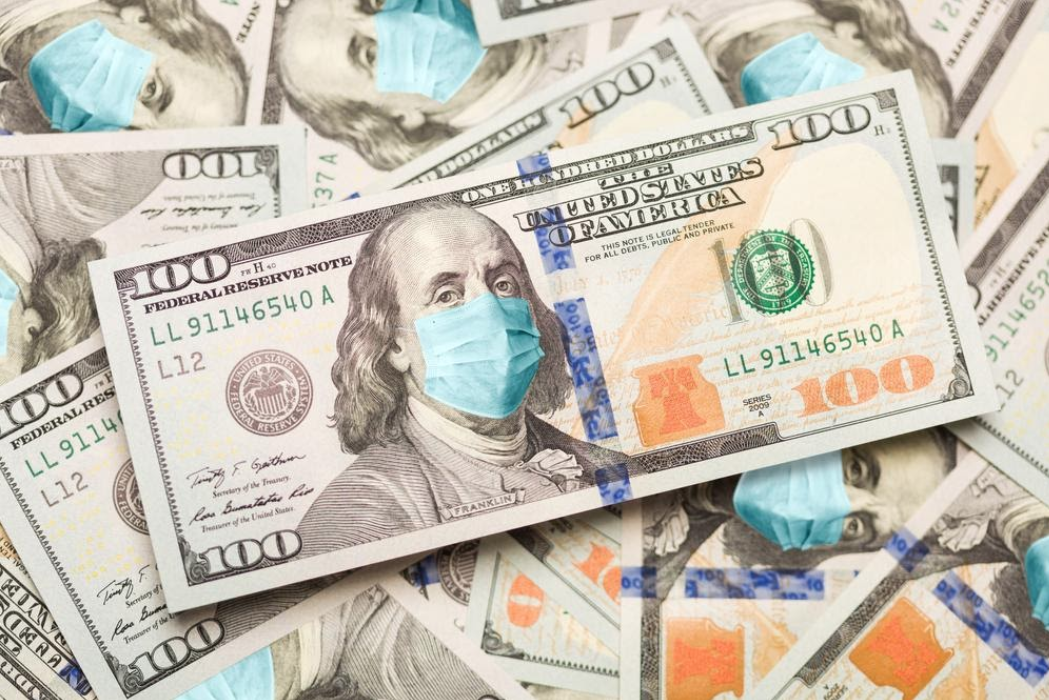
The coronavirus pandemic has created an economic crisis and a public health crisis in the United States. It has pushed the public health system to its capacity, disrupted lives, and created a worldwide economic slowdown. The economic crisis is unsurpassed in its scale: the disease has created shocks in demand, supply, and in finance.
The COVID-19 pandemic has changed all aspects of everyday life, including shopping, social interaction, education, and work-life balance. To stop the rapid spread of the disease, nonessential businesses were shut down in most states in 2020. As a result, supply chains were disrupted, demand plummeted, and workers were laid off. Let’s look at a few ways the pandemic has affected the U.S. economy.
Business Closures
In early April 2020, 43% of businesses closed temporarily. Nearly all the closures were caused by the pandemic, and the worst hit businesses were those in entertainment and retail industries and those that offered personal services (like hairdressers). Industries that weren’t heavily dependent on an on-site location--like professional services, finance, and real estate--performed better.
According to PNAS, only 75% of businesses had enough cash on hand to survive two months or less. Some businesses took title loans to try and stay afloat, but this didn’t work. By the end of 2020, commercial Chapter 11 bankruptcies had increased by 78% compared to the previous year. These bankruptcies help rehabilitate businesses through court-approved reorganization plans. And since the pandemic is still here, we expect to see an increase in filings this year as well.
Remote Working
Almost overnight, U.S. professionals started working from home. In june 2020, Stanford economist Nicholas Bloom carried out a study on the new working-from-home economy. He found that 42% of U.S. professionals were working from home full-time, 26% were running essential businesses like grocery stores and auto repair facilities, while 33% were not working because of the lockdown and layoffs.
While the labour force working from home sustained economic activity, remote working came with its fair share of challenges. According to Bloom, more than 50% of professionals working from home had to use bedrooms or shared rooms. About 33% had poor internet connection and couldn't participate effectively in video conference calls. But even with its challenges, many corporations decided to make remote working a more permanent aspect of company policy.
Historic Economic Change
A recession was declared in February 2020 by The National Bureau of Economic Research. U.S. GDP declined 5% in the first quarter of 2020. As the coronavirus became a national emergency, many businesses closed shop as stay-at-home orders were implemented. Due to this, in the second quarter of 2020, the economy decreased by 31.4%. Quarterly GDP had never dropped below 10% since 1947 (when record-keeping began).
The economy recovered a little in the third quarter of 2020, growing by 33.4%. But that wasn't enough to make up for lost output. Economists have warned that the economy won’t be able to go back to the way it was without the widespread distribution of a vaccine.
This article does not necessarily reflect the opinions of the editors or the management of EconoTimes







