


 UK Housebuilder Stocks Surge on New First-Time Buyer Loan Scheme
  U.S. Stock Futures Fall as Iran, Oil and AI Risks Rattle Markets
  China Cuts Tariffs on U.S. Farm Goods but Excludes Soybeans
  Oil Prices Jump Nearly 3% as Iran Holds Firm on Hormuz Conditions
  US Stocks Slip as Treasury Yields Ease, AI Trade Rebounds
  Asian Currencies Weaken as Dollar, Oil Prices Rise
  Japan Factory Output Unexpectedly Falls 1.7% in August
  South Korea Exports Set for 16th Monthly Gain on AI Chip Demand
  BlackRock’s Rick Rieder Favors Bonds Over Stocks as Treasury Yields Surge
  Trump Eyes $54 Billion South Korean Investment in Alaska LNG


 Add as a preferred source on Google
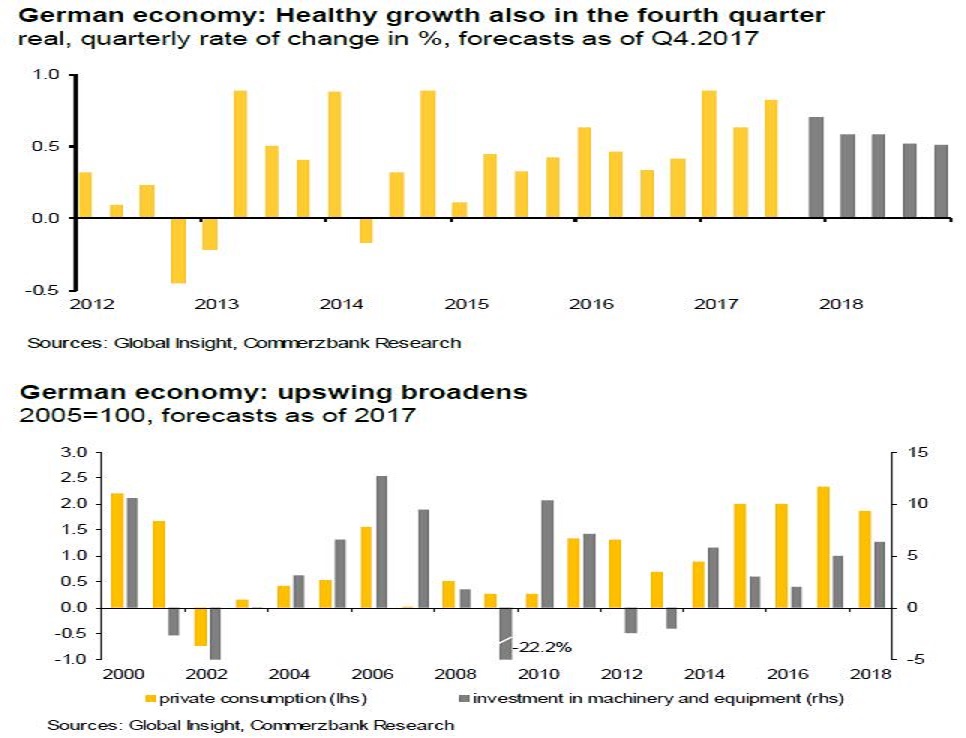
The German economy is expected to grow by 2.5 percent this year after having expanded strongly in 2017 at an expected rate of 2.3 percent. Private consumption is likely to remain the main driver of the economy, benefitting from rising employment and decent wage increases. In addition, the improving investment in machinery and equipment is also expected to widen the upswing, Commerzbank reported.
The upturn in the global economy, favorable financing conditions and, last but not least, increasing capacity bottlenecks mean that companies are once again investing more. Further impetus is likely to come from construction investments, fuelled by the high demand for real estate.
The German economy has grown far more over the past ten years than the average of other eurozone countries, but this situation will come to an end in the longer term. One of the pillars of German success in recent years – its strong price competitiveness – is wobbling. German unit labor costs, for example, has been rising since 2011 more than the average in other eurozone countries.
Meanwhile, Germany has lost attractiveness as a business location in past years. Its distance from a hypothetical top location in the EU has steadily increased. Especially eastern European countries have implemented much more reform. Germany as a business location has slipped to rank 16 out of 28 EU countries.
Lastly, FxWirePro has launched Absolute Return Managed Program. For more details, visit http://www.fxwirepro.com/invest







