


 Autodesk Beats Q1 Estimates, Acquires MaintainX for $3.6 Billion
  SoftBank to Invest €75 Billion in France AI Data Center Expansion by 2031
  Marvell Stock Rises After Record Q1 FY2027 Earnings Fueled by AI Demand
  Kentucky School District Secures $27 Million in Social Media Addiction Lawsuit Settlements
  EU Antitrust Probe Could Lead to Massive Google Fine Under DMA Rules
  Xiaomi Shares Drop After Weak Q1 Earnings Amid Rising Smartphone Costs
  Salesforce Q1 FY2027 Earnings Beat Expectations Despite Soft Q2 Revenue Outlook
  Samsung Workers Approve Wage Deal, Avoiding Major Strike and Boosting Chip Supply Confidence
  Samsung to Invest $1.5 Billion in Vietnam Semiconductor Testing Plant by 2027
  Synopsys Q2 FY2026 Earnings Beat Driven by AI and Semiconductor Demand
  MongoDB Q1 FY2027 Earnings Beat Expectations, Raises Full-Year Outlook
  Sable Offshore Wins Key Court Battle Over California Oil Pipeline
  Trump Adviser’s Investment in Thrive Capital Draws Scrutiny Over Federal Contracts
  Morgan Stanley Names Top AI Security and Data Center Stocks for 2026
  Macquarie Names Five Taiwan AI Stocks Set to Benefit From Data Center Growth in 2026
  Mega IPOs Like SpaceX and OpenAI Could Reshape S&P 500 and Nasdaq 100 Portfolios in 2026
  DOJ Investigates Group Linked to Reid Hoffman Over E. Jean Carroll Lawsuit Funding


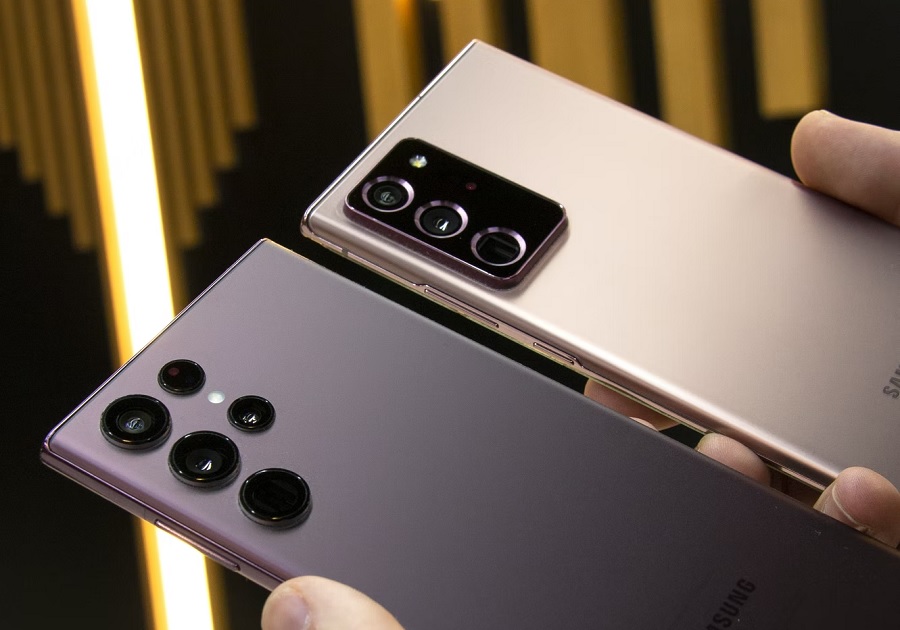
Samsung might end up abandoning its own mobile chipset for the Galaxy S23 series next year. Analyst Ming-Chi Kuo reported that the South Korean tech giant is considering exclusively using the next-gen Snapdragon SoC for a good reason.
For years, Samsung shipped the latest Galaxy S series phones with different chipsets depending on the market. Some regions have been getting the version powered by the latest flagship Snapdragon mobile platform, while Samsung sells versions with the Exynos counterpart in other markets. But that could be changing in the coming year, as Kuo reported, "Qualcomm will likely be the sole processor supplier for Samsung Galaxy S23."
The analyst noted that Qualcomm already had the larger share in supplying SoCs for the Galaxy S22 lineup, accounting for 70 percent of units shipped worldwide. However, with its next premium mobile platform (like with model number SM8550) to be produced using TSMC's 4nm process, Samsung is expected to abandon the Exynos 2300 in the Galaxy S23 phones.
Kuo's report, shared in a series of Twitter posts, suggests that Samsung will still be making the Exynos 2300 using its own 4nm process. However, the analyst said "it can't compete with SM8550 in all aspects," making it likely for Samsung to exclusively use Qualcomm's SM8550 chip for the Galaxy S23 phones.
TSMC's 4nm design is expected to give Qualcomm's upcoming SoC, which could be named Snapdragon 8 Gen 2, notable upgrades in terms of performance and power efficiency compared to its predecessors Snapdragon 8 Gen 1 and Snapdragon 8+ Gen 1. It then seems like the best course for Samsung to only use Qualcomm's upcoming chip for the Galaxy S23 series. This change, should Samsung implement it, would mean that consumers in Europe, Africa, and some Asian markets will finally get a Snapdragon-powered Galaxy S device.
The analyst added that Qualcomm could then be on track to expand its market share in premium Android phones to be shipped next year, thanks to the SM8550 chip. "The economic recession affects the high-end market less, so the market share gain will significantly benefit Qualcomm and TSMC," Kuo said.
Photo by Zana Latif on Unsplash







