


 Neuralink Plans High-Volume Brain Implant Production and Fully Automated Surgery by 2026
  Jared Isaacman Confirmed as NASA Administrator, Becomes 15th Leader of U.S. Space Agency
  Trump Signs Executive Order to Boost AI Research in Childhood Cancer
  Blue Origin New Glenn Explosion Could Delay Launch Operations Until 2028
  NASA Artemis II: First Crewed Moon Mission Since Apollo Takes Four Astronauts on 10-Day Lunar Journey
  SpaceX Pivots Toward Moon City as Musk Reframes Long-Term Space Vision
  Trump and Merck KGaA Partner to Slash IVF Drug Costs and Expand Fertility Coverage
  Blue Origin’s New Glenn Achieves Breakthrough Success With First NASA Mission
  Cogent Biosciences Soars 120% on Breakthrough Phase 3 Results for Bezuclastinib in GIST Treatment
  SpaceX Delays Starship V3 Launch Ahead of Potential Record IPO
  Trump Administration Releases New UFO Files and Apollo Mission Records
  Tabletop particle accelerator could transform medicine and materials science


 Add as a preferred source on Google
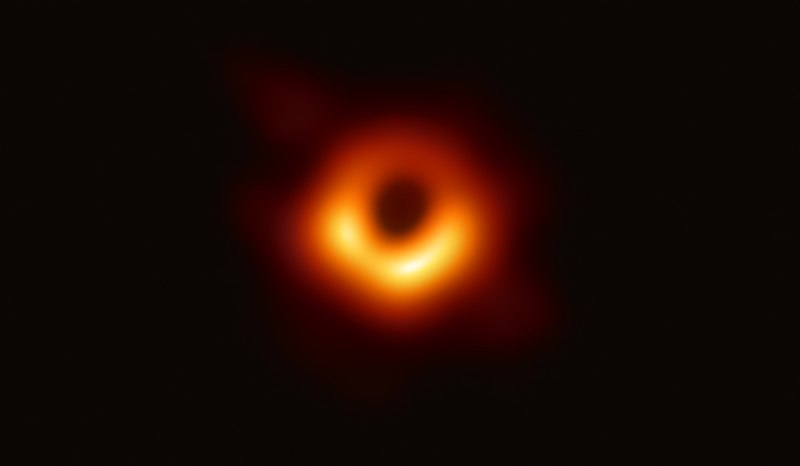
It seems that there is more information to be learned from the black holes that are known to consume everything they come into contact with. Recently, it was theorized that there are exoplanets forming around massive black holes in space.
A new study, Space.com reports, finds that thousands of exoplanets may be forming around supermassive black holes, which are found at the heart of many galaxies in the universe. According to Kagoshima University astrophysicist and the study’s lead author Keiichi Wada, these exoplanets are not just orbiting around the stars, but also around the black holes.
It bears noting that there are a lot of supermassive black holes that are quiet. One example is Sagittarius A*, which is four million times bigger than the sun.
When new stars form, the surrounding clouds of gas and dust break away and form disks. Within these disks, called protoplanetary disks, new planets form, as implied by previous research. This is due to the gravity pulling mounds of matter together into something much larger. But it seems like stars are not the only ones who can be able to produce these protoplanetary disks as even black holes seem to be able to form exoplanets.
Wada goes on to explain that with the appropriate conditions, exoplanets could be formed around very harsh environments such as black holes. With this in mind, he says that “this could open a new field in astronomy.”
The scientists then looked into the disks surrounding the supermassive black holes that are in the center of the galaxies. As these disks are large in size, the planets that can form can be potentially large as well.
National Astronomical Observatory professor Eiichiro Kokubo shared that “tens of thousands of planets with 10 times the mass of Earth could be formed around 10 light-years from a black hole… Around black holes, there might exist planetary systems of astonishing scale.” To note, a single disk around a supermassive black hole can potentially have a mass that is 100 times larger than the sun. This would be a billion times larger than a protoplanetary disk.
With this in mind, scientists find that over the course of hundreds of millions of years, this kind of material will eventually turn into planets.







