


 U.S.-India Trade Framework Signals Major Shift in Tariffs, Energy, and Supply Chains
  Anutin’s Bhumjaithai Party Wins Thai Election, Signals Shift Toward Political Stability
  Trump Administration Appeals Court Order to Release Hudson Tunnel Project Funding
  Trump Signs Executive Order Threatening 25% Tariffs on Countries Trading With Iran
  New York Legalizes Medical Aid in Dying for Terminally Ill Patients
  Trump’s Inflation Claims Clash With Voters’ Cost-of-Living Reality
  Japan Election 2026: Sanae Takaichi Poised for Landslide Win Despite Record Snowfall
  Jack Lang Resigns as Head of Arab World Institute Amid Epstein Controversy
  Federal Judge Restores Funding for Gateway Rail Tunnel Project
  Bangladesh Election 2026: A Turning Point After Years of Political Suppression
  Israel Approves West Bank Measures Expanding Settler Land Access
  Ghislaine Maxwell to Invoke Fifth Amendment at House Oversight Committee Deposition
  India–U.S. Interim Trade Pact Cuts Auto Tariffs but Leaves Tesla Out
  Pentagon Ends Military Education Programs With Harvard University
  Trump Backs Nexstar–Tegna Merger Amid Shifting U.S. Media Landscape
  Netanyahu to Meet Trump in Washington as Iran Nuclear Talks Intensify


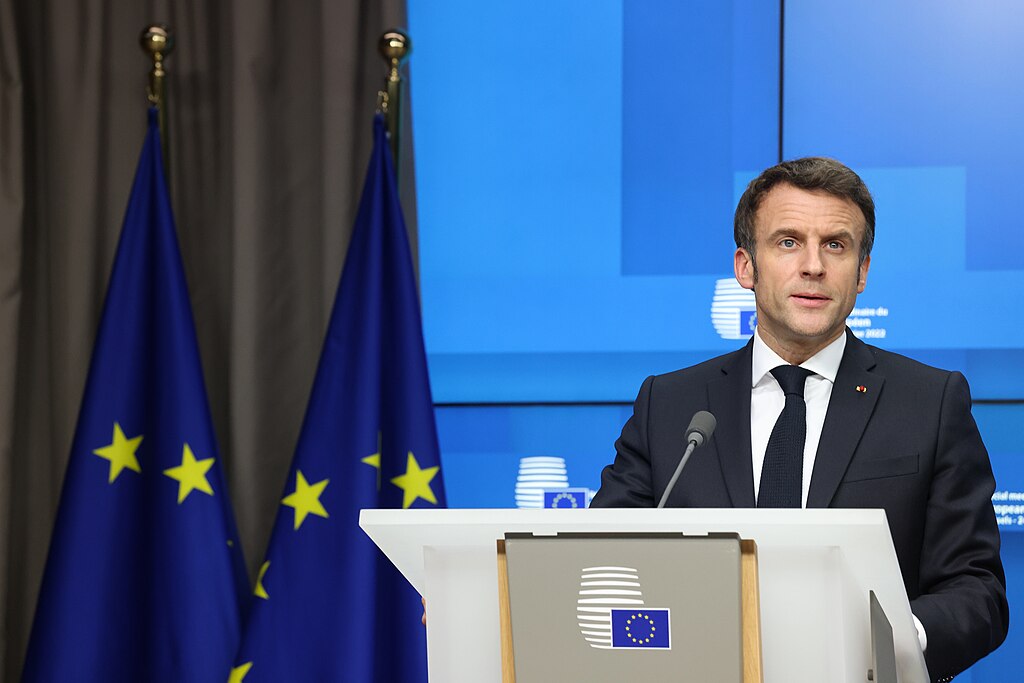
European leaders gathered at the World Economic Forum in Davos are seeking to project unity amid growing tensions with U.S. President Donald Trump, whose renewed push to acquire Greenland and impose tariffs on European allies has unsettled global markets and policymakers. The debate has reignited concerns over trade wars, geopolitical stability, and Europe’s strategic independence, while also exposing divisions within the European Union on how best to respond to Washington.
French President Emmanuel Macron delivered one of the strongest messages, warning that Europe must not submit to “the law of the strongest.” He described it as “crazy” that the EU was even considering deploying its anti-coercion instrument against the United States, stressing that Europe should defend its industries and refuse a global order based on power rather than rules. Macron also suggested that Trump’s unpredictable policies could create opportunities for Europe, arguing that the EU’s commitment to rule of law and predictability remains undervalued by markets.
European Commission President Ursula von der Leyen echoed the call for independence, saying the speed and scale of global change have pushed Europe toward a new consensus on self-reliance. Belgium’s Prime Minister Bart De Wever said the EU was at a crossroads and urged member states to stand together, warning that appeasing Trump over Ukraine had left Europe in a weak position. Swedish Deputy Prime Minister Ebba Busch added that flattery would not work with Trump, insisting the EU must be ready with firm trade retaliation.
The tension escalated after Trump announced tariffs on European imports from countries opposing U.S. control of Greenland, an autonomous Danish territory. European governments argue such tariffs would violate a trade deal reached last year and are preparing to discuss retaliation at an emergency summit in Brussels. However, some CEOs and senior bankers in Davos cautioned that Europe’s response appears emotional rather than pragmatic, urging leaders to focus on negotiation despite Trump’s confrontational style.
Meanwhile, Ukraine remains central to discussions. President Volodymyr Zelenskiy said he would only attend meetings in Davos if the U.S. was prepared to commit to security guarantees and a post-war reconstruction plan, while calling for stronger pressure on Russia after renewed attacks on Ukrainian infrastructure.













