


 Reflection AI Eyes $25 Billion Valuation in Massive $2.5 Billion Funding Round
  Sonova Shares Slip as Hearing Aid Giant Lowers Growth Outlook and Plans Sennheiser Exit
  Henkel in Advanced Talks to Acquire Olaplex at $2 Per Share
  Air Canada Express Crash at LaGuardia: Controller Distracted by Prior Emergency
  SK Hynix Eyes Up to $14 Billion U.S. IPO to Fund AI Chip Expansion
  Amazon's AWS Could Hit $600 Billion in Revenue as AI Reshapes Cloud Growth
  Explosion and Fire Erupt at Valero Oil Refinery in Port Arthur, Texas
  Berkshire Hathaway and Tokio Marine Form Major Strategic Insurance Partnership
  OpenAI Pulls the Plug on Sora, Ending $1 Billion Disney Partnership
  Nanya Technology Shares Surge 10% After $2.5 Billion Private Placement from Sandisk and Cisco
  CK Hutchison's Panama Ports Dispute Escalates as Arbitration Claims Surpass $2 Billion
  Goldman Sachs Raises ECB Rate Hike Forecast Amid Persistent Energy-Driven Inflation
  Alibaba Bets on AI Agents to Unify Its Vast Digital Ecosystem
  Apple Defies China's Smartphone Slump with Strong Early 2026 Sales
  Nintendo Switch 2 Production Cut as Holiday Sales Miss Targets
  Delivery Hero Sells Taiwan Foodpanda to Grab for $600 Million in Debt-Reduction Push


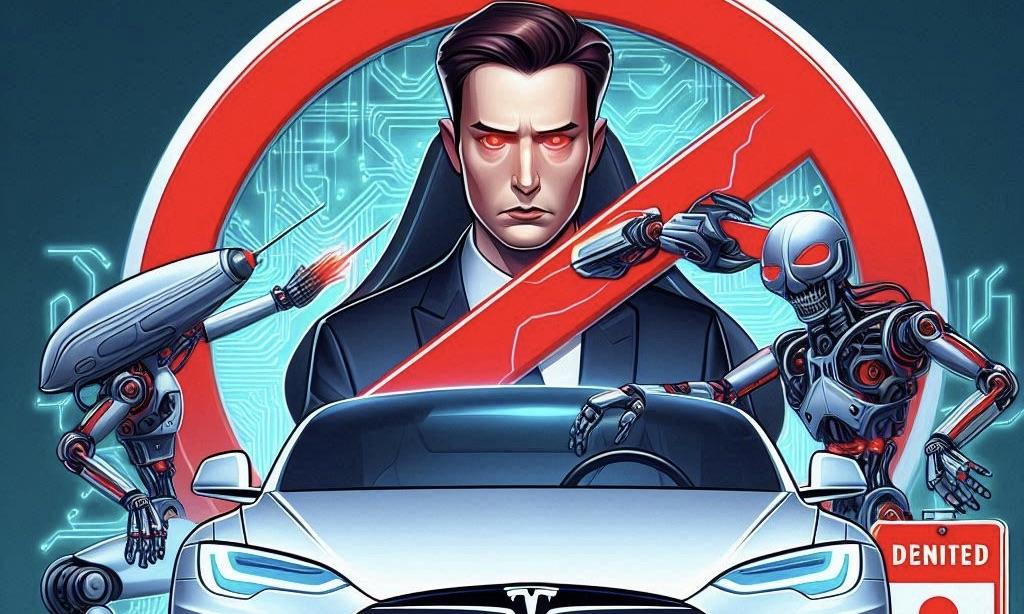
Elon Musk has publicly dismissed a Wall Street Journal report suggesting Tesla will license AI models from his startup, xAI, to aid in Full Self-Driving (FSD) development. Musk confirmed that Tesla has learned from xAI engineers but clarified no licensing is necessary.
Musk Denies Tesla Will License xAI Models for Full Self-Driving, Refutes WSJ Report Claims
Elon Musk has refuted the assertions of a recent Wall Street Journal report that Tesla and xAI have engaged in discussions regarding a potential partnership. The report indicated that the electric vehicle manufacturer would license the AI startup's models to assist in developing technologies such as Full Self-Driving (FSD). Tesla does not require any licensing from xAI, according to Musk.
The WSJ reported that the proposed partnership between Tesla and xAI has been presented to investors, citing sources who are reportedly knowledgeable about the situation. Once the agreement is finalized, Tesla will license xAI's artificial intelligence models to assist in the operation of FSD and allocate a portion of FSD's revenue to xAI.
Musk Clarifies Differences Between Tesla and xAI Models, Denies Licensing Plans for Optimus and FSD
The Journal's report also stated that xAI would develop additional features for Tesla's vehicles, including software to operate Optimus, the company's humanoid robot, and a voice assistant similar to Siri.
Musk stated in a post on X that the WSJ report's overarching claim needs to be revised, even though he still needs to review the report in its entirety and all of its points. Musk acknowledged that Tesla has gained significant knowledge from its discussions with the engineers of xAI. However, licensing any products from an AI startup is unnecessary.
According to Teslarati, Musk also clarified that the AI models being developed by xAI and Tesla exhibit significant disparities. xAI's models are enormous and are incapable of operating on Tesla's electric vehicles. Conversely, Tesla's models possess an exceptionally dense intelligence due to their emphasis on real-world driving.
“I haven’t read the article, but the above is inaccurate. Tesla has learned a lot from discussions with engineers at xAI that have helped accelerate achieving unsupervised FSD, but there is no need to license anything from xAI.”
“The xAI models are gigantic, containing, in compressed form, most of the human knowledge, and couldn’t possibly run on the Tesla vehicle inference computer, nor would we want them to. The Tesla AI models have incredibly ‘dense’ (in a good way, lol) intelligence, as they compress video of reality into driving commands, but must operate on a ~300W computer with memory size and bandwidth far lower than, say, an H100 GPU.
“Tesla real-world AI also has a vastly larger context size than an LLM, as the combined video history from all cameras is several gigabytes in size,” Musk wrote.













