


 Israel Approves West Bank Measures Expanding Settler Land Access
  Trump Slams Super Bowl Halftime Show Featuring Bad Bunny
  Trump Backs Nexstar–Tegna Merger Amid Shifting U.S. Media Landscape
  U.S.-India Trade Framework Signals Major Shift in Tariffs, Energy, and Supply Chains
  Anutin’s Bhumjaithai Party Wins Thai Election, Signals Shift Toward Political Stability
  Trump’s Inflation Claims Clash With Voters’ Cost-of-Living Reality
  Bangladesh Election 2026: A Turning Point After Years of Political Suppression
  Antonio José Seguro Poised for Landslide Win in Portugal Presidential Runoff
  India–U.S. Interim Trade Pact Cuts Auto Tariffs but Leaves Tesla Out
  China Warns US Arms Sales to Taiwan Could Disrupt Trump’s Planned Visit
  Ghislaine Maxwell to Invoke Fifth Amendment at House Oversight Committee Deposition
  Netanyahu to Meet Trump in Washington as Iran Nuclear Talks Intensify
  Trump Congratulates Japan’s First Female Prime Minister Sanae Takaichi After Historic Election Victory
  Jack Lang Resigns as Head of Arab World Institute Amid Epstein Controversy
  Bosnian Serb Presidential Rerun Confirms Victory for Dodik Ally Amid Allegations of Irregularities
  Japan Election 2026: Sanae Takaichi Poised for Landslide Win Despite Record Snowfall
  Trump Administration Appeals Court Order to Release Hudson Tunnel Project Funding


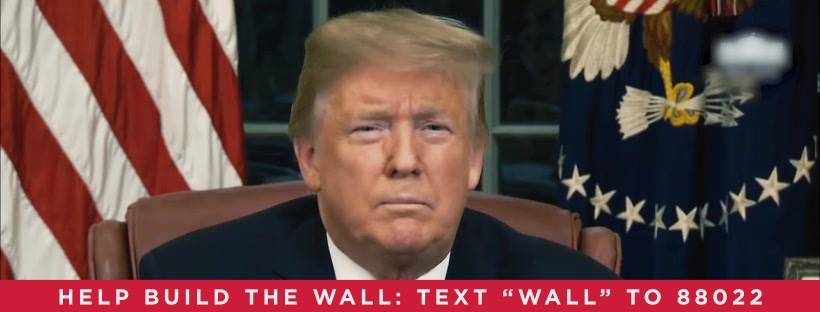
President Donald Trump signed phase one of the U.S. trade deal which China on Wednesday, January 15, finally ending the almost two-year trade war between the two largest economies of the world.
The trade war’s ending should be good news for farmers and a positive development for Donald Trump’s 2020 election efforts. “Together we are righting the wrongs of the past and delivering a future of economic justice and security,” Trump said from East Room of the White House where the signing took place, according to CNN. “Most people thought this could never happen.”
Donald Trump’s counterpart China's President Xi Jinping was not able to attend the signing but sent a letter through Vice Premier and top negotiator Liu He. In the letter, Xi noted that the agreement is proof that differences between China and the U.S. could be resolved through dialogue.
In his letter, Xi also expressed optimism for future trade relations between the two countries and said that the agreement is “good for China, the US, and the whole world.” He also hoped that the U.S. would fairly treat Chinese firms doing business in America.
Under the agreement, China commits to buying at least $200 billion worth in U.S. exports within the next two years, according to CNBC. These include “manufactured goods, food, agricultural, energy products and services.” Based on White House estimates, China will buy $35 billion in services, $53 billion in energy, $80 billion in manufactured goods and $32 billion in agricultural exports.
There is also a set minimum amount of agricultural products that China will buy from the U.S. each year. For the first year, China has promised to buy$12.5 billion in agricultural products and another $19.5 billion in the second year. The deal could help stop the U.S. declining agricultural export since the trade war started.
“China was once the largest market for U.S. agricultural products but has dropped to fifth largest since retaliatory tariffs were introduced,” American Farm Bureau Federation President Zippy Duvall told CNN. “This agreement will help turn around two years of declining agricultural exports.”
For its part, the U.S. will reduce tariffs from 15 percent to 7.5 percent on $120 billion worth of Chinese products.













