


 Wistron Opens $700M Texas AI Factory to Build Nvidia Superchips in U.S.
  Samsung Eyes Up to $1.14 Billion Investment in AI Startup Mistral
  Rubio Rejects AI ‘Kill Switch’ Claims as U.S. Defends American Technology Abroad
  OpenAI AI Agent Reportedly Breached Hugging Face, Raising AI Safety Concerns
  Macquarie Names Greg Ward as CEO, Signaling Stability and Strategic Continuity
  Scandinavian Tobacco Group Sells BREAK and Moro Brands to Japan Tobacco for €176 Million
  Domino’s Weighs Appeal After Australian Court Rules Workers Were Misled on Pay
  Alaska Air Q3 Outlook Misses Estimates as Higher Fuel Costs Weigh on Profit Forecast
  SAP Beats Q2 Revenue Estimates as Cloud Backlog and Business AI Demand Drive Growth.
  Intel Stock Slips After Earnings Rally Despite Strong AI-Driven Revenue Growth
  Cathay Pacific Sees H1 Profit Surge on Strong Travel Demand
  SpaceX Stock Slump Wipes Out Nearly $700 Billion From Elon Musk’s Paper Wealth
  Nike Shifts China Online Sales Strategy to Boost Brand and Fight Local Rivals
  Australia ASIC Tightens Auditor Oversight After KPMG Leak Scandal
  Wistron Opens $700M Texas AI Factory to Build Nvidia GB300 Superchips
  GE Vernova Q2 Revenue Tops Estimates as Earnings Miss, Shares Slide Despite Higher 2026 Outlook


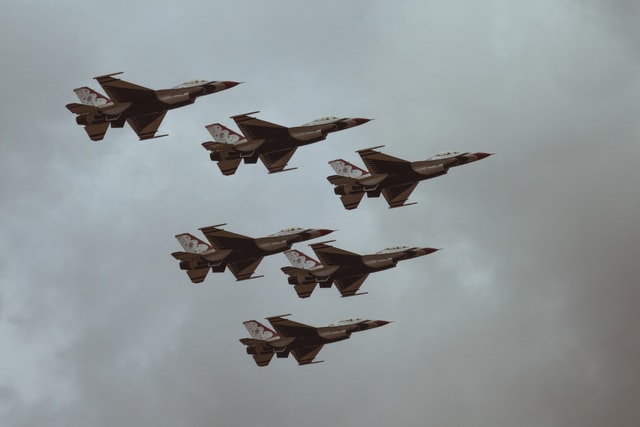
It was announced recently that Elbit has handed over five swarms of drones to the UK Ministry of Defence for use in their military operations. But the UK isn’t the only country spending money on its military. In fact, budgets for defence are going up around the world. What are these countries and militaries buying? What are the hottest gadgets to hit the battlefield? We’re looking at the most impressive tech that militaries just had to have. Read on for all the details.
Unmanned vehicles
As mentioned, Elbit has offered the UK Ministry of Defence five swarms of drones for their use, which is bound to aid in military operations. Drones and other unmanned vehicles are hugely beneficial in gaining information about any given situation. Drones will fly overhead and scope out an area, finding who the military is looking for with infrared and night vision, mapping out an area for exits or hiding places, and offering lots of other information about the situation unfolding without the need for soldiers to physically getting in the middle of it.
Helmet mounted displays
To really feel like a pilot from Star Wars, there are helmet-mounted displays hitting the military market. Displays on a jet's windscreen, as part of a tank’s interior, or otherwise incorporated into other military vehicles is nothing new, and neither is the idea of wearables. Soldiers are already known to have military-exclusive tablets mounted on their arms, consistently feeding them information and allowing them control of gadgets like bomb disposal robots and drones.
But helmet displays are the next step. These helmets offer more than a bit of shade in the sun. They offer information, like extra aiming systems, pilot monitoring, mapping of geographical areas with tactical mission data and more.
Cyber intelligence
Cyber intelligence is a big, and growing, aspect of the military. If James Bond was actually about spies today, we’d probably have an entire franchise of a hoodie-cladded spy sitting behind a computer, perhaps with a lifetime supply of energy drinks nearby.
So much of our lives are on the internet, stored in clouds, or otherwise contained inside a connected machine, and enemies know this. Cyber intelligence is being developed looking to monitor, intercept, investigate and otherwise manage knowledge that comes in. Meanwhile, cyber defence systems are consistently being developed and updated to counteract those who would try and access our intelligence caches.
Space cameras
And just to make things even more interesting, a lot of military budgets are being spent on space endeavours. Mainly for the sake of surveillance and security, there are a number of cameras being sold in order to be fitted into surveillance satellites.
These cameras would make you worried about sorting that wedgie in public. Depending on the function of the camera, the high-resolution cameras offer real-time footage of broad geographical areas, observation of Earth as a planet, or mapping for the sake of the military or civilian applications. Some have remote sensing, others have remote sensing, and others have a massive range of features that will assure you that we are living in the space age.
This article does not necessarily reflect the opinions of the editors or management of EconoTimes







