


 Lam Research Expands AI-Powered Semiconductor Tools and Arizona Operations
  SpaceX IPO Could Become Largest in History with $1.8 Trillion Valuation Target
  Blue Origin New Glenn Rocket Explodes During Launch Pad Test, Delaying Space Ambitions
  Marvell Stock Rises After Record Q1 FY2027 Earnings Fueled by AI Demand
  Morgan Stanley Names Top AI Security and Data Center Stocks for 2026
  Huawei Chip Breakthrough Sparks Rally in Chinese Semiconductor Stocks
  Samsung to Invest $1.5 Billion in Vietnam Semiconductor Testing Plant by 2027
  PDG Explores $1 Billion Sale of China Data Center Assets
  Mega IPOs Like SpaceX and OpenAI Could Reshape S&P 500 and Nasdaq 100 Portfolios in 2026
  Meta AI Push Could Add $26 Billion in Revenue by 2027, Wolfe Research Says
  Snowflake Stock Soars 30% After Q1 Earnings Beat and Major AWS AI Partnership
  Elon Musk Explores Possible Tesla-SpaceX Merger Amid Growing AI Investments
  Xiaomi Shares Drop After Weak Q1 Earnings Amid Rising Smartphone Costs
  HP Q2 2026 Earnings Beat Expectations Despite Memory Chip Pressure
  Autodesk Beats Q1 Estimates, Acquires MaintainX for $3.6 Billion
  US Quantum Stocks Surge After $2 Billion Government Investment
  SK Hynix Joins $1 Trillion Club as AI Chip Demand Fuels Stock Surge


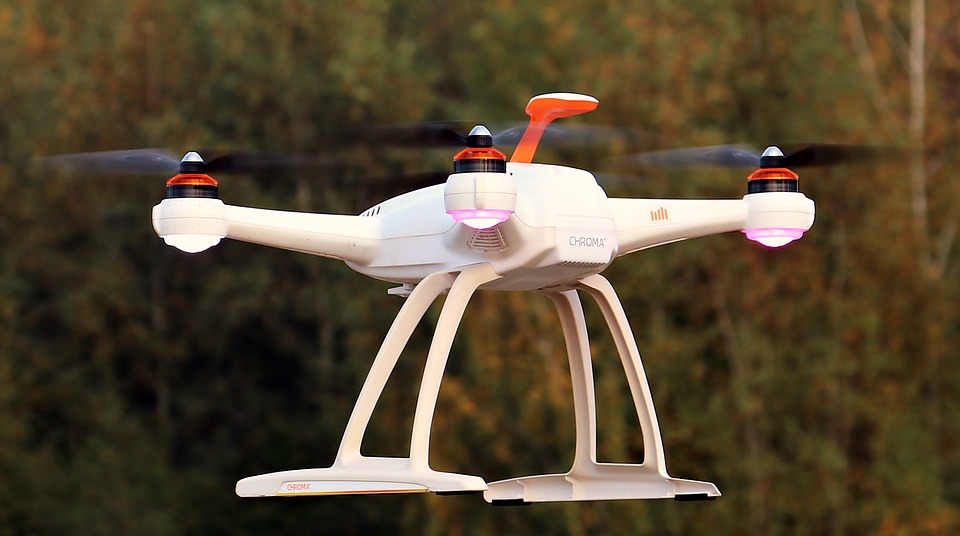
It has long been speculated that drones can be used for warfare, but a recent bombing of a Russian base in Syria and a naval base at Tartus proves that this concept is already a reality. These drones are not the high-tech, chrome weapons envisioned in sci-fi movies either. They were apparently cobbled together from spare parts that can be ordered off the internet.
Syrian rebels have actually been using drones as weapons in the region for some time, but this is the first time that the unmanned aerial vehicles (UAV) were used to attack Russia’s main base in the country, CBS News reports. All in all, 13 drones were used to launch the two attacks, which resulted in no casualties.
Seven of the drone swarms were shot down during the attack while the rest were forced to land via electronic jammer. Russia actually posted photos of the drones on its Facebook page, while also providing details on what happened along with speculations as to the culprits.
“Engineering decisions applied by terrorists while attacks on the Russian objects in Syria could be received from one of countries with high-technological capabilities of satellite navigation and remote dropping control of professionally assembled improvised explosive devices in assigned coordinates,” the post reads.
Apparently, the drone launched from the Idlib province, in a village called Muwazarra. This makes the situation tricky since the area is considered a “de-escalation zone,” after Russia made a deal with Turkey and Iran, CNBC reports. Russia is basically blaming the rebels located in the region, who happen to be receiving support from Turkey.
Turkish officials were already sent a complaint while Russian authorities conduct its investigation into the attack. While the Asian nation would certainly have advanced enough capabilities to provide technology that can be used to launch a drone swarm attack, it’s worth noting that the same can be said about any place with access to the internet.
The more frightening aspect of this development is how anyone can use drones to launch an attack. The technology to build them is readily accessible and the same goes for producing IEDs.







