


 Agentic AI Boom to Drive Massive Growth in CPU Market, UBS Says
  Anthropic’s $1.5B AI Venture with Wall Street Firms Targets Private Equity Market
  Gold Prices Rise as Weaker Dollar and U.S.-Iran Peace Hopes Boost Demand
  Meta Raises 2026 Capex Outlook Amid AI Spending Surge, Shares Drop After Earnings
  Oil Prices Surge as U.S.-Iran Conflict Threatens Strait of Hormuz Supply Route
  Japan Tech Stocks Surge as AI Optimism Lifts SoftBank, Chipmakers
  Hua Hong Semiconductor Stock Surges to Multi-Year High Amid AI Boom
  Wall Street Hits Record High as AI Chip Stocks and Strong U.S. Jobs Data Boost Markets
  Apple Explores Intel and Samsung Partnerships to Diversify Chip Supply Chain
  China Export Growth Surges in April as Global Buyers Rush to Secure Supplies
  Supermicro Forecasts Strong Q4 Revenue Growth as AI Server Demand Surges
  Intel Emerges as Key Contender in Apple’s Chip Manufacturing Strategy Shift
  Arm Stock Drops Despite Strong AI Chip Demand and Earnings Beat
  Judge Delays SEC Settlement With Elon Musk Over Twitter Stock Disclosure Case
  US-Iran Ceasefire Under Pressure as Fresh Strait of Hormuz Clashes Shake Oil Markets
  Saudi Aramco Q1 Profit Jumps 25% as Strait of Hormuz Crisis Reshapes Oil Exports
  Wall Street Futures Edge Higher as Iran Tensions and AI Optimism Shape Markets


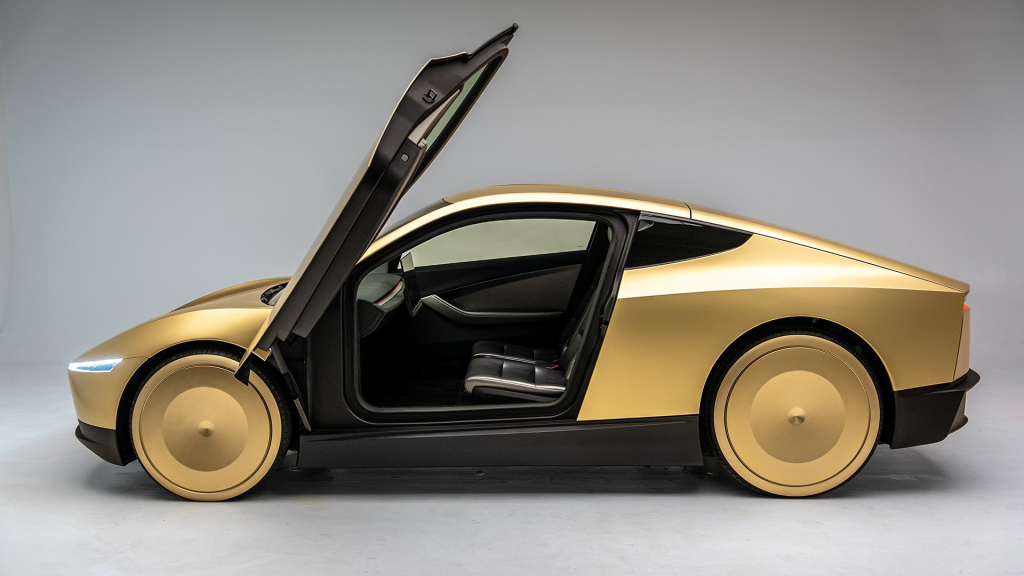
Tesla’s Cybercab, unveiled by the company’s lead engineer, pushes self-driving innovation with a compact two-seat design, half the parts of a Model 3, and impressive storage capacity. This efficiency-focused robotaxi sets a new standard for rideshare technology.
Tesla Cybercab's Two-Seat Design: A Solution for Efficiency
According to Teslarati, several intriguing details on the forthcoming autonomous robotaxi were recently divulged by Eric E., Lead Engineer at Tesla Cybercab. These encompass the Cybercab's two-seat layout, its effectiveness, and its unexpectedly sparse component count.
Because most kilometers driven today are with just one or two people, the Lead Engineer for Tesla's Cybercab says that the Cybercab is a two-seater. If more people need a robotaxi, Tesla could easily accommodate them with its other, larger vehicles, such as the Model Y.
“One of the questions we get constantly with this product is why is it two seats? There’s a couple reasons why it’s two seats. One is 82% of miles driven today are with two or fewer passengers. This product is meant to be of extreme efficiency. We worked really hard to deliver that. And the efficiency isn’t just on an energy consumption base. It’s on the concept of cleaning, it’s also on the concept of reliability and service as well,” Eric E. pointed out.
Half the Parts of a Model 3: Tesla’s Engineering Feat
Additionally, the Cybercab Lead Engineer clarified that the self-driving car will be manufactured with minimal components due to Tesla's emphasis on the robotaxi's efficiency.
Cybercab components are similar to those of a Model 3 sedan, according to Eric E. Considering the Model 3 is already among the most aerodynamic cars available, this is rather astounding.
“Two seats unlocks a lot of opportunity aerodynamically. It also means we cut the part count of Cybercab down by a substantial margin. We’re gonna be delivering a car that has roughly half the parts of Model 3 today. It also means when you need to clean the car as a rideshare asset, you really don’t have to worry about navigating multiple doors, multiple seats. You really just have what looks like a bench seat, easy to clean automatically,” the Tesla engineer observed.
Spacious Trunk Defies the Cybercab’s Compact Size
Other noteworthy design details of the Cybercab were also revealed by Eric E., including the fact that, for such a diminutive robotaxi, it has an enormous trunk.
A number of golf bags, two standard carry-ons, and two standard checked bags can all fit in the Cybercab's trunk simultaneously. It can also accommodate a foldable wheelchair and, depending on their size, a few bicycles.







