


 Oil Prices Rise as Iran Holds Firm on Strait of Hormuz Deal
  China, US Extend Trade Truce Through January 10 After Trump-Xi Summit
  BlackRock’s Rick Rieder Favors Bonds Over Stocks as Treasury Yields Surge
  Fed Unveils Stablecoin Rules Under GENIUS Act
  BOJ Set for 25-Basis-Point Rate Hike as Yen Weakness Fuels Inflation
  Fed’s Hammack Says Bond Yield Surge Is Not Driven by Inflation Fears
  ECB May Stop Rate Hikes After December, Capital Economics Says
  Asian Chip Stocks Tumble as OpenAI Safety Pause Sparks AI Growth Concerns
  Japan Warns Markets Over Yen Weakness
  Yen Sinks as BOJ Rate Hike Fails to Impress Markets
  RBI Uses $10 Billion Currency Swaps to Drain Excess Rupee Liquidity
  BOJ Flags Import Costs and Yen Shocks as Persistent Inflation Risks


 Add as a preferred source on Google
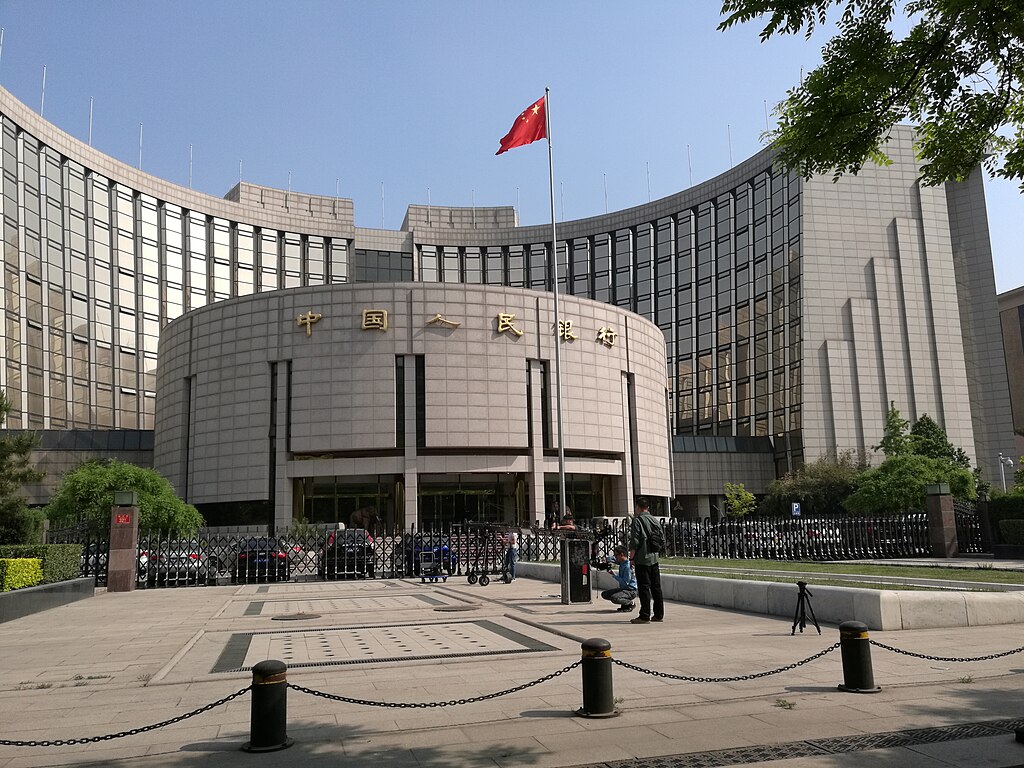
China’s central bank left its benchmark lending rates unchanged in June, marking the 13th consecutive month without an adjustment and reinforcing expectations that policymakers are not rushing to introduce additional monetary stimulus despite uneven economic growth.
The People’s Bank of China (PBOC) maintained the one-year Loan Prime Rate (LPR) at 3.00% and the five-year LPR at 3.50% on Monday. The decision was widely anticipated, with all 30 participants in a recent Reuters survey forecasting no change to either benchmark rate.
The latest move highlights Beijing’s cautious approach to monetary policy as the Chinese economy continues to show mixed signals. While the manufacturing sector has benefited from stronger-than-expected exports, domestic demand remains weak due to the prolonged downturn in the property market. The divergence between export-driven industrial activity and sluggish consumer spending has created a two-speed growth environment in the world’s second-largest economy.
Recent lending data also points to ongoing challenges. New bank loans in May increased less than analysts expected after contracting in the previous month, reflecting continued weakness in household borrowing and real estate-related demand.
PBOC Governor Pan Gongsheng recently emphasized that slower loan growth should not necessarily be viewed negatively. Speaking at the Lujiazui Forum, he noted that bond and equity financing have become increasingly important sources of funding, describing the trend as part of China’s broader economic restructuring and the emergence of new growth drivers.
Market analysts believe the central bank will likely maintain its current stance through the remainder of the year. Jing Sima, chief strategist at BCA Research, said the primary challenge facing China is not a lack of liquidity but insufficient demand for credit. As a result, he expects fiscal support to play a larger role in boosting growth while the PBOC remains accommodative without implementing outright interest rate cuts.
Similarly, Ho Woei Chen, economist at UOB, said future policy measures are likely to remain gradual unless economic growth falls significantly below the government’s target range of 4.5% to 5.0%.
The decision to keep China’s Loan Prime Rates unchanged underscores policymakers’ confidence that targeted support and fiscal measures, rather than aggressive rate cuts, will be the preferred tools for sustaining economic growth and stabilizing financial markets in 2025.







