


 Moonshot Launches Kimi K3, China's Largest Open-Source AI Model
  Hyundai Takes Full Control of Boston Dynamics to Accelerate Humanoid Robot and AI Strategy
  Nvidia Partners With Fanuc and Yaskawa to Accelerate AI Robotics in Japan
  Stripe, Advent Offer Over $53 Billion to Acquire PayPal in Major Fintech Deal
  Apple Intelligence China Approval Lifts Alibaba and Baidu Shares
  Seven & i Eyes Żabka Stake in Major European Expansion Push
  Sodexo Unveils Shift & Grow 2030 Strategy, Targets Over 5% Revenue Growth by Fiscal 2030
  Volkswagen Launches €28,000 ID. Cross EV as Europe’s Electric Vehicle Demand Accelerates
  Airbus Signs Cloud Deal With Scaleway to Power Secure AI and Defense Applications
  Sam Altman Admits OpenAI Missteps, Promises Major AI Comeback Focused on User Freedom
  UBS Boosts China Tech Bets, Adds Kuaishou and Meituan to Focus List
  NY Times Challenges Trump Administration Subpoenas Over Air Force One Report
  Jamie Dimon Warns Anthropic's Mythos AI Poses National Security Risks
  United Airlines Beats Q2 Earnings, Raises 2026 Profit Outlook Despite Higher Fuel Costs
  Netflix Stock Drops After Weak Q3 Outlook Overshadows Mixed Q2 Earnings
  Richemont Q1 Sales Beat Forecast as Cartier Demand Drives Strong Growth
  Eli Lilly Eyes AtaiBeckley Acquisition to Expand Psychedelic Mental Health Pipeline



In January, Alaska Airlines flight 1282 nearly fell out of the sky when it lost a door plug at an altitude of more than 10,000ft, leading to rapid decompression of the main cabin of the plane.
Although no one was killed, the incident happened after two similar Boeing-manufactured 737 Max planes crashed in 2018 and 2019, killing 346 people.
These crashes sparked investigations by the US Department of Justice (DoJ), leading to Boeing being charged with one count of conspiracy to defraud regulators in 2021.
The DoJ agreed not to prosecute Boeing if the firm promised to pay a US$243.6 million (£190 million) criminal fine and enter a three-year probationary period that involved enforcing a compliance and ethics programme. But the Alaska Airlines incident prompted the DoJ to reopen the case and has resulted in Boeing agreeing to plead guilty to the original charge and paying an additional US$243.6 million.
The US government is now in the position of having to decide whether to do business with a company that has admitted a felony. This is particularly ignominious for a country that routinely strips felons of their right to vote.
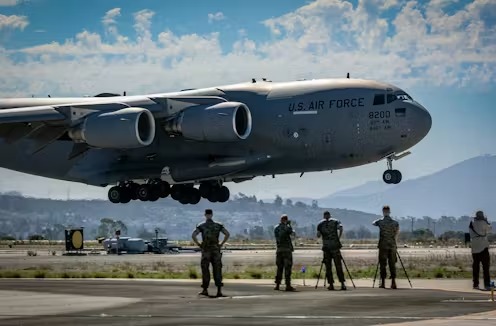
But apparently, the US government is willing to look the other way. In 2006, the US Air Force cited “compelling business interest” in letting the corporation settle criminal charges related to felony violations, which allowed Boeing to continue competing for defence contracts.
Boeing is not the only major corporation with a chequered history that the US government is willing to do business with. In 2008, Siemens pleaded guilty to routinely using bribes to secure public contracts but avoided a conviction, which allowed it to maintain its status as a “responsible contractor”.
Dependency runs deep
Pleading guilty to all sort of felonious acts, for the purpose of doing business with the US government, apparently does not make a corporation irresponsible. You might say some corporations are too big to fail because the government is far too dependent on them.
Path dependencies run deep, switching costs are far too high, and bilateral dependencies exist between these parties. For Boeing, being too big to fail means continuing to secure billions of dollars in defence contracts.
What does this mean for Boeing’s customers – both airlines and passengers? And, more importantly, will Boeing mend its ways? Its behaviour indicates that it has fallen into a confidence trap – since past risk-taking paid off, it seems to believe that continuing to do so in the future would also be lucrative.
Even when Boeing encountered clear signs that something was amiss – two planes that it manufactured crashed – it did not lead to soul-searching. Rather, the giant apparently continued to do business as usual including requesting safety exemptions from the US Federal Aviation Administration (FAA).
Not only is Boeing a major defence contractor, it is also part of a duopoly (with European rival Airbus), with orders secured for years into the future. Certainly, Airbus cannot simply ramp up production to grab more of the market share. Meanwhile, Boeing’s executives continue to be awarded tens of millions of dollars in remuneration.
Quite simply, there seems to be no real impetus for key decision-makers at Boeing to change their ways – they are paid handsomely for their public humiliation.
On the face of it, the terms of the present agreement are also not very different from the 2021 deal, except for third-party oversight (although observers await more details). But this oversight involves auditing Boeing’s safety and compliance practices, which is what the FAA is supposed to be doing routinely in any case.
In calling for third-party oversight, the DoJ does not seem to have much confidence in the FAA’s ability to monitor Boeing effectively. Perhaps this move marks the beginning of a new era of much more “privatised” regulatory oversight in aviation.
Are airlines worried? Some seem to be, and others are not. Emirates has warned Boeing that it must act to fix problems, and its president Sir Tim Clark had said that the airline would send its engineers to monitor quality.
United Airlines CEO Scott Kirby reportedly asked Boeing to stop making more advanced versions of the Max.
In contrast, Ryanair has expressed wholehearted support for Boeing. In fact, CEO Michael O’Leary reversed course from calling Boeing management “headless chickens” in 2022 to praising them in 2024 saying that safety was their “number one byword”.
But as these events unfold and the turmoil at Boeing continues, passengers are likely to face higher fares. Those wishing to avoid flying in Boeing planes such as the 737 Max can, but it’s often complicated and expensive.
There are, however, bigger concerns. Namely, the perception that the arc of the moral universe does not bend towards justice – rather it bends to the will of the rich and powerful.
Correcting this problem requires an approach that makes clear that no one is above the law, which means holding executives responsible.
One way of doing so would be to institute financial clawbacks – in this case, designing contracts to recover CEO compensation in the event of crashes or near-misses resulting from criminal behaviour.
Those of us who fly literally put skin in the game every time we climb aboard a Boeing – or indeed any kind of – plane. Financial clawbacks inject much-needed executive skin in the game. While this does not put passengers and executives on parity, it might just restore some trust in the system.







