


 FDA Targets Hims & Hers Over $49 Weight-Loss Pill, Raising Legal and Safety Concerns
  Trump Signs Executive Order Threatening 25% Tariffs on Countries Trading With Iran
  Rio Tinto Shares Hit Record High After Ending Glencore Merger Talks
  U.S. Justice Department Removes DHS Lawyer After Blunt Remarks in Minnesota Immigration Court
  DBS Expects Slight Dip in 2026 Net Profit After Q4 Earnings Miss on Lower Interest Margins
  Kroger Set to Name Former Walmart Executive Greg Foran as Next CEO
  Alphabet’s Massive AI Spending Surge Signals Confidence in Google’s Growth Engine
  Nvidia CEO Jensen Huang Says AI Investment Boom Is Just Beginning as NVDA Shares Surge
  Nvidia, ByteDance, and the U.S.-China AI Chip Standoff Over H200 Exports
  Sony Q3 Profit Jumps on Gaming and Image Sensors, Full-Year Outlook Raised
  Panama Supreme Court Voids CK Hutchison Port Concessions, Raising Geopolitical and Trade Concerns
  Trump Threatens 50% Tariff on Canadian Aircraft Amid Escalating U.S.-Canada Trade Dispute
  SpaceX Prioritizes Moon Mission Before Mars as Starship Development Accelerates
  American Airlines CEO to Meet Pilots Union Amid Storm Response and Financial Concerns
  Trump Lifts 25% Tariff on Indian Goods in Strategic U.S.–India Trade and Energy Deal
  Global PC Makers Eye Chinese Memory Chip Suppliers Amid Ongoing Supply Crunch
  New York Legalizes Medical Aid in Dying for Terminally Ill Patients


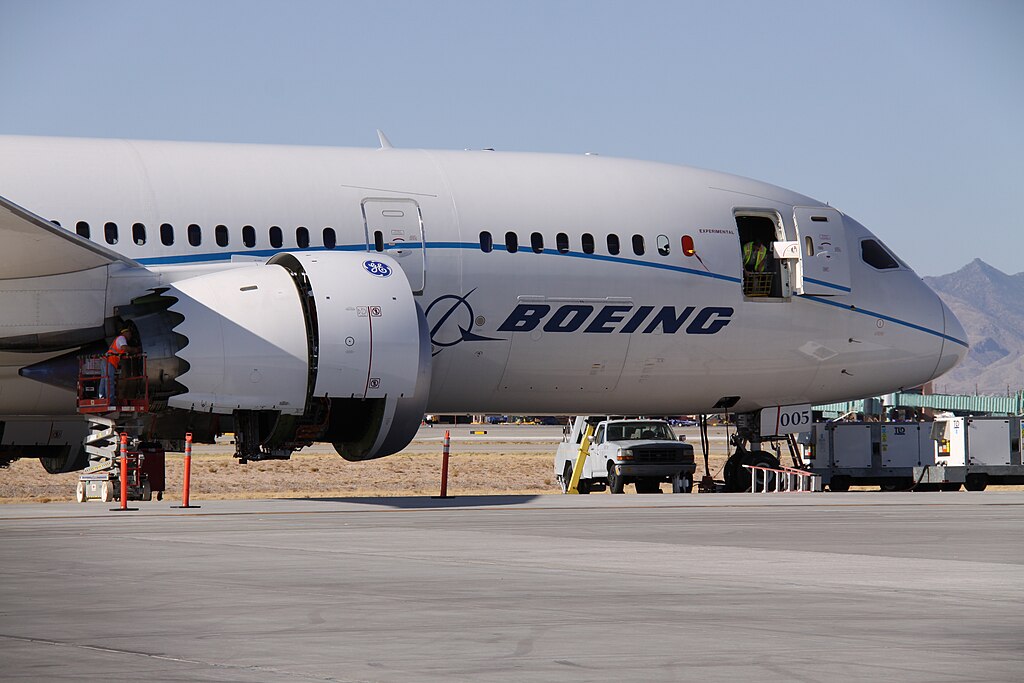
Boeing has formally requested a waiver from the Federal Aviation Administration (FAA) to allow continued sales of its Boeing 777F freighter aircraft beyond 2028, citing strong global demand for cargo planes and delays in certifying its next-generation freighter. The request would permit Boeing to sell an additional 35 units of the 777F despite new airplane emissions rules set to take effect in 2028.
The FAA’s emissions regulations, finalized in February 2024, align with international standards aimed at reducing carbon pollution from most large aircraft operating in U.S. airspace. These rules apply only to aircraft certified after the effective date and do not affect planes already in service. Boeing argues that its next-generation 777-8 Freighter, which is expected to meet the new emissions limits, will not be ready in time, as its entry into service is projected to occur after 2028.
According to Boeing, the 777-8F is scheduled to be delivered roughly two years after the first delivery of the passenger 777-9, which is currently targeted for 2027. As a result, the company says a waiver is essential to bridge the gap and meet anticipated customer demand for widebody freighters in the near term. Boeing has asked the FAA to make a decision on the waiver by May 1.
The aerospace manufacturer emphasized the economic importance of large widebody freighters to U.S. trade. Boeing stated that of the approximately $600 billion in goods exported by air cargo in 2024, more than $260 billion were transported using large widebody freighters. Each exported 777F aircraft contributes an estimated $440 million at catalog value to the U.S. trade balance, meaning that without an exemption, more than $15 billion in export value could be at risk.
Boeing also noted that the 777F is currently the most fuel-efficient aircraft in its class and the only large widebody freighter still in production. Last year, Congress granted Boeing a similar exemption, allowing continued production of the 767 freighter through 2033 despite the upcoming efficiency standards.
The FAA has previously reported that civil aircraft account for about 9% of domestic transportation emissions and 2% of total U.S. carbon pollution. The emissions rules are part of a broader U.S. aviation climate action plan aiming to achieve net-zero greenhouse gas emissions in the sector by 2050.













