


 BOJ Flags Import Costs and Yen Shocks as Persistent Inflation Risks
  Central Banks Could Buy 20,000 Tonnes of Gold: BofA
  FxWirePro- Major Crypto levels and bias summary
  FxWirePro- Major Crypto levels and bias summary
  Global Central Banks Brace for More Rate Hikes as Inflation Risks Rise
  Yen in Focus as BOJ, Fed Rate Hikes Reshape Currency Markets


 Add as a preferred source on Google
The interest of central banks in the concept of digital currency seems to be rising. Last month, People’s Bank of China Governor Zhou Xiaochuan suggested that the central bank is not only interested in digital currencies but is also researching related technologies. The Reserve Bank of Australia has also hinted at the possibility that Australian dollars might come in digital form in the future.
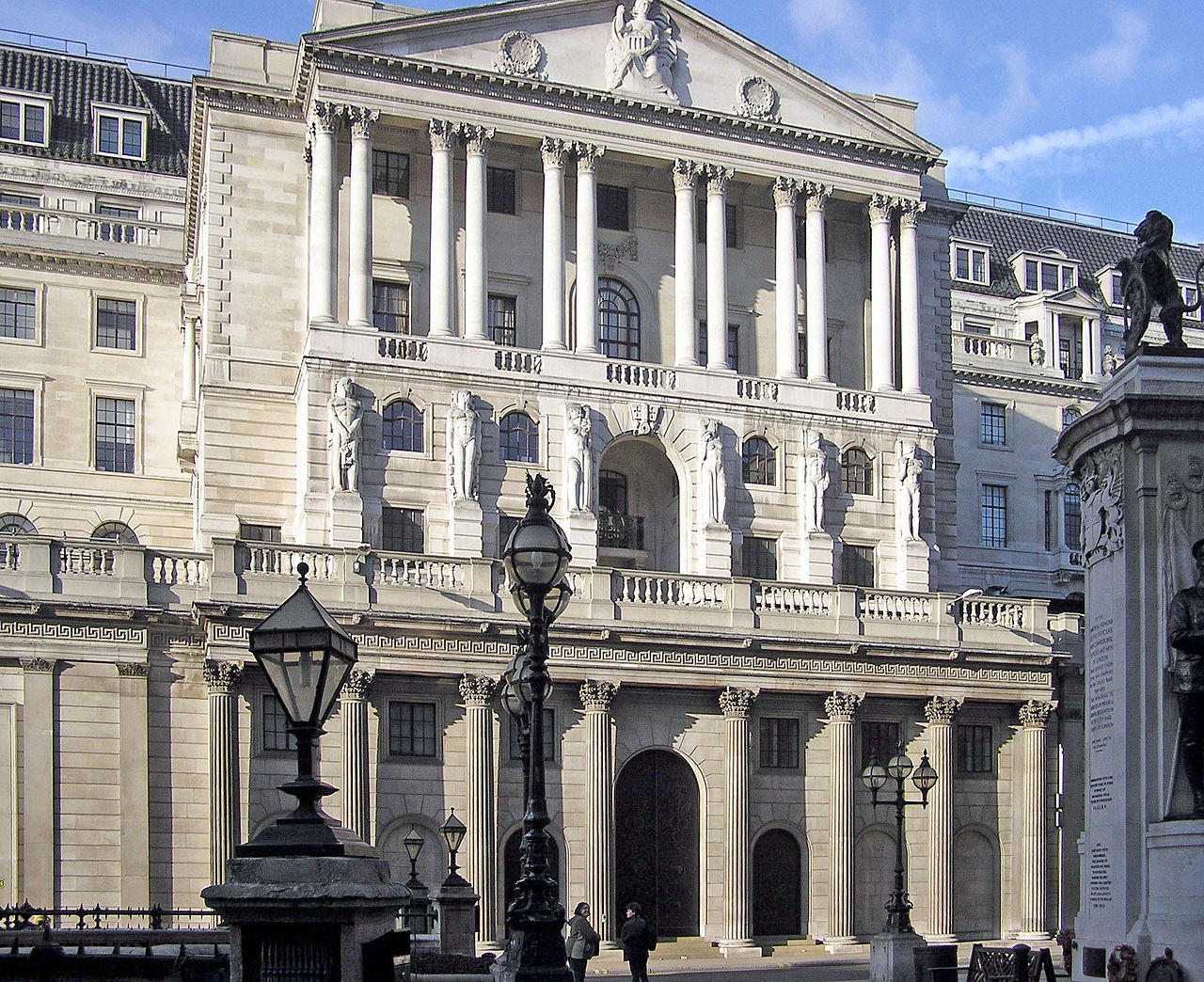
According to latest report by MIT Technology Review, the Bank of England asked researchers at University College London to invent a digital currency with a more centralized design. Termed as RSCoin, the system uses cryptography to create a kind of digital cash that is resistant to counterfeiting.
Similar to Bitcoin, verified transactions are added to a digital ledger that records all the movements of the currency. However, in contrast to Bitcoin’s underlying blockchain technology, RSCoin’s ledger will remain solely with the BoE, which would also retain a “special encryption key” that could be used to control the money supply—for example, to take actions like the QE programs.
The central bank will elect a small group of third-party organizations to process new transactions and submit them for inclusion in the central ledger. Sarah Meiklejohn, one of the researchers in the project, believes that large commercial banks are apt to play that role.
The bank could also choose to publish that ledger for transparency’s purposes, she said, further suggesting the possibility of making transactions partially or fully anonymous.
She says that RSCoin’s centralized design will allow handling of very large numbers of transactions, unlike Bitcoin. Meiklejohn said that she is in talks with the BoE about conducting more research on how it might be implemented in practice.
RSCoin has been tested using 30 different computers inside Amazon’s cloud computing platform so far. A paper on RSCoin has also been presented at the Network & Distributed System Security Symposium in San Diego last month.

- News

- Economy

- Central Banks
- Investing
- Research
- Roundups
- Digital Currency
- Insights
- Technical Analysis
- Technology
- Business
- Law
- Health
- Nature
- Fintech
- Science
- Topic
- Opinions
- ©Econometrics LLC . All Rights Reserved.
Bank Of England Shows Interest In Centralized Digital Currency
Thursday, March 10, 2016 12:21 PM UTC
Editor's Picks



- Market Data
Most Popular




