


 Broadcom Eyes $35 Billion AI Chip Financing Deal With Apollo and Blackstone
  Philips Reaffirms 2026 Outlook After Strong Q1 Sales and Margin Beat
  AWS Data Center Overheating Disrupts Cloud Services in Northern Virginia
  OCBC Q1 Profit Rises 5% on Strong Wealth Management and Non-Interest Income
  BMW Keeps 2026 Outlook Despite 25% Profit Drop Amid Tariff Pressure
  Japan Tech Stocks Surge as AI Optimism Lifts SoftBank, Chipmakers
  Sony Forecasts Lower 2027 Profit Despite Strong Music and Sensor Growth
  Supermicro Forecasts Strong Q4 Revenue Growth as AI Server Demand Surges
  AMD Q1 Earnings Surge on AI Demand, Stock Jumps After Strong Guidance
  Judge Delays SEC Settlement With Elon Musk Over Twitter Stock Disclosure Case
  Infineon Raises 2026 Outlook as AI Data Center Chip Demand Surges
  Trump Invites Top CEOs Including Nvidia, Apple, Boeing to China Summit With Xi Jinping
  Apple Q2 2026 Earnings Surge as iPhone 17 Sales Drive Record Revenue
  U.S.-China AI Talks May Take Center Stage at Trump-Xi Summit
  AI-Driven Inflation Raises U.S. Consumer Prices, Goldman Sachs Says
  Hua Hong Semiconductor Stock Surges to Multi-Year High Amid AI Boom
  Arm Stock Drops Despite Strong AI Chip Demand and Earnings Beat


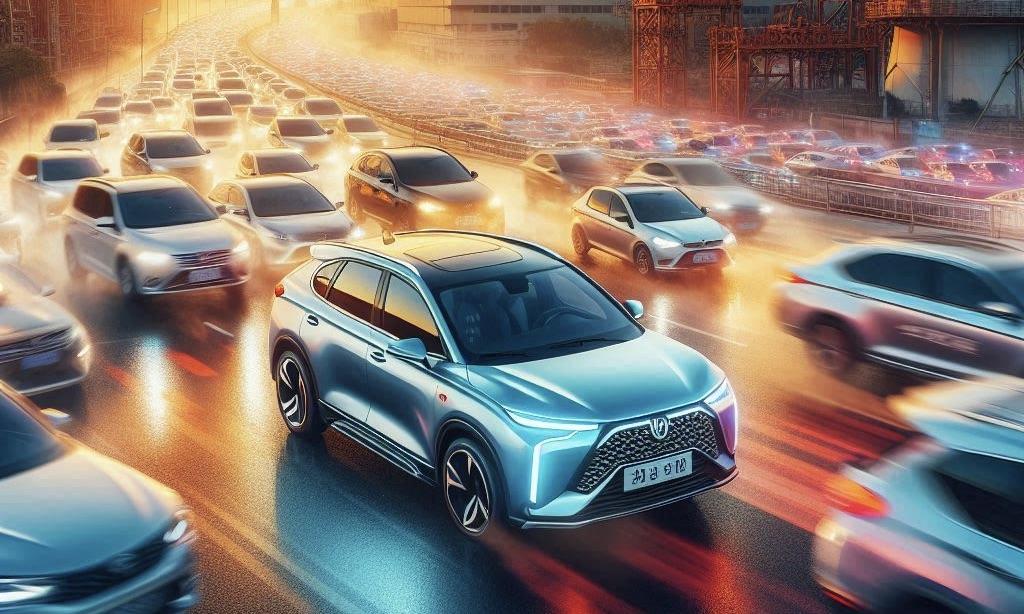
BYD and Geely reported significant profit growth in the first half of 2023, driven by strong sales of electric vehicles and strategic price cuts. Meanwhile, state-owned carmakers like SAIC Motor and Guangzhou Automobile saw declining profits as the market became increasingly competitive.
BYD and Geely Drive Profit Growth in China's Auto Market, Outpacing Struggling State-Owned Rivals
BYD and Geely Automobile Holdings were among the leading private automakers in China, and they reported profit growth in the January-June half. At the same time, SAIC Motor and other state-owned operators encountered challenges in an overcrowded market.
BYD's net profit increased by 24% year over year to 13.6 billion yuan ($1.9 billion), the highest among the 10 prominent Chinese carmakers that had reported results as of the end of August. According to Nikkei Asia, this achievement was a record for the first half of the year. The number of vehicles sold increased by 28%, reaching 1.61 million units.
BYD introduced new models, which experienced robust sales of electric vehicles and a plug-in hybrid that enhanced fuel efficiency. The February introduction of new offerings resulted in price reductions for over ten models, which increased sales.
Soochow Securities reported that BYD's net profit per vehicle was 7,800 yuan, even though the price reduction reduced its per-vehicle revenue by 15% to 156,000 yuan.
The automaker maintains minimal production costs by manufacturing the on-board batteries and significant components. Despite the price reductions, this is perceived as allowing for greater profitability than competitors.
Geely Automobile, a Hong Kong-listed subsidiary of Zhejiang Geely Holding Group, announced a sevenfold increase in net profit to 10.5 billion yuan. Because of its prestige, Zeekr EV brand vehicle sales increased by 41% to 950,000 units. The gross margins were enhanced due to the 5% increase in per-vehicle revenue for the Zeekr and Geely brands combined, which amounted to 129,000 yuan.
The net profit of Great Wall Motor increased by fivefold, reaching 7 billion yuan. The company's high-end Tank brand of off-road vehicles was famous, and a 21% increase in per-vehicle revenue contributed to the company's profitability.
State-Owned Automakers in China See Profit Declines Amid Struggles with Foreign Joint Ventures
In contrast, the earnings of state-owned car manufacturers could have been better due to the decline of their joint ventures with foreign partners.
SAIC Motor's net profit decreased by 6% to 6.6 billion yuan. Vehicle sales experienced a 12% decline to 1.82 million units, while per-vehicle revenue experienced a 1% decrease. It encountered difficulties in its partnership with General Motors.
The net profit of Guangzhou Automobile Group decreased by 49% to 1.5 billion yuan. The number of vehicles sold decreased by 26%, reaching 860,000 units. The automaker maintains distinct joint ventures with Honda Motor and Toyota Motor.
Dongfeng Motor experienced a 46% decrease in profit from joint ventures, which included one with Honda and another with Nissan Motor. The net profit of the automobile manufacturer decreased by 48% to 684 million yuan.
"The current situation cannot continue," Guangzhou Automobile Chairman Zeng Qinghong said at a June event in Chongqing. "Generating profit is what allows a company to pay taxes and hire."
China's Shift to Electric Vehicles Creates New Winners, Leaving State-Owned Automakers Behind
The industry's trend toward electrification has also resulted in victors and losers. The China Association of Automobile Manufacturers reported that 35% of new vehicles sold in the January-June half were classified as "new-energy vehicles," which include electric vehicles (EVs) and plug-in hybrids. The figures encompass cars that have been exported.
BYD, which discontinued petroleum vehicle sales in 2022, has focused on producing new energy vehicles and has experienced increased sales. In contrast, SAIC Motor's unit sales of new-energy vehicles account for only 25% of the total, and other significant state-owned automobile manufacturers are similarly underperforming.
It is also anticipated that the auto market in China will experience heightened competition in terms of features, such as the integration of artificial intelligence and autonomous driving. Carmakers that fail to secure the price war will be forced into a downward spiral of insufficient investment funds, as next-generation technology necessitates substantial expenditures.







