


 Supreme Court Asked to Reinstate Mail-Order Access to Abortion Pill Mifepristone
  DOJ May Drop Gautam Adani Fraud Charges Amid $10 Billion U.S. Investment Plan
  Alibaba Stock Surges After Strong Q4 Earnings Boosted by AI and Cloud Growth
  Nike Tariff Refund Lawsuit Sparks Consumer Backlash Over Price Increases
  US-China Trade Talks Begin in South Korea Ahead of Trump-Xi Beijing Summit
  YouTube and Snap Settle School District Mental Health Lawsuit Ahead of Major Social Media Trial
  Trump DOJ Accuses Yale Medical School of Racial Bias in Admissions
  Telefónica Q1 2026 Earnings Beat Expectations as Debt Declines and Cash Flow Improves
  Anthropic Nears $30 Billion Funding Round at $900 Billion Valuation
  Coles “Down Down” Ruling Sparks Fresh Scrutiny of Australian Supermarket Pricing
  Trump Pushes China Market Access During High-Stakes Xi Summit
  U.S. Army Soldier Charged in $400K Insider Betting Scheme on Maduro Capture
  New Zealand Budget 2026 Focuses on Fiscal Discipline and Infrastructure Investment
  OECD Sees Bank of Japan Raising Interest Rates to 2% by 2027
  Berkshire Hathaway Reveals New Stakes in Delta Air Lines and Macy’s Under Greg Abel
  SpaceX Shareholders Approve 5-for-1 Stock Split Ahead of Potential IPO
  Rubio Discusses Iran Crisis and Strait of Hormuz Disruptions With UK and Australia


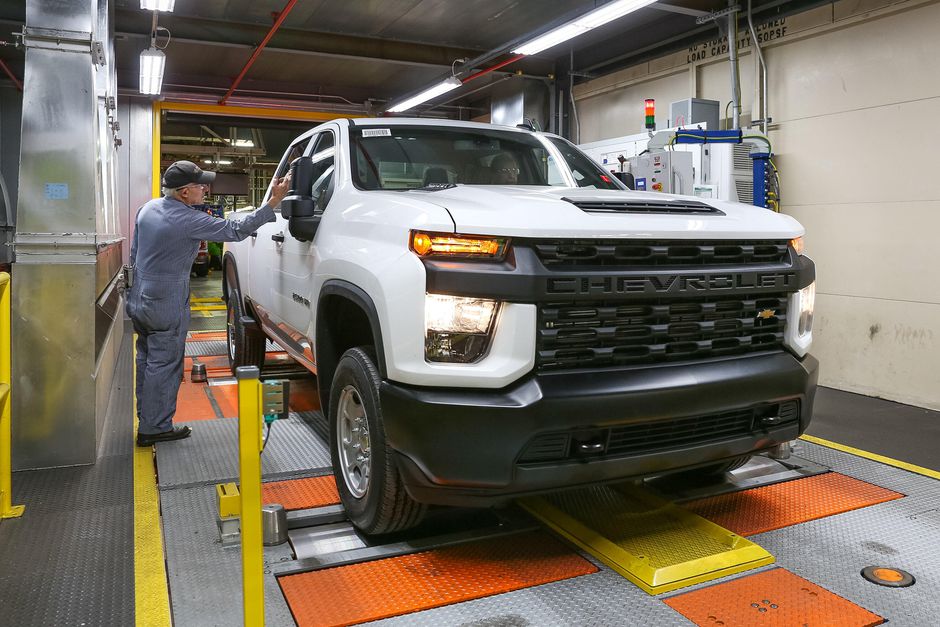
Trade group Alliance for Automotive Innovation, representing GM, Fiat Chrysler, and several other automakers took the witness stand to contest Massachusetts' "Right to Repair" law requiring automakers to provide expanded access to mechanical and electronic repair data.
US District Judge Douglas Woodlock in Boston who heard the arguments will decide whether federal law preempts the state measure.
The group sued in November after Massachusetts voters approved a ballot initiative that would expand vehicle data access to let independent shops repair sophisticated automotive technology.
Many automakers limit information and warranties only to parts and repairs from authorized dealers to ensure safety and privacy due to the sophistication of modern vehicle and crash avoidance systems.
The group argued that the Massachusetts law would require them to diminish cybersecurity controls related to critical vehicle functions. They also warned that it would make the industry vulnerable to serious cyberattacks, which would be worse than those recently done on pipelines and meat processors.
The group emphasized that the Massachusetts law is unconstitutional as it conflicts with the National Traffic and Motor Vehicle Safety Act and the Clean Air Act, which are federal laws.
Kevin Tierney, the vice president of global cybersecurity at General Motors, said that the law would seriously compromise vehicle safety and emissions control and its requirements run directly counter to GM's cybersecurity approach.
The law was defended by Massachusetts Attorney General Maura Healey, who argued that the measure allows manufacturers to establish a third-party-run standardized system to authorize access by independent repair shops.
Steven Douglas, the vice president for energy and environment at the Alliance for Automotive Innovation, said that the National Automotive Service Task Force (NASTF) while helping manufacturers authorize locksmiths to create increasingly technical new keys had avoided creating a central database of all of the companies' data.
Douglas, who sits on the NASTF board, said that doing so would put the vehicle security information of 280 million vehicles at risk by putting it all in a central location.







