


 Asian Currencies Mixed as Dollar Holds Near Two-Month High
  Best Gold Stocks to Buy Now: AABB, GOLD, GDX
  Fed Unveils Stablecoin Rules Under GENIUS Act
  Australia Unemployment Hits Five-Year High Despite Strong Jobs Growth
  U.S. 10-Year Treasury Yield Hits 2007 High as Fed Rate Hike Bets Rise
  Oil Prices Surge as U.S.-Iran Diplomacy Hopes Fade
  Mexico-US Trade Talks Delayed to October as Tariff Negotiations Continue
  Gold Prices Fall Amid Rate Jitters; Copper Steady as China Stimulus Eyed


 Add as a preferred source on Google
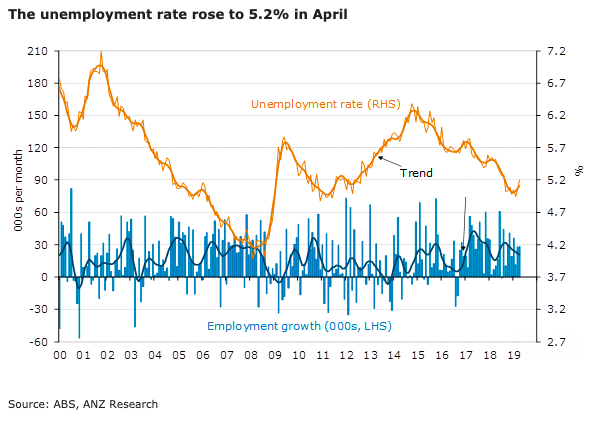
Australia’s unemployment rate moved higher during the month of April despite solid gain in jobs; increased labour supply drove the rise in the unemployment rate, with the participation rate at its highest result on record. The rise could be interpreted as the product of a healthy labour market, according to the latest report from ANZ Research.
Employment increased by 28.4k in April, exceeding the upwardly revised 27.7k in March. In contrast to last month, employment gains in April wholly resulted from a 34.7k rise in part-time jobs. Full-time jobs went backwards by 6.3k, following a strong March figure of 49.2k full-time jobs added.
Year on year, full-time jobs are up 2.9 percent, while part-time employment is up 1.9 percent and total employment accelerated to 2.6 percent.
The unemployment rate was 5.2 percent in April, up 0.3ppt from the low of 4.9 percent in February. The participation rate rose to 65.8 percent, the highest on record (to two decimal places). The underemployment rate jumped from 8.2 percent in March to 8.5 percent in April. So overall slack in the labour market was up quite a bit.
The unemployment rate rose in all states apart from Queensland, which saw a 0.2ppt fall to 5.9 percent. New South Wales (4.5 percent) and Victoria (4.9 percent) maintain the lowest unemployment rates across the states.
"Employment growth is accelerating; moving in the opposite direction from what our ANZ Labour Market Indicator would suggest. However, we see the increased slack in the labour market as a barrier to improving wage growth and inflation," ANZ Research further commented.







