


 Wall Street Futures Edge Higher as Iran Tensions and AI Optimism Shape Markets
  Oil Prices Surge as U.S.-Iran Conflict Threatens Strait of Hormuz Supply Route
  Trump Invites Top CEOs Including Nvidia, Apple, Boeing to China Summit With Xi Jinping
  Pope Leo Calls for Peace as Vatican Seeks Better Ties With U.S.
  U.S., South Korea Launch Shipbuilding Partnership Initiative
  Judge Rules DOGE Humanities Grant Cuts Unconstitutional
  Russian LNG Shadow Fleet Expands Amid Arctic LNG 2 Sanctions
  China-Made Fireworks Power U.S. Independence Day Celebrations Amid Trade Truce
  U.S.-China Beef Trade Deal Hopes Rise Ahead of Trump-Xi Summit
  Asian Currencies Slip as US Dollar Gains on Rising Iran Tensions and Awaited Jobs Data
  Trump Says U.S. Navy Destroyers Passed Strait of Hormuz Under Iranian Fire
  US Reviews Mexican Consulates Amid Rising Diplomatic Tensions
  Rubio Presses Italy Over Iran Support as Tensions Test U.S.-Italy Alliance
  China EV Truck Boom Accelerates as Iran War Drives Diesel Prices Higher
  Iran Accuses U.S. of Violating Strait of Hormuz Ceasefire with Ship and Coastal Attacks
  Russia Downs Over 50 Drones Near Moscow Ahead of Victory Day Ceasefire
  Dollar Weakens as Iran Peace Hopes Boost Risk Appetite and Yen Gains Strength


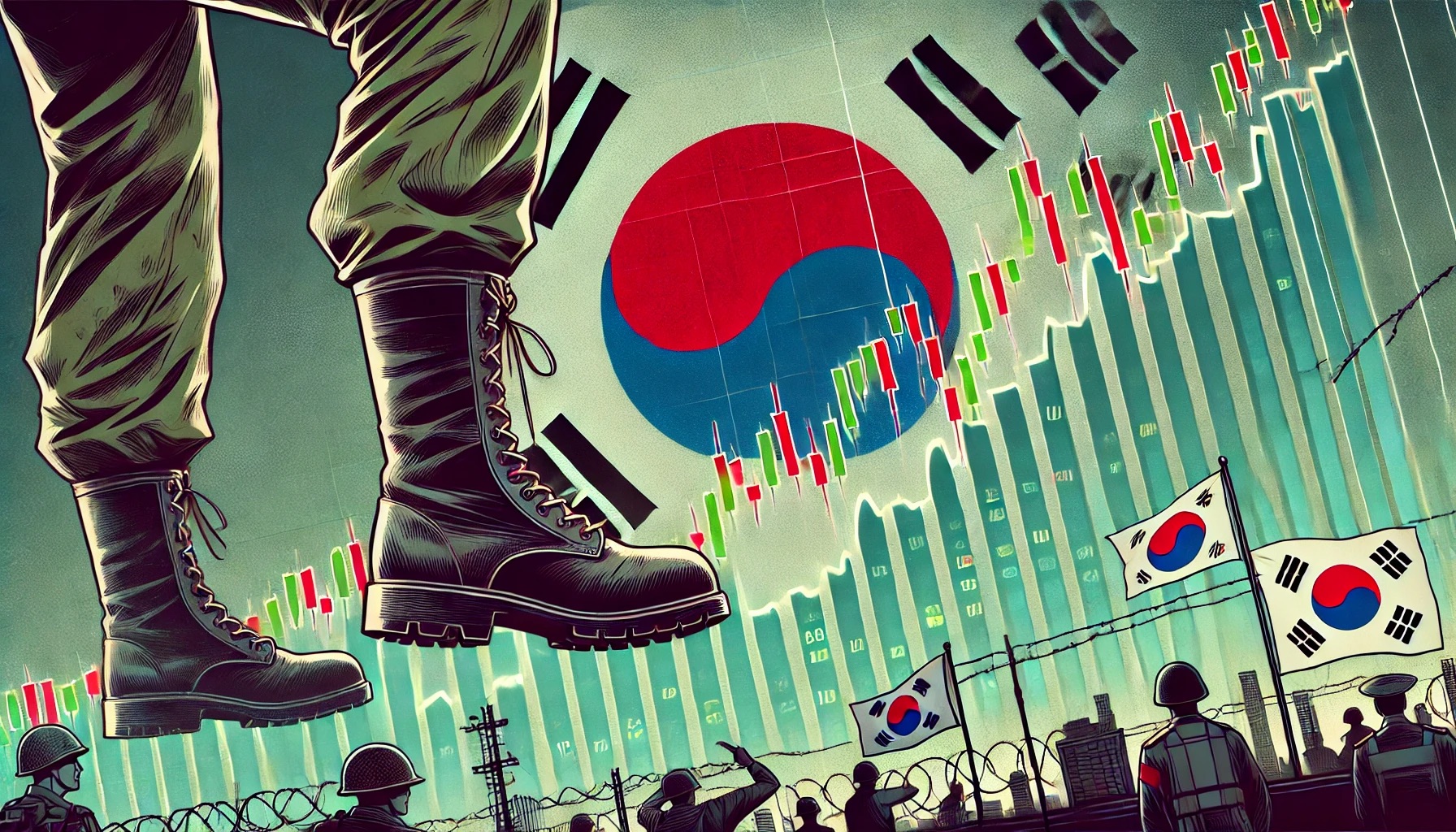
Asian stocks tumbled Wednesday, led by South Korea’s KOSPI falling over 2%, as President Yoon Suk-Yeol’s abrupt martial law and its reversal deepened political unrest, unnerving investors across the region.
Asian Stocks Decline Amid South Korea's Political Turmoil
According to Investing.com, Wednesday saw a decline in most Asian stocks, with South Korean shares falling the most. This was due to the political turmoil and loss of investor confidence caused by President Yoon Suk-Yeol's sudden lifting of temporary martial law.
Following Wall Street's somewhat upbeat session overnight, regional markets followed mixed signals as investors awaited Federal Reserve Chair Jerome Powell's speech later in the day for further clues on U.S. monetary policy. In Asian trade, U.S. stock index futures showed a little uptick.
South Korea's Martial Law Reversal Impacts KOSPI Index
In an attempt to quell "anti-state forces" among his political opponents, South Korean President Yoon Suk-Yeol proclaimed martial law on Tuesday, causing the KOSPI index to fall by more than 2%. He revoked the bill within hours, however, due to the swift opposition it encountered, which included public protests and rejection in parliament.
As a result, lawmakers in South Korea called for Yoon's impeachment, triggering the country's worst political crisis in decades.
During a period of martial law, civilian government is supplanted by military rule, civilian courts are overridden by military ones, and ordinary civil liberties may be suspended as well.
Investor Confidence Erodes Amid Political Unrest
Investor trust in the country was eroded by Yoon's move. ING analysts even predicted that South Korea's credit rating could be lowered if the current instability continues.
Since South Korea is considered a key pillar in East Asia's economy, markets became apprehensive of any possible spillover from the country's political unrest.
Regional Markets React to South Korean Developments
Both the Nikkei 225 and the TOPIX lost 0.4% and 0.7%, respectively, in Japan. Japan's Prime Minister Shigeru Ishiba told reporters, "We are monitoring (the South Korea's situation) with particular and grave interest."
There was a little decline in the Shanghai Composite index and a 0.3% decline in the Shanghai Shenzhen CSI 300 index in China. As the Chinese economy gets ready for more tariffs from the United States under a second Trump administration, data shows that growth in the services sector slowed in November. The Caixin PMI index fell to 51.5 from 52.0, reflecting weaker growth in new business and exports.
Geopolitical Risks and U.S. Trade Tariffs Pressure Asian Stocks
U.S. trade tariffs, which could materialize under Trump's administration, are one of the geopolitical concerns that have recently escalated in Asia. U.S. tariffs on Chinese technology exports tightened this week, causing economic and market volatility in the region.
However, on Wednesday, Chinese chipmaking stocks soared as the government advised against purchasing chips made in the United States, a move that could lead to a rise in demand for chips made in China.
Mixed Performances in Asian Stock Indices
A favorable opening was signaled by India's Nifty 50 Futures, while the PSEi Composite index of the Philippines fell 0.2%.
The SET Index in Thailand rose 1.3% on Wednesday, following comments made by the country's finance minister Pichai Chunhavajira the day before, who said that low inflation could lead to a rate drop, but that the central bank would ultimately make the call. In order to bolster the economy, he stressed again how critical it is to harmonize fiscal and monetary policies.
Australian Economy Shows Signs of Slowing Growth
On Wednesday, the Australian stock market (ASX 200) dropped 0.5% when GDP statistics revealed slower-than-expected growth in the country's economy during the September quarter.
The data revealed that the Australian economy was suffering due to sticky inflation and high interest rates, but it also increased betting that the Reserve Bank of Australia could drop interest rates sooner than predicted.
Weak household expenditure and falling commodity export prices were the main factors in the GDP's softness.







