


 Xi Calls for Deeper U.S.-China AI Cooperation in Trump Talks
  US Appeals Court Upholds Anthropic AI Supply Chain Ban
  Anthropic’s Claude Discovers CRISPR-Like Enzyme System
  Microsoft Stock Upgraded as Stifel Sees Stronger Azure Growth
  Former OpenAI Data Center Chief Chris Malone Joins Nvidia
  Apple Extends Qualcomm Patent Licensing Deal
  Oracle Shares Fall as New Mexico AI Data Center Faces Power Delays
  SoftBank Shares Fall as Oracle Flags Stargate Data Center Delay Risk
  Scott Bessent Eyed as Trump’s New AI Czar
  BlackBerry Shares Rise as Q2 Earnings, Revenue Beat Estimates
  Meta Partners With Shopify to Bring Shop Pay Checkout to Muse AI
  Meta Unveils Muse Charm AI Device, Expands Smart Glasses Lineup
  AMD Hits $1 Trillion as BofA Raises Price Target to $720
  SoftBank Raises $11.1 Billion in Bond Sale to Fund OpenAI Investment
  China’s ‘Lipstick King’ Says AI Won’t Replace Livestream Hosts


 Add as a preferred source on Google


Artificial intelligence (AI) has revolutionized many different industries in recent years. It gained a lot of attention and popularity with the launch of ChatGPT, a tool capable of writing poems, solving equations and producing articles on different topics.
With the fast-paced implementation of AI in different fields, will it take the place of architects and architecture schools soon? To answer this question, we need to understand the capabilities of AI and the role of architects and architecture schools.
Architectural education
While the topics and research surrounding AI are rapidly evolving, AI lacks certain qualities and characteristics that architects gain by completing architecture school. At its core, architects learn how to use different skills to combine technical knowledge, arts, esthetics, emotions and other attributes.
Architecture schools train their students so that they can respond to certain design problems with solutions based on their personal experiences, design styles and other factors.

Architecture curricula still needs to incorporate traditional design skills. (Shutterstock)
Creativity and innovative solutions are a result of combining different skill sets, personal experiences and technical knowledge that future architects develop in architecture schools.
The same process exists when it comes to AI. AI is trained on different datasets to come up with solutions. In some cases, like ChatGPT, it uses this dataset to generate new and innovative solutions.
But AI is limited by its datasets, especially when there isn’t enough data, or gathering it is too resource-intensive. This is the main difference between humans and AI comes. Humans can draw on their experiences, skills and other attributes to come up with innovative solutions without being limited to specific datasets.
Improved efficiency
AI has different capabilities that can significantly help many different industries, including architecture and construction. For instance, AI can help architects with architectural programming and creating layouts in buildings. It can provide renders and other types of visualizations.
In general, AI can make many different processes, such as schematic design and renders, more efficient. Architects can develop customized platforms based on their guiding principles, visions, design styles and other values.
However, assistive tools that result in a final product might interrupt the learning process at schools. Students are supposed to learn skills by exploring different design solutions, ideas and philosophies. But architecture students might not fully engage with learning if they use assistive tools that conceal or eliminate the process.
Therefore, architecture schools should carefully study how AI can be integrated with their syllabi to improve the learning process for architecture students.
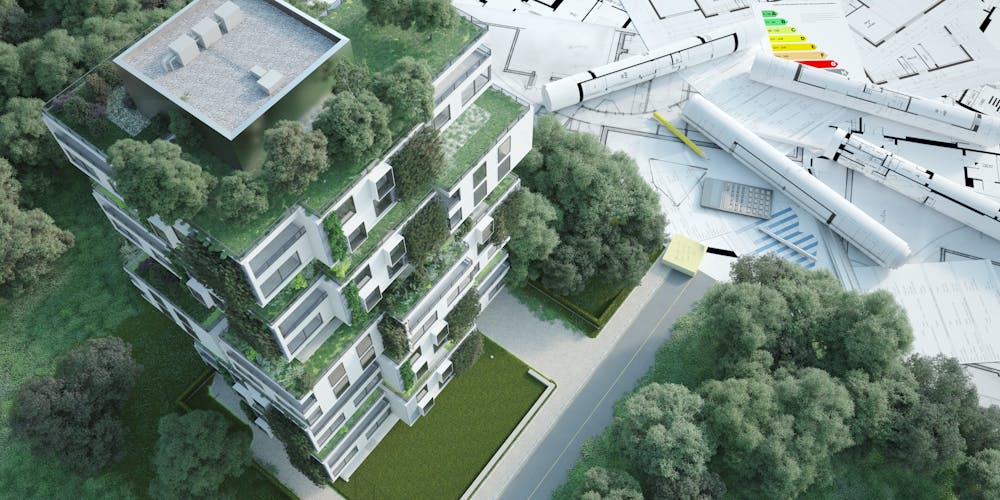
Architecture schools should teach students how to use AI technologies, but ensure that they still acquire needed skills. (Shutterstock)
Absence of true empathy
Beyond architecture schools, understanding the importance of the shared values, heritage and cultural qualities of a community, or even a person, is essential for architects in coming up with design solutions.
While AI is capable of analyzing such information, it cannot truly empathize with and understand these different considerations.
At the same time, decisions made by architects carry responsibilities and liabilities. Students learn about sustainability issues, long-term impacts of designs, ecological footprints and other similar topics.
Although AI can be provided with decision-making capabilities, it cannot replace architects’ roles in ethical decision-making process.
In addition, architecture involves collaborations among different stakeholders, from clients to interior designers, civil engineers and other experts. Although AI can engage in dialogue, it lacks the ability to engage in dynamic interactions and truly understand the intentions and experiences of different stakeholders.
Human indispensability
AI is still in its early stages and may certainly improve significantly in the coming years. However, at the moment, it seems unlikely to replace the indispensable role of architecture schools and architects because it cannot fully grasp cultural values and heritage.
In addition, AI cannot draw on personal experiences, emotions and perceptions of different concepts and designs. In its current state, AI cannot engage in meaningful collaborations where it can truly understand the need of different stakeholders. Furthermore, the ethical issues, responsibilities and liabilities involved need to be addressed before progressing to more advanced stages that can give AI more freedom in the design process.
Although AI can significantly improve the efficiency of the design process and improve the learning experience, it’s too early to consider it — even as a semi-independent entity — during the architectural design process.







