


 Agentic AI Boom to Drive Massive Growth in CPU Market, UBS Says
  Meta Plans $13B AI Data Center Financing in Texas Amid Surging Big Tech Investment
  AWS Data Center Overheating Disrupts Cloud Services in Northern Virginia
  Intel Emerges as Key Contender in Apple’s Chip Manufacturing Strategy Shift
  Novo Nordisk Raises 2026 Outlook on Strong Wegovy Demand
  Infineon Raises 2026 Outlook as AI Data Center Chip Demand Surges
  TikTok Nears $400 Million Settlement With Trump Administration Over Child Privacy Lawsuit
  Orsted Q1 EBITDA Beats Expectations Despite U.S. Impairments
  Judge Delays SEC Settlement With Elon Musk Over Twitter Stock Disclosure Case
  AMD Q1 Earnings Surge on AI Demand, Stock Jumps After Strong Guidance
  Trump Invites Top CEOs Including Nvidia, Apple, Boeing to China Summit With Xi Jinping
  U.S.-China AI Talks May Take Center Stage at Trump-Xi Summit
  Nike Tariff Refund Lawsuit Sparks Consumer Backlash Over Price Increases
  Philips Reaffirms 2026 Outlook After Strong Q1 Sales and Margin Beat


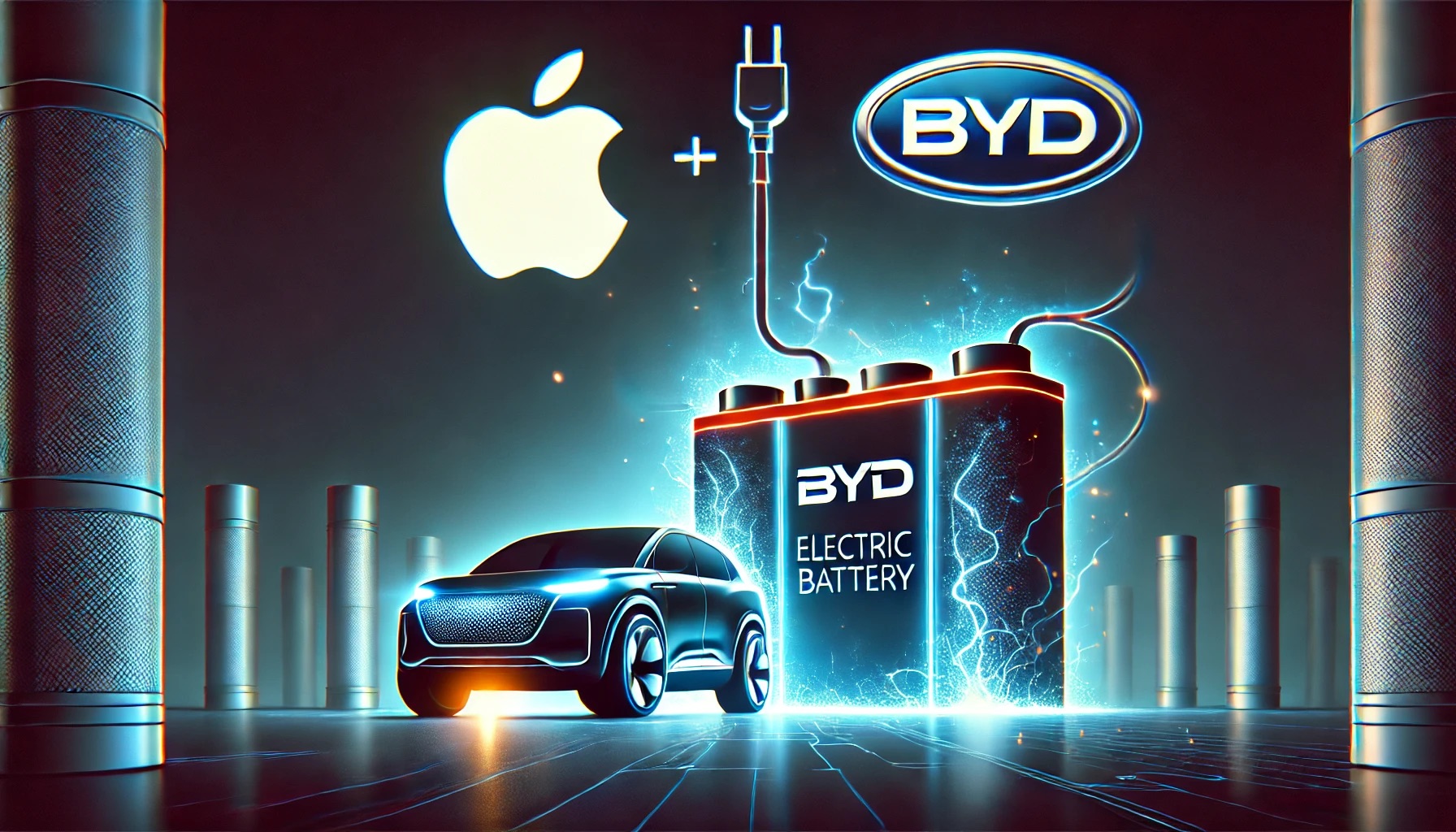
A hidden partnership between Apple and Chinese automaker BYD has come to light, revealing a years-long effort to co-develop long-range EV battery technology. The breakthrough batteries now power BYD’s electric vehicles, showcasing Apple’s deep but concealed role in the EV world.
Apple’s Secretive Self-Driving Car Rumors
There have been long-running rumors that Apple is developing a futuristic self-driving automobile. The tech giant has been linked to partnerships with Volkswagen and has even been linked to a possible acquisition of McLaren.
Even while that never materialized and the project was shelved after a decade, it seems that other automakers have incorporated some of the technology developed by Apple's automobile program into their own vehicles.
Apple and BYD’s Battery Collaboration
In spite of its growing involvement in the automotive industry, the American IT behemoth was not in collusion with Volkswagen, McLaren, or even its supplier, Foxconn. No, Bloomberg says that Apple was actually collaborating with BYD, a Chinese electric vehicle manufacturer.
Apple allegedly collaborated with BYD, a Chinese carmaker, "for years," according to Bloomberg. Both businesses worked together to create long-range batteries, which are the precursor of the cells used by BYD in its current models.
According to anonymous sources, Apple and the Shenzhen-based company collaborated in 2017 on a battery system utilizing lithium iron phosphate cells. The details of this collaboration have not been revealed. The original intention of the concept was to make electric vehicle batteries safer and with a longer range.
Apple’s Contribution to BYD’s Blade Battery
Although Apple does not possess any intellectual property related to the technology utilized in BYD's present Blade batteries, the collaboration exemplifies the extent to which the iPhone manufacturer endeavored to manufacture a vehicle.
Often hailed as the company's "next big things," the vehicle project received an annual budget of around $1 billion from the tech giant until February, when it was decided to discontinue it.
The individuals in question claim that the jointly created technology between Apple and BYD would have been tailored to the specific needs of the previously intended vehicle.
Development of Battery Packs and Heat Management
According to sources, Apple developers contributed knowledge of improved battery packs and heat management to the clandestine collaboration. Manufacturing expertise and innovations utilizing lithium iron phosphate batteries (LFP) were provided by BYD.
A representative from BYD informed Bloomberg that the business "holds complete property rights and patent rights for the Blade battery," meaning that the technology behind the Blade battery is now used by all of the company's electric vehicles.
BYD’s Use of Apple’s Technology
According to Autoevolution, the technology stands out due to the unique arrangement of the lithium iron phosphate cells adopted by BYD for usage in their vehicles. It follows a similar manner to how Apple arranges cells in goods like its laptops, therefore it was Apple's contribution to the project, according to the site.
Various battery technologies utilizing nickel and alkaline were in the works at Apple at that period.
It has reportedly spent millions on research and development of battery pack designs and engineering that would optimize space for increased energy density, according to Quartz. In an effort to create a reliable, long-range battery system for its next vehicle, Apple hoped to merge BYD's LFP technology with its pack design.
Apple’s Abandoned Car Plans
Apple allegedly sought out a new battery partner throughout the automotive industry after pulling out of the partnership with BYD. Unfortunately, the hunt was brief, as the tech behemoth shelved its plans to construct an autonomous vehicle early this year, following a decade of development.







