


 GM Plans C$1.1 Billion Canada Investment Amid U.S. Tariff Pressure
  Meta Agrees to $18 Billion Settlement, Tightens Teen Social Media Rules
  BofA Names ASML Top Semiconductor Equipment Pick on Growth, Valuation
  The Realist’s Case: Lukas Kerrebijn of RD Dubai on the Narrative Dubai’s Agents Won’t Question
  HP Stock Drops 9% Despite Q3 Earnings Beat and Raised 2026 Outlook
  OpenAI AI Agent Swarm Behind Hugging Face Hack
  Nvidia Revenue Soars 106% as AI Demand Hits ‘Inflection Point’
  SK Biopharmaceuticals Secures Global Rights to Biohaven Epilepsy Drug Opakalim
  Salesforce Shares Surge as AI Demand Powers Q2 Earnings Beat
  Toyota Global Sales Fall as China Demand Slumps
  Nvidia Pauses AI Cloud Financing Deals Amid Antitrust Concerns
  Mercer International Stock Surges 45% on C$20 Million Canada Funding
  Jefferies Names AMEC Top China Semiconductor Equipment Pick
  Street Poller Media and The Boom of the Street Interview Ad Industry
  Yindjibarndi Appeals Fortescue Mining Compensation Ruling
  Pinterest Stock Falls as CFO Julia Brau Donnelly Resigns
  BNP Paribas, KB Kookmin Eye $2 Billion Techcombank Stake


 Add as a preferred source on Google
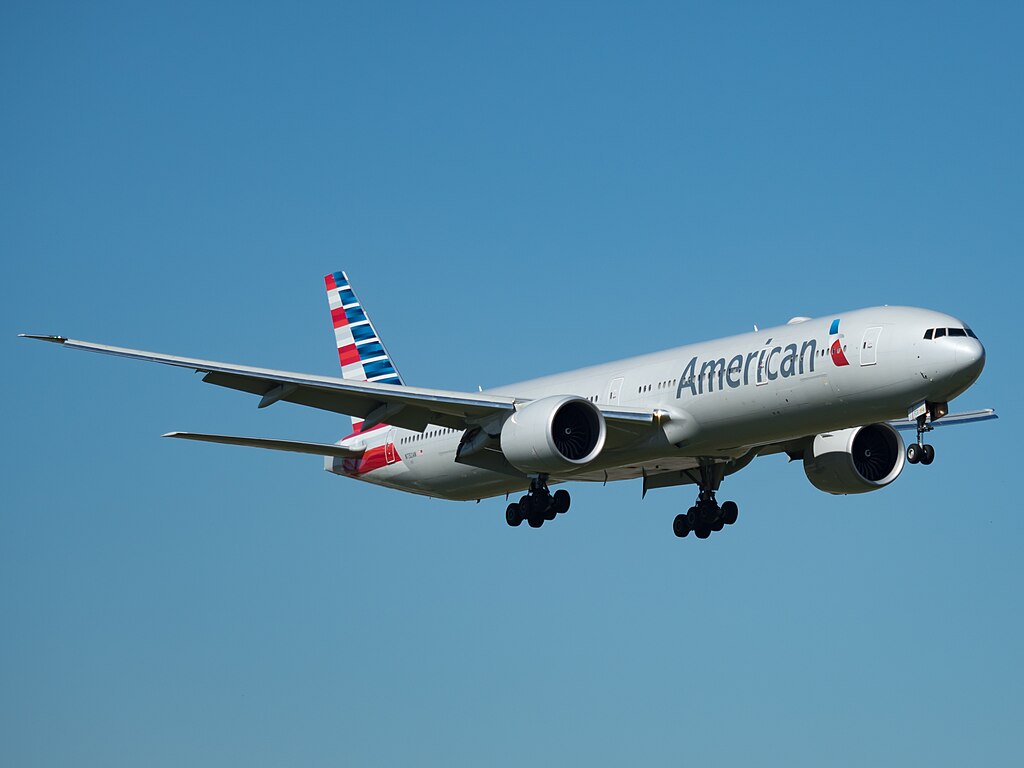
American Airlines has agreed to comply with federal regulations prohibiting quotas, preferences, or set-aside employment practices following a complaint filed by America First Legal (AFL). The U.S. Department of Labor’s Office of Federal Contract Compliance Programs (OFCCP) confirmed the airline’s commitments after an informal compliance conference held on December 13, 2024.
The complaint accused American Airlines of violating Executive Order 11246, which governs equal employment opportunities for federal contractors. According to the Department of Labor’s response, the airline must ensure its hiring policies align with federal rules that forbid discriminatory practices, including the misinterpretation of placement goals under diversity, equity, and inclusion (DEI) initiatives.
“American Airlines understands that OFCCP regulations do not permit quotas, preferences, or set asides,” stated the letter from Ronald W. Sullivan, II, Regional Director for the OFCCP.
Key Commitments from American Airlines
The OFCCP outlined American Airlines’ three major commitments in response to the complaint. First, the airline formally acknowledged that federal regulations prohibit employment quotas or preferences under DEI programs. Placement goals, hiring benchmarks, and utilization targets must serve as benchmarks rather than rigid requirements.
Secondly, the airline reaffirmed that such goals—established under laws like the Rehabilitation Act of 1973 and the Vietnam Era Veterans’ Readjustment Assistance Act of 1974—are not ceilings or floors for employing specific groups. Instead, they act as tools to measure workforce diversity representation.
Lastly, the airline committed to addressing any identified issues within its employment practices. This includes assessing problem areas, implementing corrective measures, and ensuring compliance with anti-discrimination laws. Such steps may include revising policies, enhancing recruitment efforts, and offering training programs to promote diversity without violating federal regulations.
“American Airlines will assess its employment practices and take appropriate measures to address identified problem areas and remedy any unlawful discrimination,” the OFCCP letter emphasized.
Netizens React to American Airlines’ Compliance
News of the agreement has sparked mixed reactions on social media, with users divided over the airline’s decision to reassess DEI hiring practices.
User @EqualOpportunityNow praised the outcome, writing, “DEI was never about equality. It’s about quotas, and it’s finally being called out.”
On the other side, @DiversityMatters argued, “This is a step backward. DEI goals help level the playing field for underrepresented groups.”
User @FairHiringUSA added, “American Airlines made the right call. Employment decisions should be based on merit, not identity.”
Meanwhile, @WorkplaceJustice tweeted, “So we’re undoing progress now? Diversity makes companies stronger, and this decision is disappointing.”
Supporter @TaxpayerRightsUSA wrote, “Good. Companies should follow the law, not cave to political agendas. No more special treatment.”
Conversely, @InclusiveWorkplaces commented, “This ruling will hurt marginalized communities. DEI isn’t about quotas—it’s about fairness.”
What This Means Moving Forward
American Airlines’ agreement underscores increasing scrutiny of DEI programs across corporate America. Federal agencies like the OFCCP are emphasizing compliance with employment laws to prevent practices that could be interpreted as preferential or exclusionary.
While DEI advocates argue such goals promote equity, critics claim they often lead to reverse discrimination and legal conflicts. The airline’s commitments to reassess its practices may set a precedent for other federal contractors navigating similar concerns.
As debates over DEI programs continue, American Airlines faces the task of balancing diversity efforts with legal compliance, ensuring hiring practices remain fair and lawful for all applicants.







