


 Bangladesh Election 2026: A Turning Point After Years of Political Suppression
  Trump Allows Commercial Fishing in Protected New England Waters
  Ghislaine Maxwell to Invoke Fifth Amendment at House Oversight Committee Deposition
  Trump Says “Very Good Talks” Underway on Russia-Ukraine War as Peace Efforts Continue
  Antonio José Seguro Poised for Landslide Win in Portugal Presidential Runoff
  Nicaragua Ends Visa-Free Entry for Cubans, Disrupting Key Migration Route to the U.S.
  Anutin’s Bhumjaithai Party Wins Thai Election, Signals Shift Toward Political Stability
  U.S.-India Trade Framework Signals Major Shift in Tariffs, Energy, and Supply Chains
  Netanyahu to Meet Trump in Washington as Iran Nuclear Talks Intensify
  U.S. Lawmakers to Review Unredacted Jeffrey Epstein DOJ Files Starting Monday
  Sydney Braces for Pro-Palestine Protests During Israeli President Isaac Herzog’s Visit
  Pentagon Ends Military Education Programs With Harvard University
  Jack Lang Resigns as Head of Arab World Institute Amid Epstein Controversy
  China Warns US Arms Sales to Taiwan Could Disrupt Trump’s Planned Visit
  Trump Administration Appeals Court Order to Release Hudson Tunnel Project Funding
  Bosnian Serb Presidential Rerun Confirms Victory for Dodik Ally Amid Allegations of Irregularities
  Japan’s Prime Minister Sanae Takaichi Secures Historic Election Win, Shaking Markets and Regional Politics


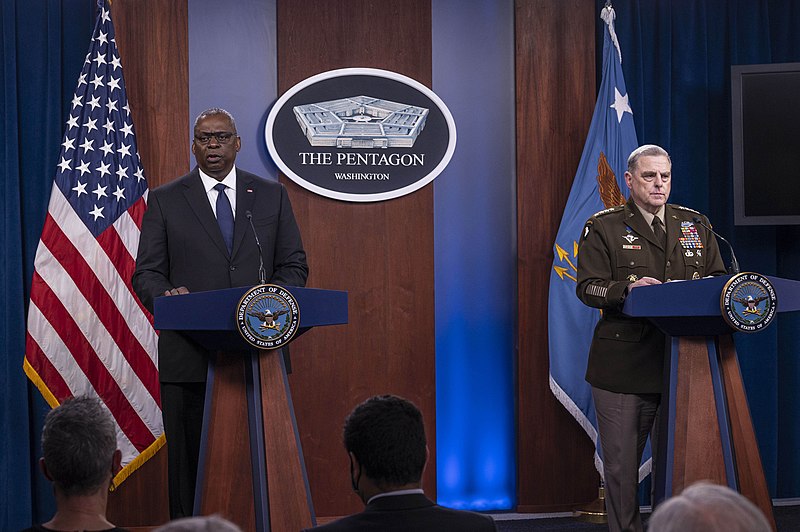
The withdrawal from Afghanistan by the US last month saw over 130,000 Afghans and American allies lifted out of the war-torn country as the insurgent group Taliban took control. During the recent hearing before the Senate and House Committees regarding the withdrawal, top US generals have said they advised President Joe Biden to keep a number of troops in the country.
During a hearing before the members of the Senate Armed Services Committee, Pentagon chief Lloyd Austin, Chairman of the Joint Chiefs of Staff Gen. Mark Milley, and US Central Command leader Gen. Kenneth McKenzie testified on the withdrawal efforts. Both Milley and McKenzie said during the hearing that they advised Biden to keep some 2,500 US troops on the ground in Afghanistan. Biden ultimately overruled their advice and ordered a complete withdrawal that saw chaos in the initial efforts.
Biden in April ordered a complete withdrawal of US forces in Afghanistan as was in the agreement his predecessor Donald Trump made with the insurgent group. Biden has staunchly defended the decision to withdraw in the midst of heavy backlash from Republicans as well as some Democrats. However, it should be noted that Biden also received support from military veterans, including those who served in Afghanistan, regarding the withdrawal.
Milley was questioned by lawmakers whether the initial chaos from the evacuation and the sudden suicide bombing at Kabul airport damaged the credibility of the US. “I think that our credibility with our allies and partners around the world and with adversaries is being intensely reviewed by them to see which way this is going to go and I think ‘damage’ is one word that could be used, yes,” said the Joint Chairman.
Speaking with the House Armed Services Committee Wednesday, Gen. McKenzie reiterated the deal Trump made with the Taliban was linked to the sudden collapse of the Afghan government to the insurgent group. McKenzie explained that once the number of troops on the ground was pushed down as part of the efforts by Washington to complete a full withdrawal by the end of August, the Taliban’s takeover efforts increased.
“The signing of the Doha agreement had a really pernicious effect on the government of Afghanistan and on its military -- psychological more than anything else, but we set a date -- certain for when we were going to leave and when they could expect all assistance to end,” McKenzie explained.













