


 Unitree Shares Plunge 45% After Blockbuster IPO, Raising China Tech Bubble Fears
  BNP Paribas, KB Kookmin Eye $2 Billion Techcombank Stake
  Meta, U.S. States Discuss Settlement in Teen Addiction Trial
  Street Poller Media and The Boom of the Street Interview Ad Industry
  Countries Tighten Social Media Bans for Children
  PayPal Shares Sink as $50 Billion Takeover Bid Collapses
  OpenAI Data Center Chief Chris Malone Exits Ahead of Planned 2027 Listing
  Nvidia Reportedly Eyes $13 Billion Hugging Face Acquisition
  Jefferies Names AMEC Top China Semiconductor Equipment Pick
  U.S. Disrupts China-Linked Hacking Campaign Targeting Government Agencies
  BofA Names ASML Top Semiconductor Equipment Pick on Growth, Valuation
  SoftBank Eyes $20 Billion Bond Sale to Refinance OpenAI Loan
  Itochu Offers $1.56 Billion to Privatize Dentsu Soken
  Nvidia Pauses AI Cloud Financing Deals Amid Antitrust Concerns
  Nvidia Options Price in $280 Billion Earnings Swing
  Salesforce Shares Surge as AI Demand Powers Q2 Earnings Beat


 Add as a preferred source on Google
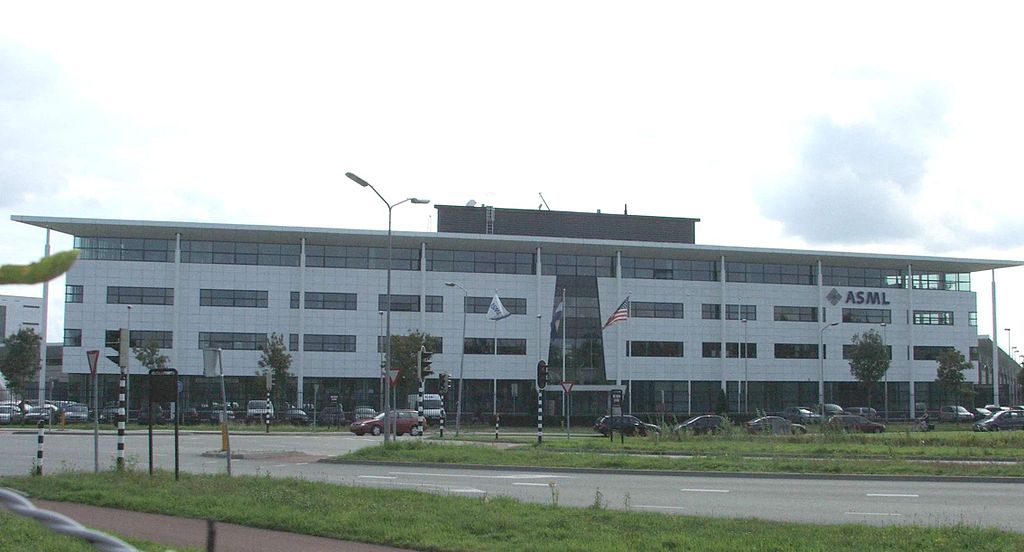
As artificial intelligence companies race to secure Nvidia chips to fuel the AI boom, Dutch semiconductor equipment maker ASML has cemented its position as one of the most critical players in the global chip supply chain. Based in Veldhoven, the Netherlands, ASML builds the highly advanced lithography machines required to manufacture cutting-edge semiconductors, including those used in AI processors. Its unique role has made it indispensable to top chipmakers such as TSMC and Intel.
ASML dominates around 90% of the global lithography market and holds a complete monopoly over extreme ultraviolet (EUV) technology, which is essential for producing advanced microprocessors. EUV systems use ultra-thin light beams measuring just 13.5 nanometers, enabling chipmakers to print incredibly dense and powerful circuitry. This technological edge has allowed ASML to ride the wave of soaring AI demand alongside companies like Nvidia, creating enormous value across the semiconductor industry.
Investor confidence has surged as ASML’s shares have more than doubled since last April and gained roughly 25% in the past month alone. The rally reflects expectations that major chip manufacturers are ramping up capital expenditures to address supply shortages and rising chip prices. Analysts are closely watching ASML’s upcoming earnings report for potential upgrades to its 2026 sales outlook, which currently points to flat-to-modest growth but is increasingly seen as conservative.
Demand for AI-driven cloud services has exploded in 2025, triggering shortages in memory chips and pushing up prices for consumer electronics such as smartphones, PCs, and gaming consoles. In response, leading manufacturers are significantly increasing spending. TSMC plans to raise capital expenditure by 37% in 2026, while Samsung, SK Hynix, Micron, and others are also planning major investment hikes. Since roughly a quarter of chipmaker capital spending goes toward lithography, ASML stands to capture a large share of this growth.
Despite competition in lower-end deep ultraviolet systems from Nikon, Canon, and China’s SMEE, experts believe ASML’s dominance in advanced chips will persist for years. With hundreds of billions of dollars invested in future chip technologies, switching away from ASML’s tools would be an enormous risk, reinforcing the company’s central role in the global AI and semiconductor ecosystem.







