





- News

- Economy

- Central Banks
- Investing
- Research
- Roundups
- Digital Currency
- Insights
- Technical Analysis
- Technology
- Business
- Law
- Health
- Nature
- Fintech
- Science
- Topic
- Opinions
- ©Econometrics LLC . All Rights Reserved.
How brain implants can let paralysed people move again
Jul 03, 2016 02:54 am UTC| Insights & Views Science
Something as simple as picking up a cup of tea requires an awful lot of action from your body. Your arm muscles fire to move your arm towards the cup. Your finger muscles fire to open your hand then bend your fingers...
Helium is vital for medicine -- just as well we discovered more of this rare element
Jul 01, 2016 12:10 pm UTC| Science Health
Helium is in short supply and its more than just the sellers of party balloons who should worry. This rare element is critical to medicine where ultra-low-temperature liquid helium is used to cool the superconducting...

Playing a science-based video game? It might be all wrong
Jul 01, 2016 09:04 am UTC| Insights & Views Science
You look down from the sky, manipulating the world and seeing how it responds to your changes. You are able to alter vegetation and climate while watching their effects on the surrounding organisms. In this way, and many...
Jun 30, 2016 14:46 pm UTC| Science
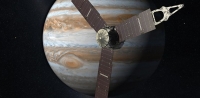
A burst of flame will streak across the skies of Jupiter in the early hours of July 5 as humankinds newest robotic explorer arrives at the giant planet. NASAs Juno spacecraft will be entering the unknown, penetrating deep...

It's time for the 'science of sensibility' to return
Jun 28, 2016 20:14 pm UTC| Insights & Views Science
What is beauty in art? Why can art move us emotionally? How do our minds and bodies respond to art? These and other questions, some linked to what we now call aesthetics, occupied some of the greatest minds of the...
Does a planet need plate tectonics to develop life?
Jun 28, 2016 20:05 pm UTC| Insights & Views Nature Science
Plate tectonics may be a phase in the evolution of planets that has implications for the habitability of exoplanets, according to new research published this month in the journal Physics of the Earth and Planetary...
What Brexit means for UK science: a view from the coalface
Jun 26, 2016 19:13 pm UTC| Insights & Views Science Economy
Science, and geoscience in particular, is an international activity that benefits from cooperation and collaboration. The Brexit vote is a wake up call, not just for the UK but more widely, and it underlines how so many...


Morgan Stanley: Fed Rate Cuts Still on Track Despite Oil-Driven Inflation
China's Energy Resilience Shields Economy From Global Oil Shock, Goldman Sachs Says

UAE's Largest Natural Gas Facility Suspended After Attack-Triggered Fire

Trump's FY2027 Budget: Major Defense Boost and Domestic Spending Cuts

U.S. Warplane Shot Down by Iran Amid Escalating Middle East Conflict

Trump Eyes Cabinet Shake-Up Amid Iran War Political Fallout

Iran Tightens Grip on Strait of Hormuz as Israel Prepares Strikes and Oil Markets Spiral

U.S. and Israel Escalate Pressure on Iran Over Strait of Hormuz as War Enters Sixth Week

Israel Poised to Strike Iranian Energy Sites, Awaiting U.S. Approval

U.S. Envoys Witkoff and Kushner Expected to Visit Kyiv in April Amid Stalled Peace Talks


NASA's Artemis II Mission: First Crewed Lunar Journey Since Apollo

NASA's Artemis II Crew Arrives in Florida for Historic Moon Mission
SpaceX Pivots Toward Moon City as Musk Reframes Long-Term Space Vision

SpaceX Prioritizes Moon Mission Before Mars as Starship Development Accelerates

Elon Musk Ties SpaceX IPO Access to Mandatory Grok AI Subscriptions

MATCH Act Targets ASML and Chinese Chipmakers in New U.S. Export Crackdown

Microsoft's $10 Billion Japan Investment: AI Infrastructure and Data Sovereignty Push

Australia's Social Media Ban for Under-16s Sparks Global Movement

SpaceX Eyes Historic IPO at $1.75 Trillion Valuation




- Market Data




