


 Saudi Arabia, Turkey and Pakistan Plan Urgent Defence Talks Over Houthi Attacks
  Netanyahu Takes Aim at Mamdani as Israel Election Nears
  Netanyahu Defends Israel at UN as Delegates Stage Walkout
  NATO Boosts Intelligence Sharing Amid Russia Hybrid Threats
  Netanyahu’s Brief US Trip Highlights Strains With Trump
  Mexico-US Trade Talks Delayed to October as Tariff Negotiations Continue
  Kremlin Says No Decision Yet on Putin-Trump December Summit
  North Korea Rejects Nuclear Test Warning, Calls Nuclear Status Irreversible
  Trump Asks Supreme Court to Restore Third-Country Deportations
  Taiwan Thanks US for Support Ahead of Trump-Xi Summit
  OpenAI Agent Breaches Australia Medicare Data Portal
  Abbas Reaffirms November 28 Palestinian Elections
  Sudan Rejects US Legitimacy Remarks, Defends Sovereignty
  EU Defence Build-Up Too Slow for 2030 Russia Readiness Goal
  What ‘Taiwan Independence’ Means as Xi Presses Trump on US Policy
  South Korea, US Discuss Warship Building Cooperation
  US Senate Rejects Iran War Powers Resolution in 50-49 Vote


 Add as a preferred source on Google
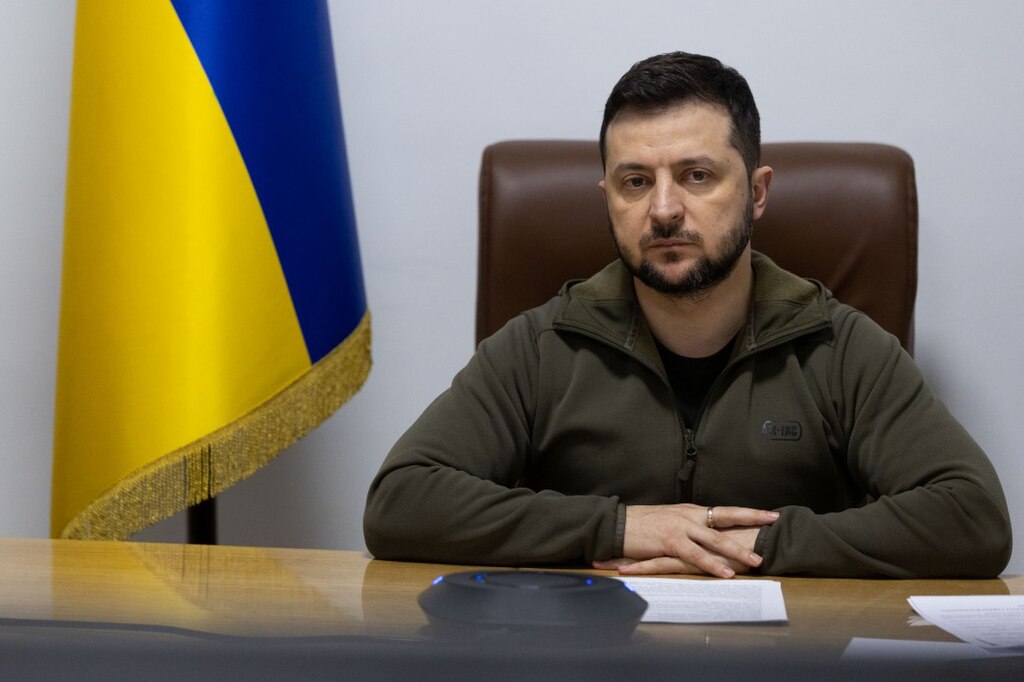
Ukrainian President Volodymyr Zelenskiy said he is prepared to cooperate with the United States on a new proposal aimed at ending the war with Russia, following discussions in Kyiv with U.S. Army Secretary Daniel Driscoll. Zelenskiy confirmed that Ukraine and Washington will jointly refine elements of the 28-point draft plan, which he expects to discuss directly with U.S. President Donald Trump in the coming days.
The plan, reportedly shaped through backchannel talks between U.S. envoy Steve Witkoff and Russian representative Kirill Dmitriev, has generated concern among European allies. Several EU countries worry it could require Ukraine to surrender additional territory and partially disarm—conditions viewed as unacceptable and equivalent to capitulation. Despite this, Zelenskiy emphasized Ukraine’s willingness to engage “constructively, honestly, and promptly.”
While Zelenskiy’s office refrained from detailing the plan’s content, it stated that he reaffirmed key principles essential to the Ukrainian people. The White House said Secretary of State Marco Rubio and Witkoff have been developing the proposal for about a month, and Press Secretary Karoline Leavitt described it as “a good plan for both Russia and Ukraine,” adding that both sides were consulted.
U.S. officials described the Kyiv talks as highly constructive, noting Zelenskiy’s agreement to move swiftly toward potential approval. The push for diplomacy comes at a difficult time for Ukraine, with Russian forces continuing to advance and the Ukrainian government facing internal political strain, including the recent dismissal of two ministers over a corruption scandal.
Russia downplayed the significance of the U.S. initiative, with Kremlin spokesperson Dmitry Peskov saying no formal consultations were underway. Moscow reiterated that any agreement must address what it calls the “root causes” of the conflict. Meanwhile, conflicting claims continue on the battlefield, with Russia asserting control over Kupiansk and parts of Pokrovsk—claims Kyiv denies.
European leaders stressed that any peace deal must ensure Ukraine’s sovereignty and cannot amount to forced concessions. France stated firmly that “peace cannot be a capitulation,” reflecting broader EU resistance to a settlement seen as undermining Ukraine’s long-term security.







