


 Novartis Shares Plunge After Muscle Drug Fails Phase III Trial
  Novo Nordisk Raises 2025 Outlook Despite Wegovy Pill Miss and CagriSema Setback
  Moderna Wins FDA Approval for mFLUSIVA mRNA Flu Vaccine for Adults 50+
  Trump Administration Bars U.S. Travelers From Congo Flights Amid Ebola Outbreak
  Hims & Hers Shares Fall as GLP-1 Costs Widen Q2 Loss
  AstraZeneca Halts Phase III Volrustomig Lung Cancer Trial After Efficacy Setback
  The government is ‘doubling down’ on its social media ban. But bigger penalties for platforms aren’t enough
  France Battles Mediterranean Wildfires as Heatwave Fuels Fire Risk
  Alcohol is one of the most dangerous drugs, yet its presence is ubiquitous in social settings and celebrations
  US-Backed Pediatric HIV Treatment Drops After Foreign Aid Changes, Study Finds
  GSK Unveils $2.52 Billion Cost-Cutting Plan to Accelerate Drug Pipeline
  Eli Lilly Eyes AtaiBeckley Acquisition to Expand Psychedelic Mental Health Pipeline
  GLP-1 Weight-Loss Drug Use Surges Among U.S. Children
  FDA Weighs Safety Standards for Psychedelic Therapies


 Add as a preferred source on Google



Cough medicines containing the active ingredient pholcodine are being withdrawn from sale due to safety concerns highlighted for years both in Australia and internationally.
Yesterday, Australia’s medicines regulator announced the immediate registration cancellation and recall of dozens of these over-the-counter cough medicines and lozenges.
This is because of the risk of a sudden, severe and life-threatening allergic reaction if people are also given specific muscle relaxant drugs while under a general anaesthetic.
That risk of anaphylaxis can remain weeks and months after taking the cough medicine.
Pholcodine (pronounced pho-co-dean) is an opioid-based medicine, which means it’s related to morphine and codeine. It works by binding to various opioid receptors in a part of the brain responsible for triggering the cough reflex.
As such, it is a common ingredient in many over-the-counter medicines used to treat a dry cough. These include cough syrups and lozenges. Every product that contains pholcodine will list it prominently on the bottle or cardboard packaging.
Common brands that contain this ingredient include Benadryl, Bisolvon, Codral, Difflam, Difflam Plus and Duro-Tuss.
Why the recall?
The most common side effects of pholcodine are dizziness, nausea and sedation. But the Therapeutic Goods Administration (TGA) has recalled products containing it, as pholcodine can trigger analphylaxis around the time of surgery.
The issue arises when pholcodine medicines are combined with types of muscle relaxants given during surgery known as neuromuscular blocking agents.
This type of anaphylaxis can occur in people who have had a muscle relaxant before and been previously fine, or in people who receive a muscle relaxant drug for the first time.
Being obese also places people at higher risk of this type of anaphylaxis.

Muscle relaxants given during surgery plus pholcodine can be a lethal mix. Shutterstock
We’ve known about the risk for years
We have actually known about the risks of pholcodine and muscle relaxants for some time, including in Scandinavian studies in 2005.
In fact, it was because of these studies that pholcodine was withdrawn from the market in Norway in 2007.
The European Medicines Agency recommended the withdrawal of pholcodine in Europe in December 2022.
In Australia, the PatientSafe Network has been calling for its ban since at least 2017.
Over the past 12 months, there were nine reported cases of serious adverse effects to pholcodine reported to the TGA, including three deaths. The most recent case was in January this year. In three of the nine, pholcodine was the only suspected medicine involved.
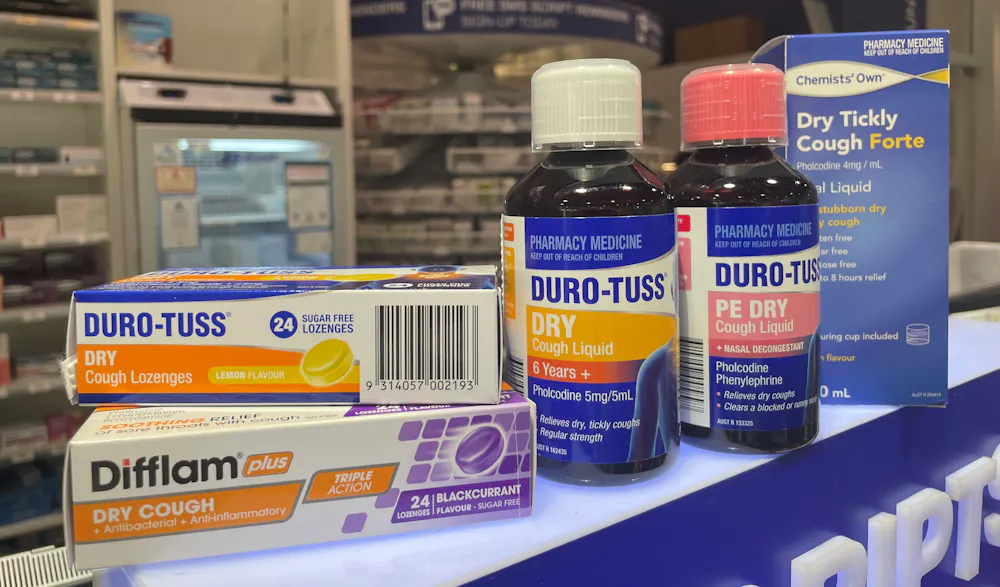
These common cough syrups and lozenges are among products being recalled. Author provided
Why now?
The TGA’s decision may come from a recent (but not yet peer reviewed) French study. This found that when patients had taken pholcodine at any time in the 12 months before surgery that used a muscle relaxant, they were at much higher risk of anaphylaxis.
The French research is consistent with an earlier Western Australian study which found analphylaxis is 14 times more likely to occur when the two types of drugs are combined.
This is because pholcodine can linger in the body for long periods. After you swallow the medicine, the drug reaches its highest concentration in the blood stream one to two hours later. But both the drug and its metabolites can still be detected in the body up to seven weeks later.
I have some at home. What now?
As pholcodine can linger in the body, the TGA has warned that if you have taken a medicine containing pholcodine in the past 12 months you need to tell your doctor before you have surgery.
If you are taking one of these medicines you should stop immediately, even if you don’t think you’re going to have a medical procedure soon.
Take it to your local pharmacy for disposal. At that time, the pharmacist will be able to recommend a different medicine for your cough.







