


 Japanese Bank Stocks Surge as Bond Yields Fuel Rate Hike Bets
  RBI Uses $10 Billion Currency Swaps to Drain Excess Rupee Liquidity
  Trump, Xi Focus on Trade and AI at White House Summit
  Wall Street Falls as Treasury Yields Surge, Oil Rebounds on Iran Tensions
  Fed Unveils Stablecoin Rules Under GENIUS Act
  Japan Private-Sector Growth Slows as Domestic Demand Weakens
  Fed Unveils Stablecoin Rules Under GENIUS Act
  Mexico-US Trade Talks Delayed to October as Tariff Negotiations Continue
  Gold Prices Fall as Treasury Yields Rise on Fed Rate Hike Bets
  South Korea, US Discuss Warship Building Cooperation
  Australia Unemployment Hits Five-Year High Despite Strong Jobs Growth
  US 10-Year Treasury Yield at 6% Emerges as New Market Risk Threshold
  Oil Prices Jump 3% as Houthi Attack Revives Supply Fears
  Asian Stocks Fall as Surging Bond Yields Rattle Markets
  Gold Holds Near $4,275 as Rising Treasury Yields Fuel Fed Rate Hike Bets
  US Stock Futures Fall as Treasury Yields Surge Ahead of Trump-Xi Summit
  U.S. Dollar Hits Two-Month High as Oil, Treasury Yields Surge


 Add as a preferred source on Google
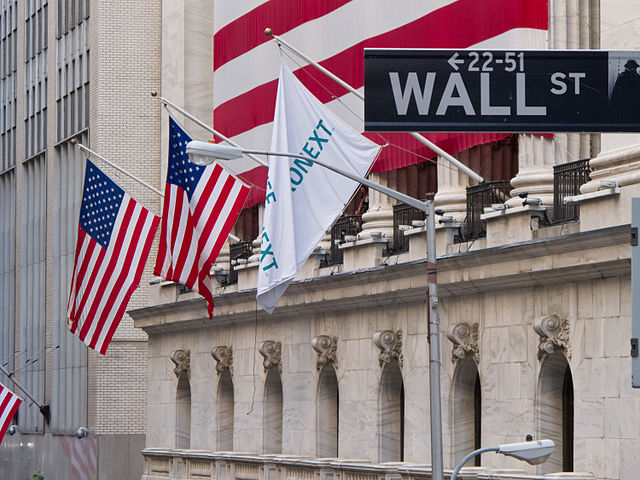
Wall Street closed sharply lower Monday as investors reacted to a Supreme Court ruling against President Donald Trump’s emergency tariffs and growing concerns about artificial intelligence disruption. The S&P 500 dropped 1% to 6,838.95, the Nasdaq Composite fell 1.1% to 22,627.27, and the Dow Jones Industrial Average slid 1.7% to 48,804.06, reversing gains from the previous week.
Market volatility intensified after Trump announced he would raise a temporary universal tariff on imports to 15%, up from 10%, using Section 122 of the Trade Act of 1974. The move followed the Supreme Court’s decision that he exceeded his authority in declaring an economic emergency to impose sweeping trade tariffs. The 15% tariff can remain in place for up to 150 days without congressional approval, adding fresh uncertainty to U.S. trade policy and the broader economic outlook. According to Yale’s Budget Lab, the effective U.S. tariff rate now stands at 13.7%, still near multi-decade highs.
Global trade tensions also resurfaced as the European Union requested clarity on U.S. tariff plans, while Trump warned of even higher tariffs for countries seeking to renegotiate existing agreements. Federal Reserve Governor Christopher Waller said tariffs typically have only a temporary impact on inflation, suggesting the ruling may not significantly alter monetary policy expectations.
Technology stocks, particularly software shares, faced additional pressure after a Citrini Research report outlined a hypothetical 2028 scenario in which rapid AI development could disrupt white-collar jobs. The iShares Expanded Tech-Software Sector ETF (IGV) hit its lowest level since November 2023, while Workday, Intuit, and Atlassian posted steep losses.
Investors are now focused on Nvidia’s upcoming earnings report, with analysts forecasting strong year-over-year growth driven by AI chip demand. Meanwhile, oil prices edged lower as traders monitored U.S.-Iran nuclear talks and ongoing geopolitical risks affecting crude supply.







