


 Russian Envoy Dmitriev Heads to US for Ukraine Talks
  Wall Street Falls as Treasury Yields Surge, Oil Rebounds on Iran Tensions
  Asian Stocks Fall as Bond Yields Surge Ahead of Trump-Xi Summit
  Gold Prices Fall as Treasury Yields Rise on Fed Rate Hike Bets
  Australia Unemployment Hits Five-Year High Despite Strong Jobs Growth
  Japan Private-Sector Growth Slows as Domestic Demand Weakens
  China’s ‘Lipstick King’ Says AI Won’t Replace Livestream Hosts
  European Stocks Slip as Iran Tensions Offset Strong Eurozone Data
  US Stock Futures Fall as Treasury Yields Surge Ahead of Trump-Xi Summit
  US Dollar Hits Two-Month High as Fed Rate Hike Bets Rise
  Mexico-US Trade Talks Delayed to October as Tariff Negotiations Continue
  Fed Unveils Stablecoin Rules Under GENIUS Act
  U.S. Dollar Hits Two-Month High as Oil, Treasury Yields Surge
  Wall Street Ends Flat as Oil, Treasury Yields and Fed Jitters Rattle Markets
  Oil Prices Jump 3% as Houthi Attack Revives Supply Fears
  U.S. 10-Year Treasury Yield Hits 2007 High as Fed Rate Hike Bets Rise
  European Stocks Fall as Bond Yields and Geopolitical Risks Weigh


 Add as a preferred source on Google
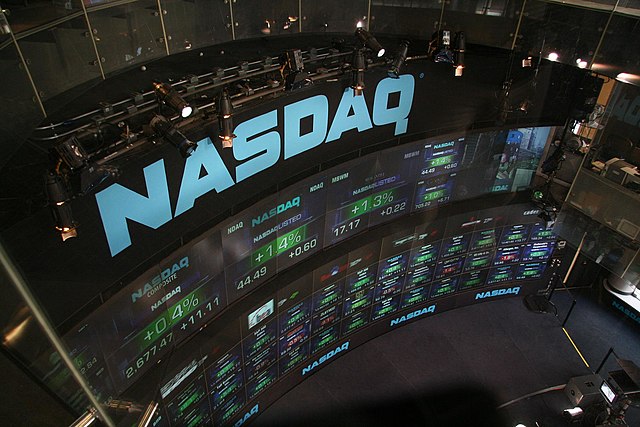
Wall Street closed mixed on Tuesday after a volatile trading session dominated by geopolitical tensions, weakness in technology stocks, and growing investor focus on upcoming U.S. inflation data. Market sentiment deteriorated after President Donald Trump vowed a response to an alleged Iranian attack that reportedly downed a U.S. military helicopter, while enthusiasm surrounding artificial intelligence stocks continued to fade.
The S&P 500 slipped 0.3% to finish at 7,385.48, recovering from an intraday decline of more than 2%. The Nasdaq Composite fell 1% to 25,678.82 as technology and semiconductor shares faced renewed selling pressure. Meanwhile, the Dow Jones Industrial Average gained 0.1%, ending at 50,870.94 after recovering from earlier losses.
Investor concerns intensified after Trump stated that Iran had shot down a U.S. Apache helicopter near the Strait of Hormuz. Although both pilots were reported safe, Trump said the United States would respond. The comments reduced optimism surrounding potential diplomatic progress between Washington and Tehran, particularly regarding negotiations over Iran’s nuclear program and the reopening of the strategically important Strait of Hormuz.
Oil prices moved lower despite the heightened tensions. Brent crude fell 2.7% to $91.75 per barrel, while West Texas Intermediate crude dropped 3.1% to $88.49. Markets continue to monitor developments in the Middle East, as disruptions in the Strait of Hormuz remain a major concern for global energy supplies and inflation.
The technology sector also faced pressure as a recent rebound in semiconductor stocks lost momentum. Analysts noted that artificial intelligence-related companies have been responsible for much of the stock market’s gains in 2026. However, the sector has become increasingly vulnerable to concerns about higher interest rates and profit-taking.
OpenAI attracted significant attention after confidentially filing for a U.S. initial public offering. The move follows a similar filing by AI rival Anthropic and highlights continued investor interest in artificial intelligence. However, market observers cautioned that demand for AI-related stocks may not be as strong by the time OpenAI launches its public offering later this year.
Investors are now turning their attention to key U.S. inflation reports, including the Consumer Price Index (CPI) and Producer Price Index (PPI), scheduled for release later this week. These reports are expected to play a crucial role in shaping expectations for Federal Reserve interest rate policy.
Among notable stock movers, Apple shares fell 3.6% after investors reacted cautiously to announcements made during the company’s Worldwide Developers Conference. In contrast, J.M. Smucker surged 10.4% after issuing stronger-than-expected annual profit guidance. Cancer drug developer Nuvalent also posted strong gains after agreeing to a $10.6 billion acquisition by pharmaceutical giant GSK.
As markets navigate geopolitical uncertainty, inflation concerns, and shifting sentiment toward AI stocks, investors remain focused on economic data and central bank policy for clues about the next direction of Wall Street in 2026.







