


 Pope Leo Warns UN, Multilateral Groups Face Crisis
  US Backs Musk in Fight Against EU’s €120 Million X Fine
  Iran Awaits U.S. Response on Hormuz Ceasefire Proposal
  What ‘Taiwan Independence’ Means as Xi Presses Trump on US Policy
  Trump Warns China Against Supporting Iran in Xi Talks
  Saudi Arabia Seeks Military Support as Houthi Attacks Escalate
  Saudi Arabia, Turkey and Pakistan Plan Urgent Defence Talks Over Houthi Attacks
  Germany Political Risks Rise as Merz Faces Coalition Pressure
  EU Agrees €6.6 Billion Military Aid Funding for Ukraine
  China Agrees to Buy 20 Million Tons of U.S. Coal
  Xi Calls for Deeper U.S.-China AI Cooperation in Trump Talks
  Pope Leo Backs Press Freedom After White House Media Ban
  Trump to Ease U.S. Fuel-Economy Standards
  Colombia Extradites FARC Dissident Leader ‘Spider’ to US
  UK PM Burnham to Unveil Economic Vision at Labour Conference
  Trump, Xi Visit US National Archives After White House Summit
  Najib Razak Seeks Stay of 15-Year 1MDB Prison Sentence


 Add as a preferred source on Google
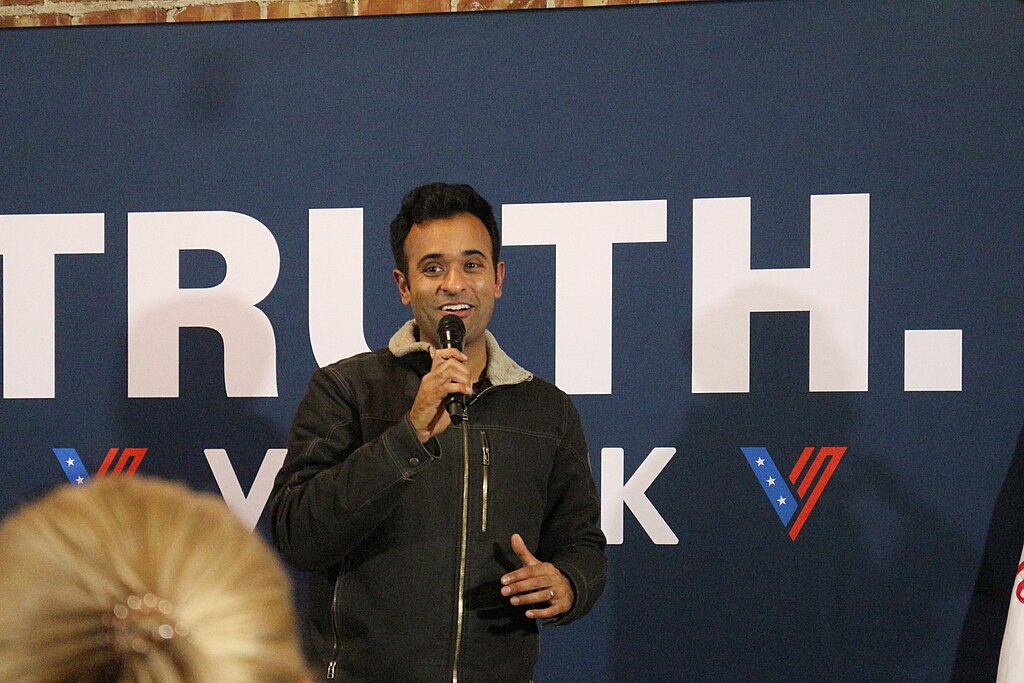
Businessman and presidential candidate Vivek Ramaswamy is reportedly looking to bring on former Congressman Ron Paul to help streamline and reform the federal government. As part of a new initiative aimed at trimming government inefficiencies, Ramaswamy’s plan focuses on identifying and eliminating wasteful programs, duplicative agencies, and bureaucratic bloat, making this one of the most ambitious government reform efforts in recent history.
According to sources close to Ramaswamy’s campaign, the newly proposed Department of Government Efficiency would function as a specialized body with the sole purpose of analyzing and cutting down on redundant government operations. The department would target agencies with overlapping responsibilities, seek out areas of excessive spending, and recommend reforms to improve accountability and productivity. Ramaswamy believes that such a bold initiative could drastically reshape the way the government functions, saving taxpayer money and reducing bureaucratic red tape.
Ron Paul’s Return to Government Reform
To lead this charge, Ramaswamy has expressed interest in consulting Ron Paul, the former Texas Congressman and presidential candidate who built a reputation for advocating smaller government and fiscal restraint. Known for his libertarian principles, Paul has long criticized what he sees as a bloated and overreaching federal government. His views on limited government align well with Ramaswamy’s goal to reduce federal expenditures and increase operational efficiency.
While Ron Paul has largely stepped back from public office, his influence remains significant among fiscal conservatives and advocates for limited government. His potential involvement with Ramaswamy’s Department of Government Efficiency could bring fresh momentum and credibility to the effort, drawing on Paul’s decades of experience and staunch anti-government waste ideology.
An insider from Ramaswamy’s team shared that Paul’s role would be primarily advisory, providing guidance on identifying the most impactful cuts and lending his insights on regulatory reform. “Ron Paul’s knowledge of the federal government and his longstanding commitment to reducing waste could be invaluable to Vivek’s vision,” the source stated.
Ambitious Cuts and Controversial Goals
The Department of Government Efficiency, as conceptualized by Ramaswamy, would set its sights on several key areas often criticized for inefficiency, including healthcare, defense contracting, and federal grant programs. The plan is expected to be divisive, with critics arguing that aggressive cuts could result in job losses and negatively impact critical services. Ramaswamy, however, has defended his approach, suggesting that streamlining operations could make government services more effective, not less.
“There are dozens of agencies with overlapping missions,” Ramaswamy said at a recent town hall meeting. “Cutting redundant operations and reallocating resources could make the government work better for everyone.”
Reaction from Both Sides
The proposal has drawn mixed reactions from lawmakers and political analysts. Fiscal conservatives and some libertarian groups have applauded Ramaswamy’s plan, seeing it as a necessary step to address America’s growing national debt and restrain government expansion. On the other hand, Democrats and some moderate Republicans have voiced concerns that widespread cuts could jeopardize essential services, warning of potential repercussions for middle- and low-income Americans who rely on government support.
The prospect of Ron Paul joining forces with Ramaswamy has already ignited conversations in political circles, with some speculating on how effective the former Congressman’s influence would be in today’s political climate. Paul, known for his sometimes controversial views, may bring both strong support and intense scrutiny to the initiative.
As Ramaswamy continues to pitch his vision for a leaner, more efficient government, it’s clear that the potential involvement of Ron Paul could both bolster the effort and spark debate over the future size and role of the federal government.







