


 What ‘Taiwan Independence’ Means as Xi Presses Trump on US Policy
  Mexico-US Trade Talks Delayed to October as Tariff Negotiations Continue
  North Korea Rejects Nuclear Test Warning, Calls Nuclear Status Irreversible
  Trump, Xi Visit US National Archives After White House Summit
  Taiwan Thanks US for Support Ahead of Trump-Xi Summit
  Trump Asks Supreme Court to Restore Third-Country Deportations
  Netanyahu Takes Aim at Mamdani as Israel Election Nears
  South Korea, US Discuss Warship Building Cooperation
  Xi Calls for Deeper U.S.-China AI Cooperation in Trump Talks
  Ukrainian Drone Attacks Hit Russian Regions, Injuring at Least 12
  Yemen Violence Displaces 130,000 as Civilian Toll Rises
  EU Defence Build-Up Too Slow for 2030 Russia Readiness Goal
  Ghana Says Western Support Growing for Slave Trade Reparations
  Russian Missile and Drone Attack on Kyiv Kills Two, Damages Maternity Hospital
  Sudan Rejects US Legitimacy Remarks, Defends Sovereignty
  US Backs Musk in Fight Against EU’s €120 Million X Fine
  North Korea Warns South Korea Over US-Led Defense Role


 Add as a preferred source on Google
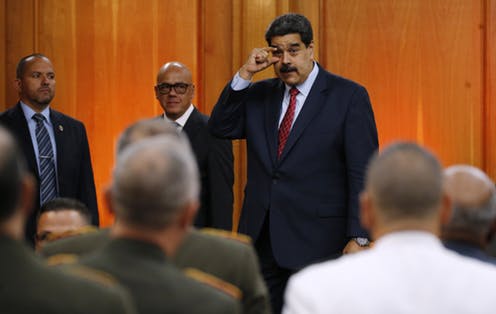
Venezuela strongly criticized U.S. President Donald Trump after he declared that the airspace above and around the country should be considered completely closed. In an official statement released Saturday, the Venezuelan government condemned Trump’s remarks as a “colonialist threat” that undermines the nation’s sovereignty and violates principles of international law. Officials in Caracas emphasized that no foreign leader has the authority to impose unilateral restrictions on Venezuelan airspace, calling the claim an unacceptable interference in the country’s internal affairs.
Trump’s comments appeared earlier on Truth Social, where he urged airlines, pilots, drug traffickers, and human traffickers to treat Venezuelan airspace as “closed in its entirety.” The post did not include further details or official justification, leaving global aviation observers questioning whether the announcement represented a formal policy move or a political warning. His statement quickly drew international attention, given the sensitive geopolitical climate surrounding Venezuela and ongoing tensions between Washington and Caracas.
The Venezuelan government argued that Trump’s assertion could create confusion for international carriers and poses potential risks to diplomatic relations. They reaffirmed that decisions over national airspace remain under the exclusive control of Venezuelan authorities and highlighted that any foreign attempt to dictate such terms contradicts global aviation standards governed by international agreements.
The exchange adds to a long history of strained relations between the United States and Venezuela, with both sides frequently clashing over political, economic, and security issues. Venezuela’s leadership said it would continue defending its territorial integrity and denounced what it views as an aggressive and unfounded statement from the U.S. president.
As discussions unfold, analysts note that Trump’s message may have been intended as a symbolic warning rather than an enforceable directive. Still, Venezuela maintains that external threats—real or rhetorical—will not dictate its sovereign decisions regarding its own airspace.







