


 Nvidia CEO Jensen Huang Expected at Trump-Xi State Dinner
  Guterres Urges Stronger Global AI Safeguards Ahead of UN Assembly
  UK, Mauritius Seek Diego Garcia Base Deal
  Canada Unveils Bill to Fast-Track Major Resource Projects
  US, Denmark and Greenland Set to Sign Arctic Security Deal
  SoftBank Shares Jump 8% as SB Energy IPO Optimism Builds
  Meta Partners With Shopify to Bring Shop Pay Checkout to Muse AI
  Trump Scales Back Endangered Species Act Protections
  Japan, U.S. Discuss $19 Billion GlobalFoundries Chip Plant
  Lula Meets Mamdani in New York as Elections Approach
  Trump Administration Prepares Sanctions Against Entire ICC
  Big AI wants to slow down AI research. Is it a safety pause or a strategic retreat?
  ICE Officer Shoots Man in Austin, Sparking Calls for Independent Probe
  Vietnam, US Trade Deal Could Be Signed Soon, To Lam Says
  SpaceX Nasdaq 100 Weight to More Than Double in Rebalance
  AfD Wins German State Election as Merz’s CDU Hits Historic Low
  Diana’s Brother Backs Security for Harry and Meghan


 Add as a preferred source on Google
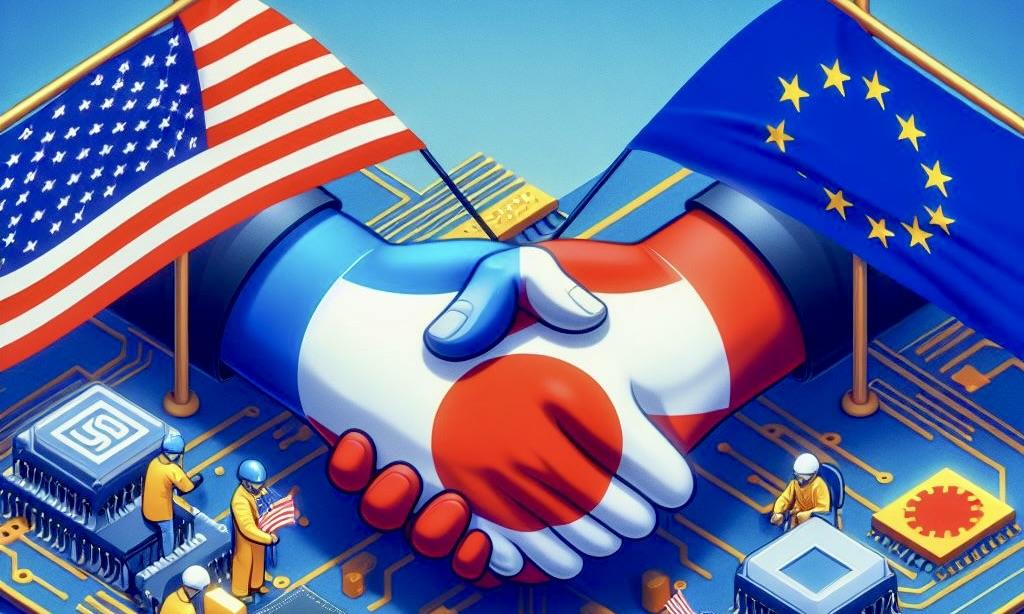
Japan and the United States are poised to deepen ties in the high-tech sector, signaling a strategic move to enhance their global partnership with a focus on artificial intelligence and semiconductor cooperation.
Strengthening Bilateral High-Tech Ties
According to the Asahi Shimbun newspaper(via Reuters), during a forthcoming joint statement, Japan and the United States are set to expand their cooperation in cutting-edge fields, including artificial intelligence (AI). This declaration is anticipated when Prime Minister Fumio Kishida meets with President Joe Biden in the United States next month.
The engagement, marked by Kishida's official visit on April 10, is expected to underscore the "global partnership" between the two nations, emphasizing a concerted push towards collaborative advancements in AI and semiconductors, though specific sources were not cited.
Asahi Shimbun reports that this agreement may create a framework for AI research and development, engaging tech giants such as Nvidia, Arm, and Amazon. This initiative underscores a significant step in bilateral relations, aiming to leverage the strengths of both nations in the face of global technological challenges.
Expanding Collaborations Beyond Bilateral Borders
Parallel to the Japan-U.S. accord, Japan and the European Union (EU) are gearing up to initiate dialogue on cooperation in developing innovative materials for next-generation processors and batteries. This effort seeks to mitigate their reliance on China for critical resources. Iliana Ivanova, the EU Commissioner for Innovation and Research, expressed in a written interview with the Business Daily the mutual benefits such a collaboration could bring.
The proposed framework, responding to an EU request and set to launch as early as April, aims to reduce dependency on China for essential commodities like rare metals. US News states that these materials are integral to various applications, including electric vehicle batteries, highlighting a strategic move to diversify sources and enhance technological resilience.
These developments mark a significant shift in international technology partnerships, indicating a broader attempt to foster innovation, secure supply chains, and address global challenges collaboratively.
Photo: Microsoft Bing







