


 Meta CEO Zuckerberg Backs Independent AI Safety Reviews Over Development Slowdown
  France Urges Faster AI Push Despite Safety Risks
  SoftBank Shares Plunge 11% After OpenAI Rules Out 2026 IPO
  Yemen Fighting Threatens Red Sea Oil Routes
  MediaTek Unveils 2nm Dimensity 9600 Pro AI Chip
  Rodrigo Duterte Makes First Public Appearance at ICC in 18 Months
  Guterres Urges Stronger Global AI Safeguards Ahead of UN Assembly
  Europe can’t achieve space sovereignty alone. Here’s why
  Trump Rejects Calls for Tougher AI Regulation
  Big AI wants to slow down AI research. Is it a safety pause or a strategic retreat?
  SoftBank Shares Jump 8% as SB Energy IPO Optimism Builds
  Ukraine Tests New Anti-Drone Weapon After Successful Shahed Intercept
  US Allies Fear Trump Could Soften Taiwan Stance in Xi Talks
  Who should own the knowledge that underpins AI technology?
  DOJ Will Investigate AI-Related Crimes, Attorney General Blanche Says
  Japan, U.S. Discuss $19 Billion GlobalFoundries Chip Plant


 Add as a preferred source on Google
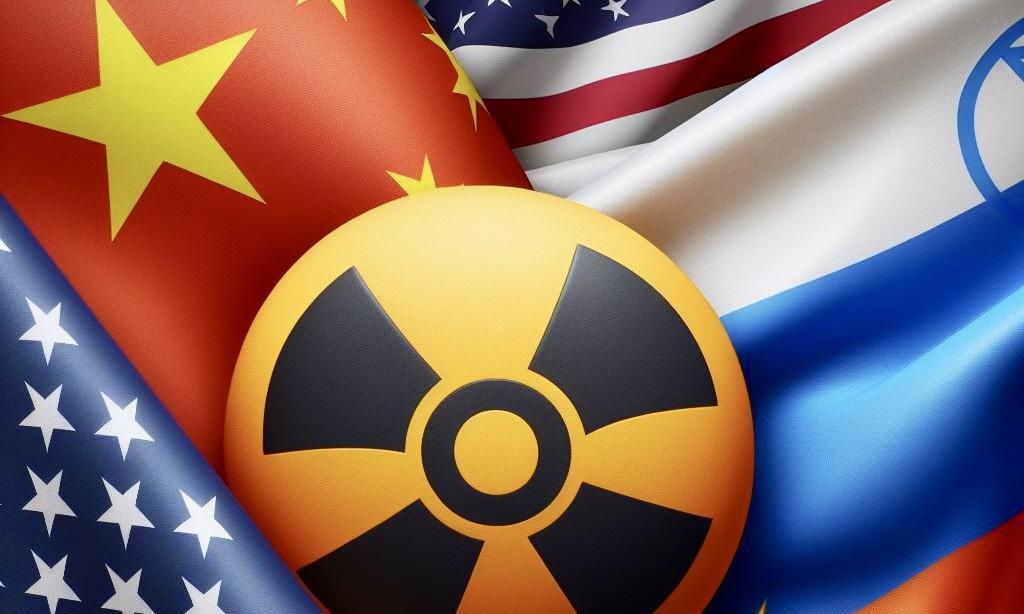
Paul Dean, a senior U.S. arms control official, emphasized the critical need for China and Russia to join the U.S. in declaring that humans will always decide on the deployment of nuclear weapons, not artificial intelligence (AI).
US, France, and Britain Stand United on Nuclear Control
As reported by Reuters on Thursday, China and Russia are implored to follow the lead of the United States and others in stating that decisions regarding the deployment of nuclear weapons would never be made by artificial intelligence but by humans.
During an online briefing, Paul Dean, an arms control official for the State Department, stated that Washington, together with France and Britain, had made a "clear and strong commitment" that humans had complete control over nuclear weapons.
Dean, principal deputy assistant secretary of the Bureau of Arms Control, Deterrence, and Stability, stated, "We would welcome a similar statement by China and the Russian Federation."
"We think it is an extremely important norm of responsible behavior and we think it is something that would be very welcome in a P5 context," he stated, alluding to the five permanent members of the U.N. Security Council.
Dean's comments coincide with efforts by U.S. President Joe Biden's administration to expand bilateral talks with China on the development of artificial intelligence and nuclear weapons policy.
The Chinese Ministry of Defense did not immediately answer a request for comment.
Blinken and Wang Yi's Talks Set Stage for AI Dialogue
During broad talks in Beijing on April 26, U.S. Secretary of State Antony Blinken and China's Foreign Minister Wang Yi talked about the growth of AI technology.
Blinken stated that in the coming weeks, the two parties will conduct their first bilateral discussions on artificial intelligence, during which they will exchange perspectives on managing the technology's associated risks and ensuring its safety.
Although formal arms control negotiations are not anticipated to happen anytime soon, U.S. and Chinese officials began discussing nuclear weapons in January as part of normalizing military relations.
Photo: Microsoft Bing







