


 US, China Extend Trade Truce to Jan. 10 Ahead of Trump-Xi Summit
  U.S. Treasury Yields Surge as 30-Year Hits 22-Year High
  Judge Orders Trump to Restore White House Access for CNN, MS NOW and Politico
  US Backs Musk in Fight Against EU’s €120 Million X Fine
  Abbas Reaffirms November 28 Palestinian Elections
  Sudan Rejects US Legitimacy Remarks, Defends Sovereignty
  Xi Calls for Deeper U.S.-China AI Cooperation in Trump Talks
  U.S. 10-Year Treasury Yield Hits 2007 High as Fed Rate Hike Bets Rise
  Oil Prices Ease as Iran Tensions Clash With Diplomacy Hopes
  Trump, Xi Focus on Trade and AI at White House Summit
  North Korea Warns South Korea Over US-Led Defense Role
  Asian Stocks Fall as Surging Bond Yields Rattle Markets
  EU Defence Build-Up Too Slow for 2030 Russia Readiness Goal
  Mexico-US Trade Talks Delayed to October as Tariff Negotiations Continue
  European Stocks Fall as Bond Yields and Geopolitical Risks Weigh
  Trump Asks Supreme Court to Restore Third-Country Deportations
  Netanyahu Takes Aim at Mamdani as Israel Election Nears


 Add as a preferred source on Google
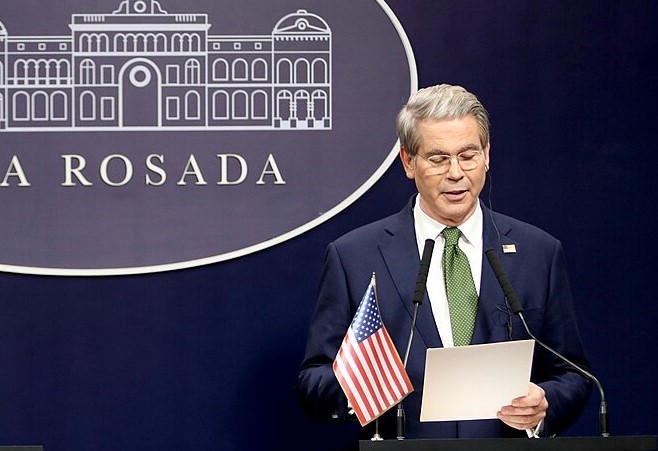
U.S. Treasury Secretary Scott Bessent announced Tuesday that tariff revenues have reached approximately $100 billion so far in 2025, with projections rising to $300 billion by year-end due to President Donald Trump’s aggressive trade policies. Speaking at a White House cabinet meeting, Bessent emphasized that most of the collections began in the second quarter, following the implementation of a sweeping 10% tariff on nearly all U.S. imports and increased duties on steel, aluminum, and automobiles.
The $300 billion estimate applies to the calendar year ending December 31, 2025, rather than the government’s fiscal year ending September 30. Achieving this would require a sharp acceleration in tariff collections and further expansions to current tariff rates.
According to the Treasury, gross customs duties hit a record $22.8 billion in May, nearly quadrupling from $6.2 billion a year earlier. From October through May, fiscal year 2025 collections totaled $86.1 billion, while calendar year collections through May reached $63.4 billion. By June 30, combined customs and excise tax collections surpassed $122 billion.
Bessent noted that the Congressional Budget Office projects $2.8 trillion in tariff income over the next decade, although he believes that figure may be too conservative.
President Trump reaffirmed his tariff push, announcing that beginning August 1, new “reciprocal” tariff rates will apply to nearly all U.S. trading partners. He also signaled potential negotiations to lower tariffs for certain countries. In addition, Trump revealed plans for a 50% tariff on copper imports, with further duties expected on semiconductors and pharmaceuticals.
As tariff policy becomes central to Trump’s economic agenda, the surge in collections highlights its significant impact on trade, inflation, and global supply chains.







