


 Japanese Bank Stocks Surge as Bond Yields Fuel Rate Hike Bets
  US Comfortable With Canada Trade Standoff as Import Bans Loom
  US Stock Futures Fall as Treasury Yields Surge Ahead of Trump-Xi Summit
  Soybean Futures Slip as Traders Await Trump-Xi Trade Signals
  Dollar Holds Near Two-Month High as Yen Approaches 160
  RBI Uses $10 Billion Currency Swaps to Drain Excess Rupee Liquidity
  Australia Unemployment Hits Five-Year High Despite Strong Jobs Growth
  Oil Prices Fall on U.S.-Iran Hormuz Deal Hopes
  U.S. Dollar Hits Two-Month High as Oil, Treasury Yields Surge
  Fed Unveils Stablecoin Rules Under GENIUS Act
  Germany’s 2026 Growth Outlook Strengthens on Fiscal Spending
  Gold Prices Fall as Treasury Yields Rise on Fed Rate Hike Bets
  Asian Stocks Fall as Surging Bond Yields Rattle Markets
  Asian Stocks Fall as Bond Yields Surge Ahead of Trump-Xi Summit
  Canadian Dollar Faces Pressure as Fed-BoC Policy Gap Widens
  UK PM Burnham to Unveil Economic Vision at Labour Conference


 Add as a preferred source on Google
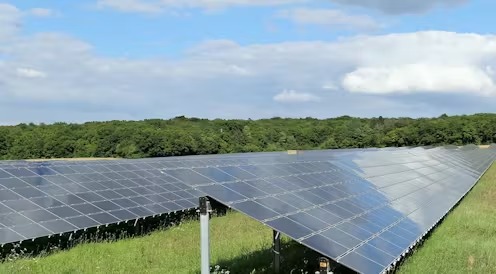
U.S. solar energy installations are projected to decline over the next five years due to shifting federal policies favoring fossil fuels, new tariffs, and legislative uncertainty, according to a joint forecast by the Solar Energy Industries Association (SEIA) and Wood Mackenzie. The report expects solar capacity to drop from 48.6 gigawatts (GW) in 2025 to 43.5 GW by 2030—a more than 10% decline.
New federal tariffs on imported materials like steel and aluminum are already impacting solar project economics. Compounding the issue, a Republican-backed budget bill aims to repeal clean energy tax credits established under the 2022 Inflation Reduction Act (IRA). These credits have been a key driver of the solar sector’s rapid growth, which saw solar accounting for 69% of new electricity generation last quarter.
Despite recent headwinds, the industry installed 10.8 GW in the first quarter of 2025—down 7% year-over-year but still near record highs. Corporate demand for utility-scale solar remains strong, and eight new or expanded solar manufacturing facilities opened in states like Texas and Ohio.
However, the residential solar sector is struggling, with first-quarter installations falling 13% to 1.1 GW. High interest rates, unfavorable state regulations, and tariffs are hindering growth. Still, SEIA expects a rebound between 2025 and 2030 as rising electricity costs boost homeowner interest in solar.
SEIA President Abigail Ross Hopper warned that the proposed policy changes could undermine years of progress, saying, “Look at all of this that could be. And the Congress is threatening all of this development.”
While the utility-scale sector—dominated by Texas, Florida, Ohio, Indiana, and California—remains the strongest contributor, the broader outlook is clouded by policy and economic uncertainties.







