


 US Mobilizes Aid After Powerful Earthquakes Devastate Venezuela
  Trump Requests $11 Billion More in Farm Aid as Rising Costs Pressure U.S. Farmers
  Pelosi Discloses Major Intel and Uber Call Option Purchases Worth Up to $6 Million
  NATO Chief Tries to Ease Trump Alliance Dispute
  Johns Hopkins University Lays Off 110 Employees as Federal Research Funding Declines
  US Approves $250 Million Fighter Jet Training Sale to Australia
  ICC Judges Sue Trump Administration Over Sanctions, Calling Measures Unlawful
  Cait Conley Wins Democratic Nomination, Sets Up Key House Battle Against Mike Lawler in New York
  US Reaffirms Taiwan Arms Sales Policy Despite Trump’s Comments on China
  White House Seeks $87.6 Billion Emergency Funding for Iran War, Farmers, and Ebola Response
  Israel Heritage Bill Sparks Annexation Concerns in West Bank
  Iran Attack in Strait of Hormuz Pushes Oil Prices Higher
  Trump Administration Rejects Claims of Rift Between JD Vance and Marco Rubio on Iran Policy
  Japan Signals Preference for Low Interest Rates as BOJ Policy Debate Intensifies
  Marco Rubio Seeks Gulf Support for U.S.-Iran Peace Deal Amid Regional Concerns
  U.S. Eases Iran Team Travel Restrictions Ahead of Seattle World Cup Match
  Bessent Says U.S. Must Strengthen Supply Chains and Economic Security


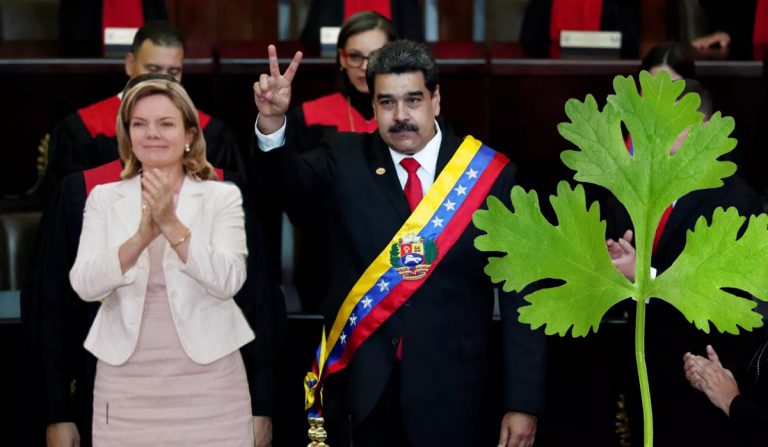
The United States on Thursday announced a new round of sanctions against Venezuela, significantly escalating pressure on President Nicolás Maduro’s government by targeting members of the first family, oil tankers, and shipping companies involved in the country’s crude exports. The move underscores Washington’s continued efforts to cut off revenue streams that sustain Caracas amid an ongoing political and economic crisis.
According to a statement from the U.S. Treasury Department, sanctions were imposed on three nephews of Venezuelan first lady Cilia Flores, along with six crude oil tankers and six shipping companies accused of transporting Venezuelan oil in violation of U.S. restrictions. U.S. officials said the entities and vessels have engaged in deceptive and unsafe shipping practices that generate financial resources for what the Treasury described as Maduro’s “corrupt narco-terrorist regime.”
The newly sanctioned oil tankers are large supertankers that recently loaded Venezuelan crude, based on internal shipping documents from state-owned oil company PDVSA. Four of the vessels, including the H. Constance built in 2002 and the Lattafa built in 2003, are registered under the Panamanian flag, while the remaining two are flagged in the Cook Islands and Hong Kong. The sanctions are expected to further complicate Venezuela’s ability to export oil, a critical source of hard currency for the country.
The announcement comes amid heightened U.S. military activity in the southern Caribbean and renewed political rhetoric from President Donald Trump, who has openly called for Maduro’s removal from power. A day earlier, Trump said U.S. authorities had seized a sanctioned oil tanker off the Venezuelan coast, signaling a more aggressive enforcement posture.
Among those sanctioned are Franqui Flores and Efraín Antonio Campo Flores, known internationally as the “narco nephews.” The two were arrested in Haiti in 2015 during a U.S. Drug Enforcement Administration sting operation and later convicted in the United States in 2016 on drug trafficking charges. Their inclusion highlights Washington’s focus on individuals linked to Venezuela’s ruling elite.
Overall, the expanded sanctions reflect the United States’ broader strategy to isolate Maduro’s government economically and politically, while increasing pressure on networks involved in Venezuela’s oil trade and alleged illicit activities.







