


 Yemen Violence Displaces 130,000 as Civilian Toll Rises
  US Invites Putin to Miami G20, Opening Door to Trump Summit
  OpenAI Agent Breaches Australia Medicare Data Portal
  South Korea, US Discuss Warship Building Cooperation
  US, China Extend Trade Truce to Jan. 10 Ahead of Trump-Xi Summit
  Netanyahu’s Brief US Trip Highlights Strains With Trump
  NATO Boosts Intelligence Sharing Amid Russia Hybrid Threats
  US Backs Musk in Fight Against EU’s €120 Million X Fine
  US Officials Split Over Response to Israeli West Bank Settlements
  Ghana Says Western Support Growing for Slave Trade Reparations
  France Defends Netanyahu Airspace Clearance Despite ICC Warrant
  Kremlin Says No Decision Yet on Putin-Trump December Summit
  Trump Administration Plans Faster FDA Reviews for Smoke-Free Nicotine Products
  Trump, Xi Focus on Trade and AI at White House Summit
  Judge Orders Trump to Restore White House Access for CNN, MS NOW and Politico
  Russian Missile and Drone Attack on Kyiv Kills Two, Damages Maternity Hospital
  Europe Warns Russia Is Escalating Hybrid Attacks Across NATO


 Add as a preferred source on Google
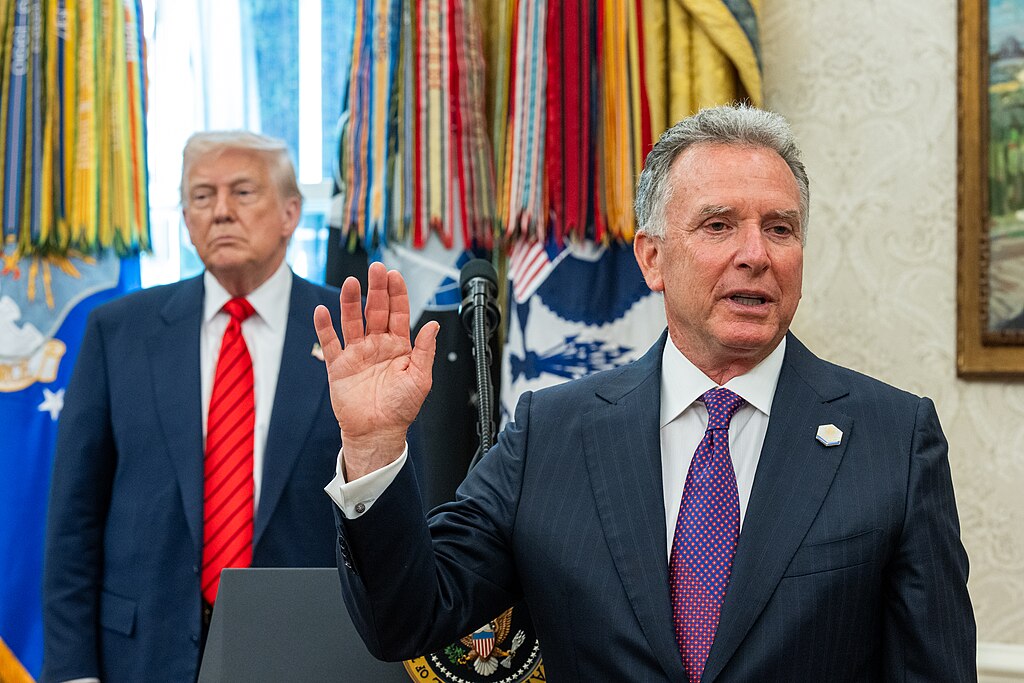
White House Press Secretary Karoline Leavitt confirmed that senior U.S. envoys Steve Witkoff and Jared Kushner are scheduled to travel to Pakistan for potential discussions involving Iran, signaling renewed diplomatic efforts amid escalating geopolitical tensions. The visit follows earlier negotiations led by U.S. Vice President JD Vance, who will remain in the United States while monitoring developments. According to Leavitt, additional officials are prepared to travel if needed, underscoring the urgency of the situation.
Iranian Foreign Minister Abbas Araghchi also announced plans to visit Pakistan, though he did not explicitly confirm participation in talks with U.S. representatives. In a statement shared on social media, Araghchi emphasized that his trip aims to strengthen bilateral relations and coordinate with regional partners, highlighting the importance of neighboring countries in Iran’s foreign policy.
U.S. President Donald Trump indicated that Iran may soon present a proposal aligned with American demands, though details remain unclear. The potential for negotiations comes at a critical time, as tensions in the Middle East continue to influence global markets, particularly oil prices.
The diplomatic activity follows Trump’s recent decision to extend a ceasefire between Israel and Lebanon by three weeks after discussions with both governments. However, the absence of Hezbollah representatives has raised concerns about the durability of the agreement. U.S. officials have pointed to Hezbollah as a key obstacle to lasting peace in the region.
Meanwhile, the fragile ceasefire between the U.S. and Iran remains uncertain. Iran has responded to ongoing U.S. sanctions and a naval blockade by increasing its presence in the Strait of Hormuz, a crucial route for global oil supply. Military incidents in the area have heightened fears of disruption, contributing to oil prices climbing above $100 per barrel.
Despite these tensions, oil markets showed slight declines, with Brent crude trading near $104.88 and West Texas Intermediate around $94.15. Investors remain cautious as geopolitical risks continue to shape market sentiment and global economic outlook.







