


 NATO Boosts Intelligence Sharing Amid Russia Hybrid Threats
  US, China Extend Trade Truce to Jan. 10 Ahead of Trump-Xi Summit
  Trump Asks Supreme Court to Restore Third-Country Deportations
  Sudan Rejects US Legitimacy Remarks, Defends Sovereignty
  US Officials Split Over Response to Israeli West Bank Settlements
  South Korea, US Discuss Warship Building Cooperation
  Judge Orders Trump to Restore White House Access for CNN, MS NOW and Politico
  US Invites Putin to Miami G20, Opening Door to Trump Summit
  Venezuela Promises Elections as Delcy Rodriguez Pledges Democratic Transition
  Kremlin Says No Decision Yet on Putin-Trump December Summit
  North Korea Rejects Nuclear Test Warning, Calls Nuclear Status Irreversible
  OpenAI Agent Breaches Australia Medicare Data Portal
  France Defends Netanyahu Airspace Clearance Despite ICC Warrant
  Russian Envoy Dmitriev Heads to US for Ukraine Talks
  Russian Missile and Drone Attack on Kyiv Kills Two, Damages Maternity Hospital
  Netanyahu’s Brief US Trip Highlights Strains With Trump
  Trump Administration Plans Faster FDA Reviews for Smoke-Free Nicotine Products


 Add as a preferred source on Google
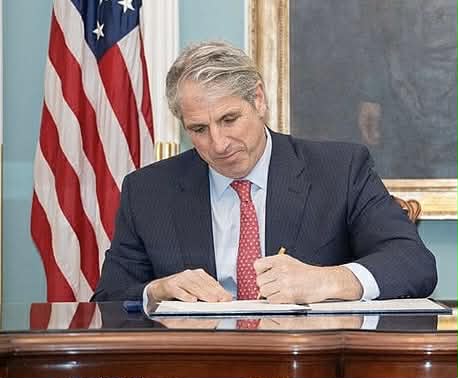
The United States has expressed concern over the presence of Chinese infrastructure projects in Argentina, highlighting potential national security risks as global geopolitical competition intensifies. Speaking at a press conference in Buenos Aires, U.S. Undersecretary of State for Arms Control and International Security Thomas DiNanno emphasized the importance of balancing economic partnerships with security priorities.
DiNanno noted that both the United States and Argentina face the complex challenge of maintaining strong commercial relationships while safeguarding national interests. China remains a major trading partner for both nations, making the situation particularly sensitive. According to the U.S. official, ensuring that economic cooperation does not compromise security is a growing concern for governments worldwide.
The discussions in Argentina come at a time when Washington is seeking closer collaboration with Latin American countries on defense and law enforcement initiatives. DiNanno confirmed that the U.S. and Argentina are currently engaged in talks focused on military equipment coordination and training programs for law enforcement agencies. These efforts are part of a broader strategy to strengthen regional security partnerships.
Prior to his visit to Buenos Aires, DiNanno traveled to Chile, where the government recently announced plans to finalize new agreements with the United States. These include both security and mining deals, signaling deeper cooperation between the two countries. The security agreement alone will involve approximately $1 million in U.S. funding, underscoring Washington’s commitment to expanding its influence and partnerships in the region.
As global competition between the U.S. and China continues to shape international relations, Latin America has become an increasingly important arena. Countries like Argentina and Chile are navigating these dynamics by pursuing economic growth while managing strategic alliances. The situation highlights the delicate balance nations must maintain between attracting foreign investment and protecting national security interests in an evolving geopolitical landscape.







