


 China Vanke Shares Jump as Beijing Moves to Ease Debt Pressure
  Burnham Eyes UK Leadership Role in AI Ahead of Trump Meeting
  Trump Bans CNN, MS NOW and Politico From White House
  Meta CEO Zuckerberg Backs Independent AI Safety Reviews Over Development Slowdown
  Westinghouse Targets $50 Billion Valuation in U.S. IPO
  Physicists zoom into the birth of cosmic rainstorms with new CERN study
  China Reviews Broadcom Switch Use in State Data Centres
  France Urges Faster AI Push Despite Safety Risks
  Prysmian, Rio Tinto Supply Low-Carbon Cables for Amazon Ohio Data Center
  NASA, Boeing Discuss Expanding Starliner Missions
  Trump-Xi Summit Puts Trade Truce and Taiwan in Focus
  White House Bars CNN, MS NOW and Politico Reporters
  Hyundai CEO Warns Chinese Automakers Could Disrupt US Market
  US, Denmark and Greenland Set to Sign Arctic Security Deal
  Carney Condemns Belleville Synagogue Shooting That Wounded Police Officer
  Paramount-Warner Bros $110 Billion Deal Draws Antitrust Backlash
  Goldman Sachs Names Simon Lyons UK Investment Banking Co-Head


 Add as a preferred source on Google
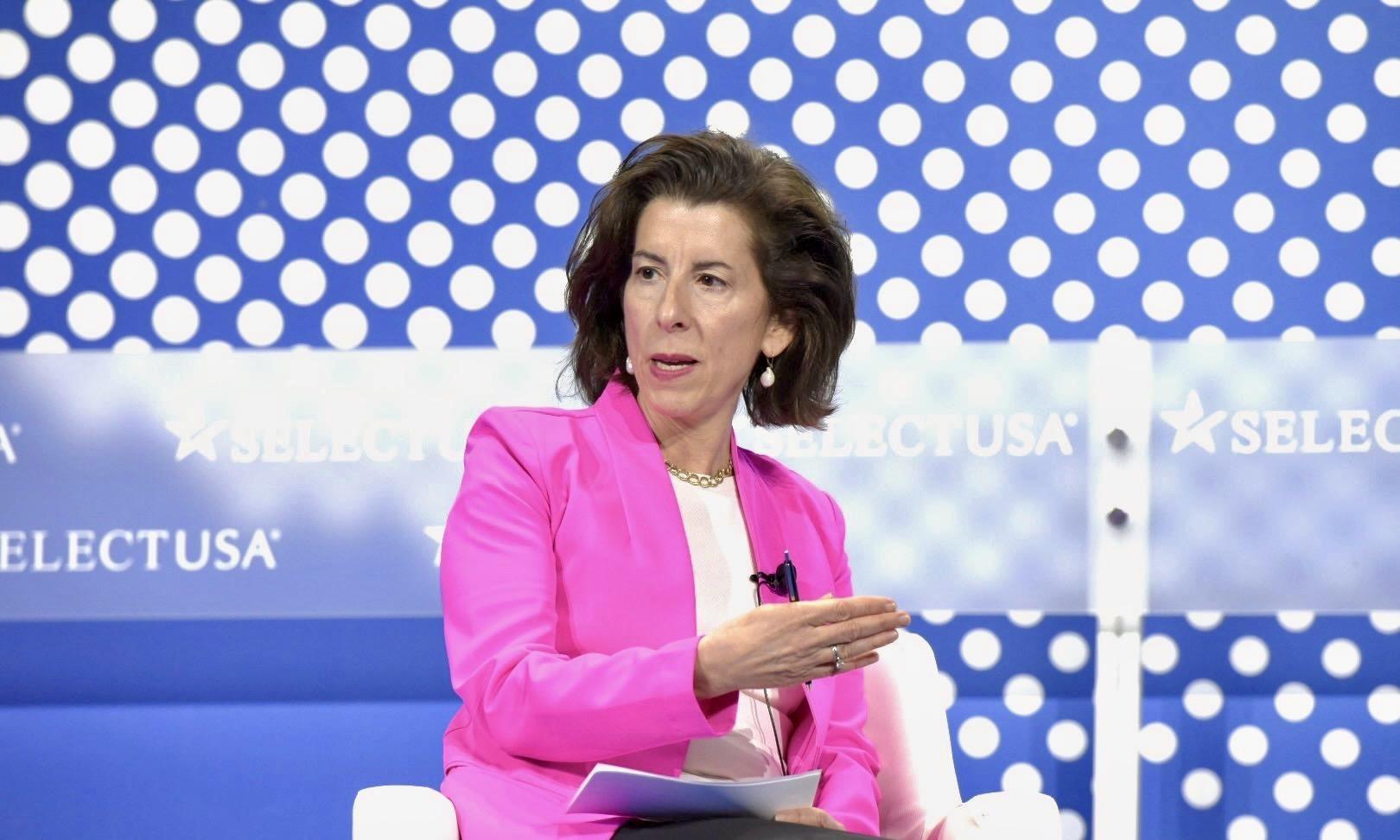
In an interview on CBS News' "60 Minutes," Commerce Secretary Gina Raimondo stated that the latest Huawei Mate 60 Pro phone's chip remains significantly behind U.S. technology despite being the most advanced from China. She asserts this validates the effectiveness of ongoing U.S. export controls to limit China's semiconductor advancements.
Despite Huawei's Recent Advances, the U.S. Maintains its Technological Edge, Affirms Commerce Secretary Raimondo
According to Reuters, Huawei, subject to trade restrictions since 2019, startled the industry and the U.S. government by releasing a new phone powered by sophisticated technology in August. Despite Washington's continued efforts to undermine China's ability to develop innovative semiconductors, the Huawei Mate 60 Pro was viewed as a sign of the country's technical revival.
Many saw it as a blow to Raimondo, who was in China then. However, in an interview with CBS News' "60 Minutes," Raimondo argued against that viewpoint.
"What it tells me is the export controls are working because that chip is not nearly as good, ... it's years behind what we have in the United States, she said. "We have the most sophisticated semiconductors in the world. China doesn't."
Washington has been working for years to prevent Beijing from obtaining advanced semiconductor chips and the tools required to manufacture them, fearing that they would be used to bolster China's military capabilities.
Huawei's New A.I. Laptop Stirs Controversy; U.S. Tightens Scrutiny Amid Ongoing Tech Tensions
Huawei, a symbol of that tech conflict, was included in the so-called entity list in 2019 due to concerns that it could spy on Americans. This would force its U.S. suppliers to acquire difficult-to-obtain permission to ship to the country.
However, its vendors, including Intel, have acquired billion-dollar licenses to continue selling to the corporation. This month, Huawei announced its first AI-enabled laptop powered by an Intel CPU has sparked outrage among Republican China supporters.
Raimondo was adamant when asked if she was harsh enough on big business.
"I hold businesses accountable as much as anyone," she told Lesley Stahl on "60 Minutes." "When I tell them they can't sell their semiconductors to China, they don't love that, but I do that," she added.
The Huawei phone also spurred the Biden administration to look into the specifications of the chip that runs it, which is the most advanced semiconductor China has ever made. However, specifics about the review have been few.
Photo: InternationalTradeAdministration/Flickr(PDM 1.0 DEED)







